

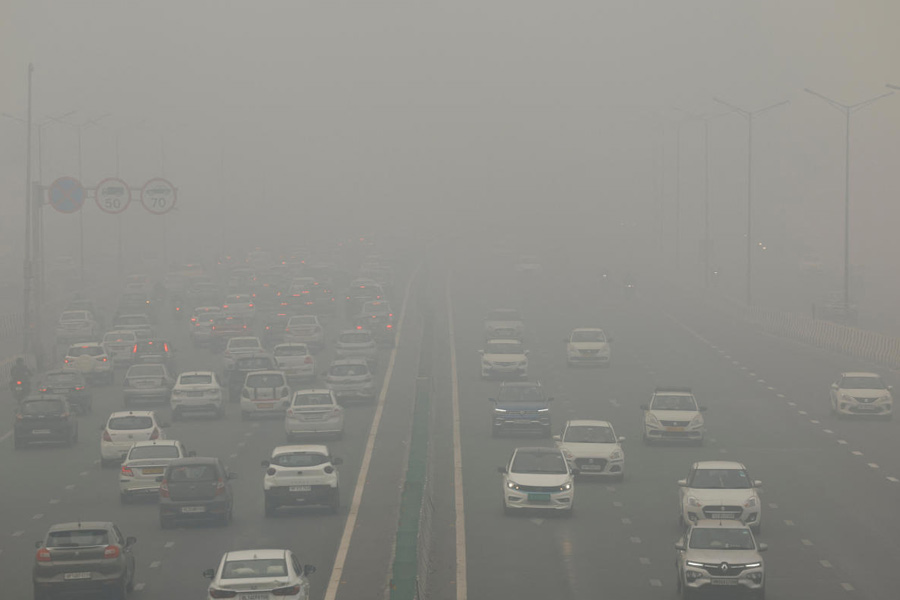

Residents of Delhi and the National Capital Region (NCR) woke up to dense smog and sharply deteriorating air quality on Saturday, with pollution levels nearing the ‘severe’ category across several parts of the city.
According to data released by the Central Pollution Control Board (CPCB), the overall Air Quality Index (AQI) in Delhi stood at 390, placing it in the ‘very poor’ category. However, air quality in multiple areas crossed into the ‘severe’ range, raising serious health concerns.
Among the worst-affected locations were:
- Anand Vihar – AQI 435
- Jahangirpuri – AQI 442
- Rohini – AQI 436
- Burari Crossing – AQI 415
- Chandni Chowk – AQI 419
- RK Puram – AQI 404
Low Visibility Due to Smog and Fog
A combination of smog and shallow fog significantly reduced visibility across many parts of the capital during the early morning hours, impacting road traffic and prompting authorities to issue advisories.
As per CPCB’s AQI classification:
- 0–50: Good
- 51–100: Satisfactory
- 101–200: Moderate
- 201–300: Poor
- 301–400: Very Poor
- 401–500: Severe
Each category reflects the level of pollution and the associated health risks, with ‘severe’ AQI posing a risk of respiratory illness even to healthy individuals.
Health Risks Rise as Winter Pollution Persists
Dangerously high pollution levels have become a recurring feature during Delhi’s winter months. Saturday’s AQI, which remained in the ‘very poor’ bracket, is considered harmful, especially with prolonged exposure, and can trigger breathing problems, eye irritation, and aggravate existing respiratory and cardiac conditions.
Delhi Airport Issues Low-Visibility Advisory
In view of reduced visibility, Delhi Airport issued an advisory on social media platform X, stating that flight operations were continuing normally but precautionary procedures were in place.
“Low visibility procedures are in progress at Delhi Airport. All flight operations are presently normal. Passengers are requested to contact the airline concerned for updated flight information,” the airport said.
Pollution Levels Remain Alarmingly High
The deteriorating air quality follows similar conditions recorded on Friday, when Delhi’s AQI stood at 386. Thick smog and haze were reported in areas such as Ghazipur and Anand Vihar, where visibility remained severely compromised.
Despite marginal improvements in pollution levels over recent weeks, large swathes of the national capital continue to remain enveloped in dense and toxic smog, underlining the persistent air pollution crisis during the winter season.