

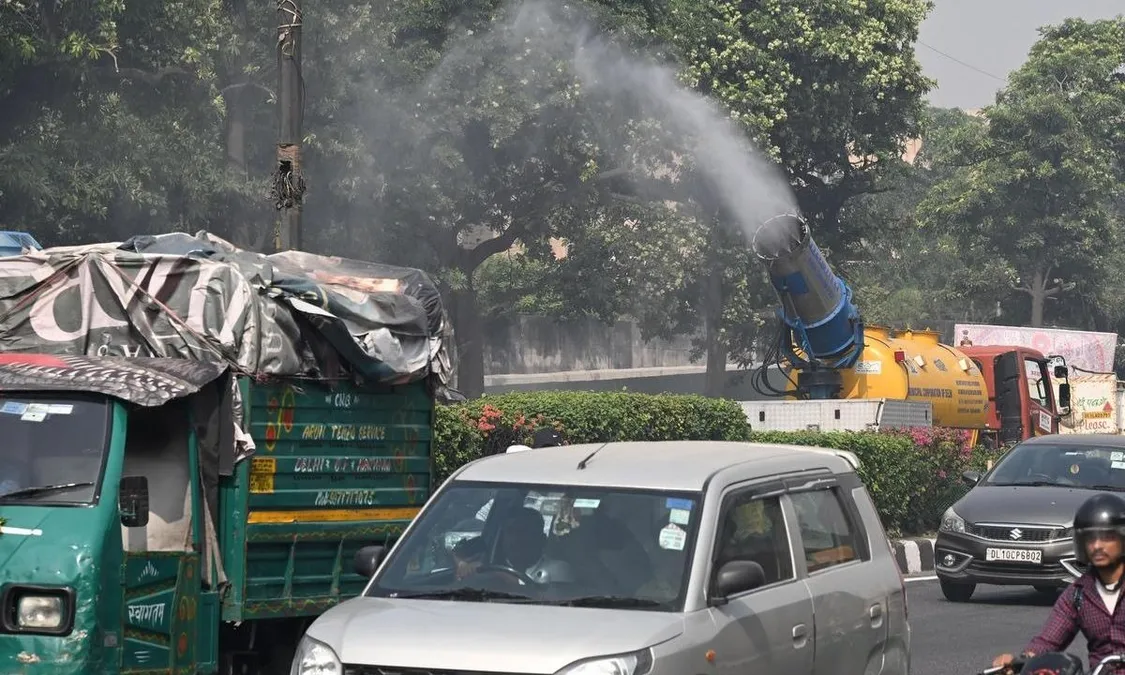

New Delhi: In a decisive move to tackle the alarming rise in air pollution across the National Capital Region (NCR), the Commission for Air Quality Management (CAQM) has imposed strict restrictions on freight traffic entering Delhi.
Effective November 1, 2025, all non-Delhi registered commercial goods vehicles that comply only with Bharat Stage III (BS-III) or lower emission norms will be prohibited from entering the city, the CAQM announced on Thursday.
The ban, issued under the Graded Response Action Plan (GRAP), is aimed at reducing vehicular emissions, which are a major contributor to the capital’s recurring winter pollution crisis.
In a post on X (formerly Twitter), the Commission stated that the restriction would remain in force until further orders or until there is a significant improvement in air quality levels.
According to the directive, only BS-IV and above vehicles registered outside Delhi will be permitted entry into the city. However, Delhi-registered BS-IV or higher-compliant vehicles will be allowed to continue operations within city limits.
Similar to previous pollution-control measures, essential service vehicles — including those carrying fuel, medical supplies, and perishable food items — are likely to be exempted from the restrictions.
To ensure strict enforcement, the Delhi Traffic Police, Transport Department, and authorities from Haryana, Uttar Pradesh, and Rajasthan have been instructed to conduct rigorous checks at all major entry points into the capital. Any violations will attract penalties under the Motor Vehicles Act and the Air (Prevention and Control of Pollution) Act.
The announcement comes as Delhi’s Air Quality Index (AQI) continues to deteriorate, slipping into the “severe” category in several parts of the city. Experts attribute this decline to a combination of factors — including stubble burning in neighbouring states, post-Diwali firecracker pollution, and increasing vehicular emissions.
The CAQM has also urged Haryana, Uttar Pradesh, and Rajasthan to adopt similar restrictions on older, high-emission commercial fleets to ensure a coordinated regional approach against NCR’s worsening air quality.
With winter setting in, the directive is seen as a crucial step in curbing the seasonal pollution surge that chokes Delhi every year, as authorities look to protect public health and reduce long-term environmental damage.