

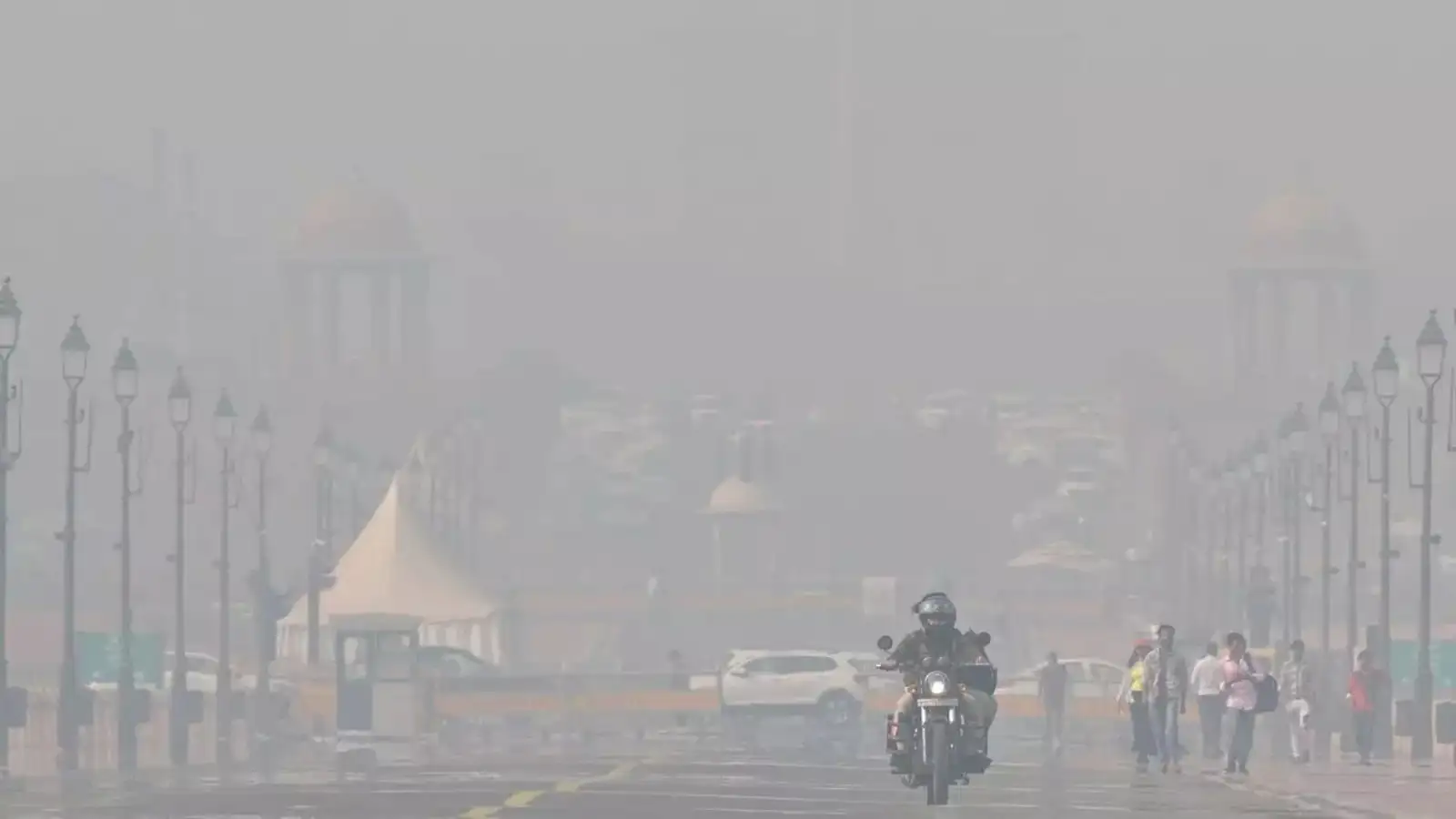

Air pollution levels in Delhi and the National Capital Region (NCR) worsened sharply on Saturday evening, prompting authorities to impose the strictest set of curbs under Stage-IV of the Graded Response Action Plan (GRAP), just hours after Stage-III measures were enforced.
According to official data, the Air Quality Index (AQI) in Delhi climbed to 441 at 6 pm, bringing it dangerously close to the ‘severe plus’ category, which begins at an AQI of 450.
Earlier in the day, the Commission for Air Quality Management (CAQM) — the central body responsible for coordinating pollution-control efforts in Delhi and neighbouring states — had invoked GRAP-3 restrictions in the afternoon after the AQI crossed the 400 mark and entered the ‘severe’ category.
However, by evening, the situation deteriorated further. The CAQM noted that the AQI, which stood at 431 at 4 pm, continued to rise steadily, touching 441 by 6 pm, indicating a worsening trend in air quality.
GRAP-4 Measures Invoked Across NCR
In a statement issued on Saturday evening, the CAQM Sub-Committee on GRAP said it had decided to invoke all actions under Stage-IV of the extant GRAP, citing the rapidly declining air quality.
“Keeping in view the prevailing trend of air quality and in an effort to prevent further deterioration of air quality in the region, the CAQM Sub-Committee on GRAP decides to invoke all actions as envisaged under Stage-IV of the extant GRAP – ‘Severe+’ Air Quality (Delhi AQI > 450), with immediate effect, in the entire NCR,” the statement said.
The authority clarified that the Stage-IV measures will be implemented in addition to the actions already in force under Stages I, II and III of GRAP across the NCR.
Rising Health Concerns
Air quality in the ‘severe’ to ‘severe plus’ range poses serious health risks, particularly to children, the elderly, and people with respiratory or cardiovascular conditions. Authorities have repeatedly warned residents to limit outdoor activities as pollution levels spike during the winter season.
The situation continues to be closely monitored, with further restrictions likely if pollution levels worsen.