

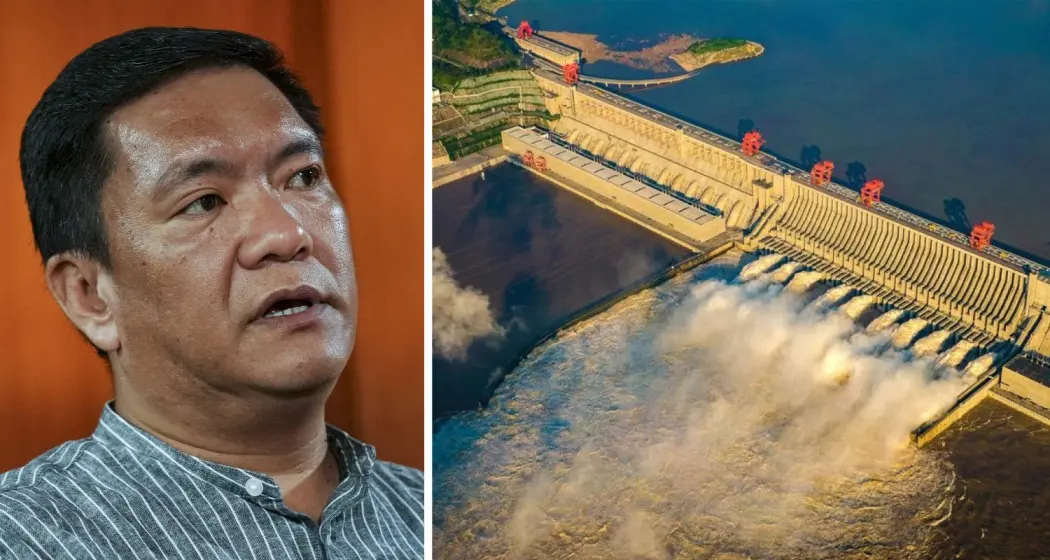

Itanagar– Arunachal Pradesh Chief Minister Pema Khandu on Tuesday issued a strong warning over China’s mega hydropower project on the Yarlung Tsangpo River—known in India as the Brahmaputra. In an interview with PTI, Khandu said the project, reportedly the largest dam in the world, poses a grave national security and ecological threat to India, especially for Arunachal and downstream states like Assam and Bangladesh.
“China cannot be trusted. No one knows what they might do,” said Khandu.
“This is a far bigger issue than the military threat. This dam could become a ‘water bomb’ that endangers the tribes, livelihoods and lands of Arunachal Pradesh.”
VIDEO | EXCLUSIVE: China's mega dam being built near the Arunachal Pradesh border will be a ticking "water bomb," an existential threat more dangerous than its military, the state's chief minister Pema Khandu (@PemaKhanduBJP) has said.
— Press Trust of India (@PTI_News) July 9, 2025
Speaking to PTI Editor-in-Chief Vijay… pic.twitter.com/0LhctGNnIN
🚨 Concerns Over Water Release and Flooding
The dam project, once completed, could give China the ability to control the flow of water into India, Khandu cautioned. If water is suddenly released, it could flood the entire Siang belt, affecting tribal communities like the Adi.
“If they release water suddenly, the entire Siang belt would be wiped out—land, property, even human lives,” he said.
Khandu added that China’s refusal to sign international water-sharing agreements makes it even more dangerous, as there are no international mechanisms to regulate or restrict their actions.
🇮🇳 India’s Countermeasure: Siang Upper Multipurpose Project
In coordination with the Centre, Arunachal has proposed the Siang Upper Multipurpose Project, a dam initiative designed to secure India’s water needs and act as a buffer against potential floods caused by China’s project.
“If we can complete our dam project in time, we can manage any water releases and also ensure we meet our own needs,” Khandu said.
🌐 China’s Mega Dam Project: Quick Facts
- Located in the Himalayan region, near the India-Tibet border
- Announced after Premier Li Keqiang’s 2021 visit
- Part of China’s $137 billion five-year hydropower plan (approved in 2024)
- Expected to generate 60,000 MW, making it the largest hydropower dam in the world
- The area is seismically active, raising further environmental concerns
🔎 What the Centre Said
In March, the Government of India said it was “carefully monitoring” all developments along the Brahmaputra and taking appropriate diplomatic and infrastructure measures to protect Indian interests.