

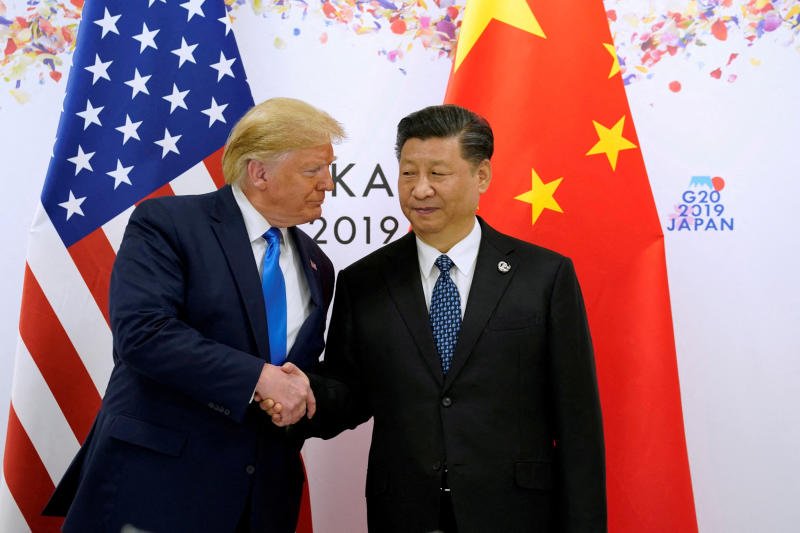

Chinese President Xi Jinping is pressuring the US to significantly strengthen its rhetorical stance against Taiwan’s formal independence, a concession that would mark a major diplomatic victory for Beijing and further isolate the self-ruled island.
China has reportedly asked the Trump administration to officially declare that it “opposes” Taiwan independence, according to sources familiar with the private discussions.
Stronger Language Than Previous US Stance
The requested phrase, “opposes Taiwan independence,” is notably stronger than the previous language used by US officials, which merely stated the US “do not support” the island seeking formal independence.
- The stronger wording would significantly bolster China’s ongoing campaign to undermine Taiwan’s international standing, which Beijing views as an inalienable part of its territory.
- The Trump administration has not yet made a decision on the demand, and it is reportedly one of a “long list of asks” from the Chinese side currently under consideration.
- The State Department’s fact sheet defining US ties with Taiwan is currently unavailable on its website, highlighting the extreme sensitivity surrounding this issue.
Language Defining the US-Taiwan Relationship
The language used by the US to describe its relationship with Taiwan has been a continuous source of tension with Beijing:
- Past Instances: The phrase “do not support Taiwan independence” was previously removed from the State Department’s website in May 2022 by the Biden administration, only to be reinstated after Chinese protests. In February, the phrase was abruptly removed again, prompting Beijing to urge Washington to “correct its wrongdoings.”
- Strategic Ambiguity: Since President Richard Nixon established formal ties with Beijing in the 1970s, the US has maintained a “one-China policy” that leaves Taiwan’s sovereignty undetermined. For decades, Washington has adopted a policy of “strategic ambiguity” regarding whether it would militarily defend Taiwan against a Chinese attack.
Significance of the Chinese Demand
Experts view this demand as a strategic move by Beijing to test US resolve. Craig Singleton, senior director of the China program at the Foundation for Defense of Democracies, noted that China repeatedly raised this shift with the Biden administration, which refused to comply.
“The significance is less about an imminent US policy change and more about Beijing testing Washington’s resolve on wording it sees as central to its position,” Singleton said.
Any shift in the US stance would fan concerns that Taiwan’s status is becoming a bargaining chip in the ongoing trade negotiations between the US and China. President Trump has already put some US tech curbs imposed on China up for negotiation.
The discussions are taking place as President Trump and President Xi prepare for an expected meeting at an upcoming summit in South Korea to finalize the terms of a broader deal. The US remains Taiwan’s biggest military backer, though Trump has previously suggested the island should pay for its protection.
A former senior National Security Council official, Sarah Beran, warned that Beijing would portray any change as an erosion of US support for Taiwan, adding that Washington should demand a “verifiable, measurable reduction in Chinese military activity around the island” in exchange for such a major concession.