

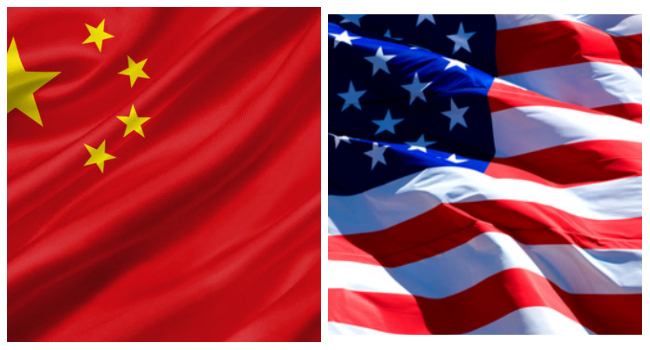

Beijing has announced sweeping sanctions against 20 US defence-related companies and 10 senior executives, days after Washington approved a large-scale arms sale to Taiwan. The Chinese foreign ministry confirmed on Friday that the sanctions include freezing assets of the targeted firms in China and prohibiting Chinese entities or individuals from conducting any transactions with them.
Among the sanctioned companies are major defence giants such as Northrop Grumman Systems Corporation, L3Harris Maritime Services, and Boeing’s St. Louis division. Also sanctioned is Palmer Luckey, founder of defence technology firm Anduril Industries, along with several other executives who are now barred from entering China and conducting business within the country. Any existing assets linked to them have also been frozen.
The move comes in response to the US arms package exceeding $10 billion meant to strengthen Taiwan’s defence capabilities. China, which views Taiwan as an inseparable part of its territory, strongly condemned the deal, calling it a direct challenge to its sovereignty.
“We stress once again that the Taiwan question lies at the core of China’s core interests and remains the first red line that must not be crossed in China-US relations,” China’s foreign ministry warned in a statement. It further emphasised that “any company or individual engaging in arms sales to Taiwan will pay the price for such wrongdoing,” urging Washington to immediately halt what Beijing labelled as “dangerous moves of arming Taiwan.”
If approved by the US Congress, this would become the largest-ever US weapons package to Taiwan, further intensifying tensions between the world’s two largest economies. Taiwan continues to remain a major flashpoint in China-US relations, with analysts cautioning the dispute could escalate into a larger military confrontation.
In recent years, China has stepped up military activity around Taiwan, frequently sending fighter jets, drones, and naval vessels near the island while conducting joint combat drills. Meanwhile, under US federal law, Washington remains obligated to support Taiwan’s self-defence, a commitment that continues to frustrate Beijing amid already strained ties over trade, technology, and human rights issues.