

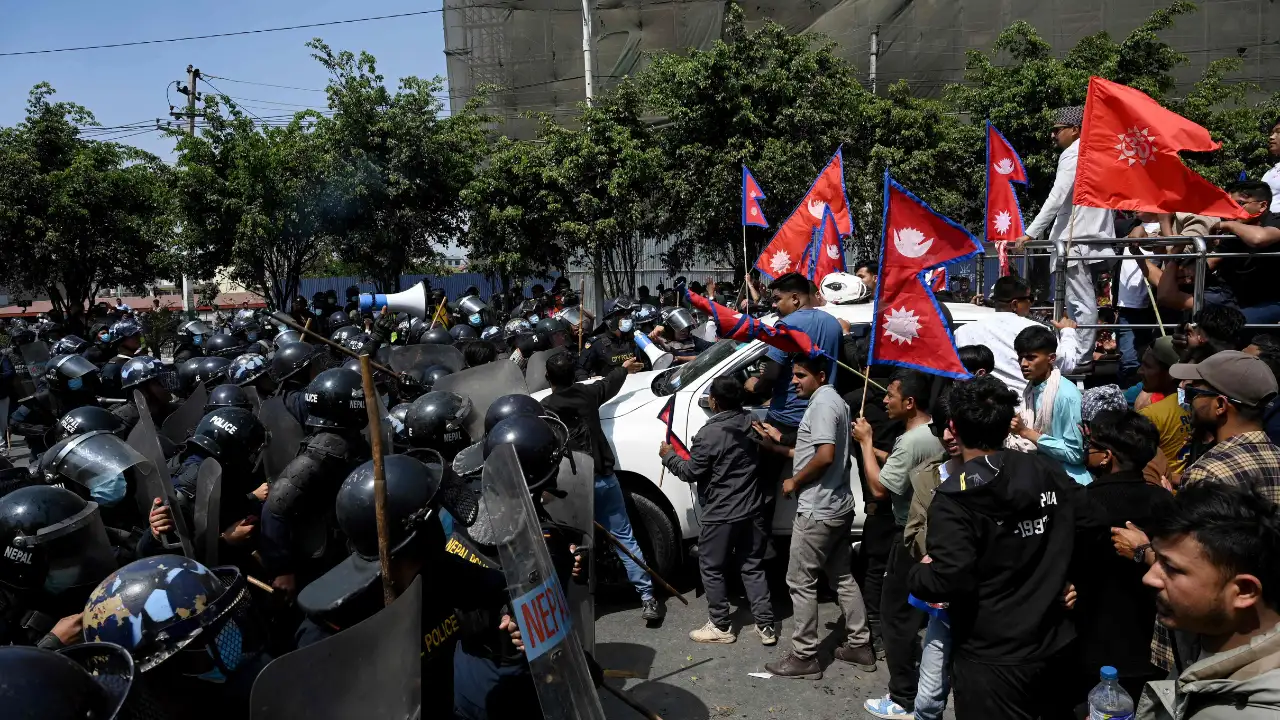

Kathmandu, Nepal — Violent protests have erupted in Nepal’s capital, Kathmandu, following the government’s decision to ban major social media platforms. Clashes between protestors and police on Sunday led to at least one death and prompted authorities to impose a curfew and deploy the army in several key areas.
The unrest began after the government announced a ban on most social media platforms, including Facebook, YouTube, and X, citing the platforms’ failure to register with authorities as required by law. According to The Kathmandu Post and other reports, tens of thousands of protestors, many of them young people, took to the streets to protest against the ban and what they see as widespread government corruption.
Demonstrators marched through Kathmandu, carrying placards with slogans like “Shut down corruption and not social media” and “Youths against corruption.” The peaceful march quickly turned violent as protestors pushed through barbed wire barricades and attempted to enter the Parliament building. In response, riot police fired tear gas and water cannons at the crowd, forcing them to retreat.
Muktiram Rijal, a spokesperson for the Kathmandu district office, told Reuters that a curfew has been imposed in key areas of the city, including the Parliament building, the government secretariat, and the presidential house. The curfew, which is in effect until 10 p.m. local time, was put in place to “bring the situation under control.” Rijal added that security forces have been given permission to use water cannons, batons, and rubber bullets to disperse the crowd.
The government’s ban on social media platforms comes after authorities had repeatedly warned companies to register and comply with local laws. While some platforms like TikTok and Viber have registered and are continuing operations, many others, including the most widely used ones, failed to do so. The government has justified its decision by claiming that these platforms have been misused for spreading hate speech, misinformation, and for committing fraud.
The ban is a part of the government’s larger plan to regulate social media, with a bill currently under debate in Parliament that aims to make social media platforms “properly managed, responsible and accountable.” However, critics and protestors argue that the move is an attack on freedom of expression and a way for the government to silence dissent.