

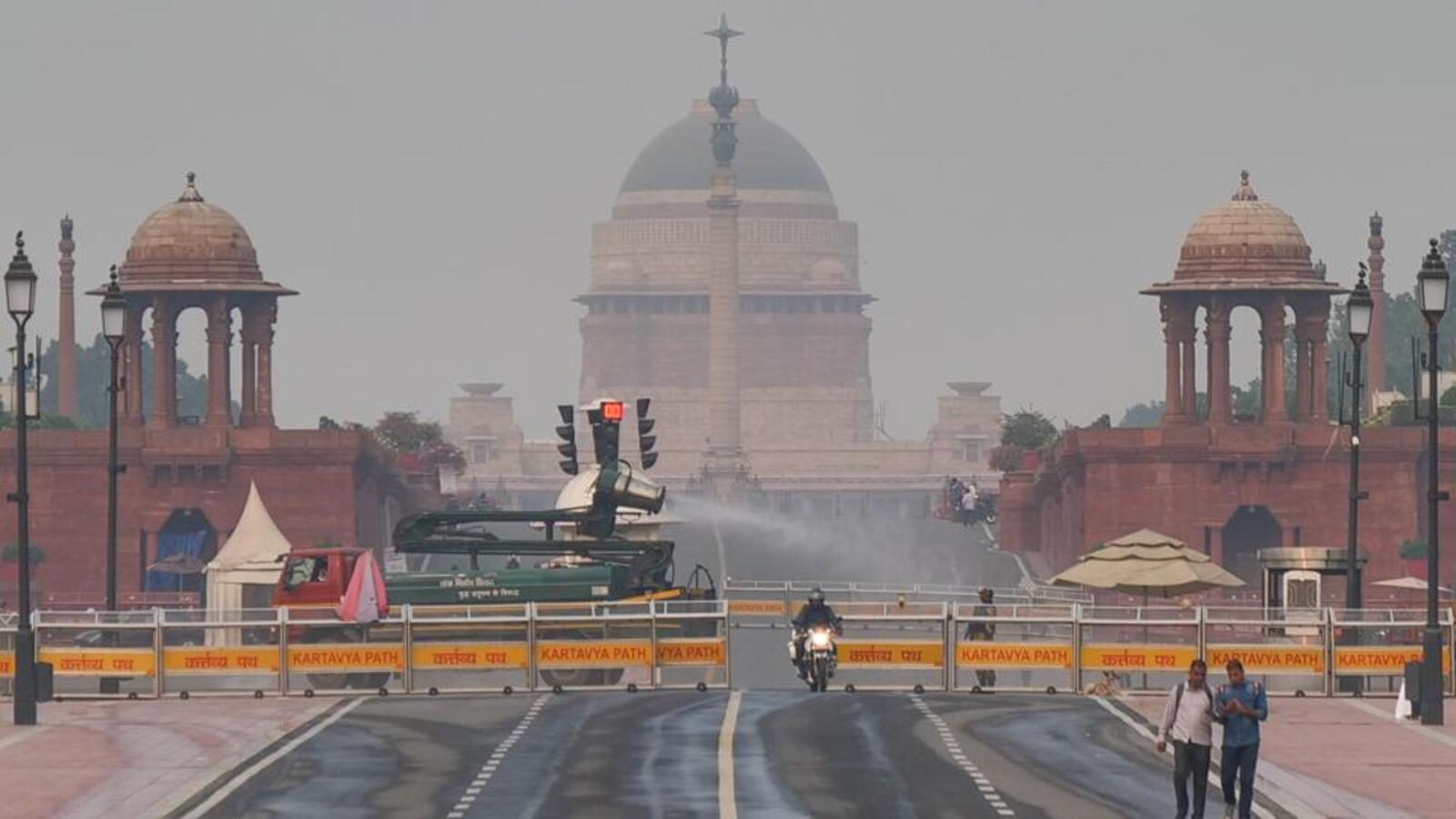

The Commission for Air Quality Management (CAQM) in the National Capital Region (NCR) has issued 95 statutory directions as part of its comprehensive strategy to combat air pollution, Union Environment Minister Bhupender Yadav informed the Lok Sabha on Monday.
The Minister’s remarks came in response to queries during the Parliament Winter Session regarding the alarming air pollution levels in Delhi, particularly during the winter months.
📝 CAQM’s Strategy and Monitoring
The CAQM was established for better coordination, research, and resolution of air pollution issues in Delhi-NCR. It possesses the power to take measures and issue legally binding directions to various agencies.
- Stringent Norms: The CAQM has implemented more stringent emission norms for polluting activities in the NCR compared to national standards.
- Monitoring Mechanism: A formal monitoring mechanism has been put in place to oversee the implementation of the 95 statutory directions.
- Collaborative Approach: Yadav stated that the CAQM addresses air pollution in a “collective, collaborative, and participative mode.”
🚨 Graded Response Action Plan (GRAP)
A central pillar of the CAQM’s effort is the Graded Response Action Plan (GRAP), which provides a dynamic set of emergency response actions based on the severity of pollution:
| GRAP Stage | Air Quality Index (AQI) Range | Action Mechanism |
| Stage I | Poor (201–300) | Focus on basic, perpetual enforcement (e.g., stopping illegal burning, strict dust control). |
| Stage II | Very Poor (301–400) | Adds measures like banning Diesel Generators and increasing parking fees. |
| Stage III | Severe (401–450) | Involves restrictions on non-essential construction and banning certain vehicle types (e.g., BS-III petrol/BS-IV diesel). |
| Stage IV | Severe + (>450) | The toughest curbs, including decisions on allowing only essential vehicles and industries. |
The GRAP is invoked based on a dynamic air quality model and weather forecasts, with actions taken across Stages I, 2, 3, and 4. The Commission has recently conducted a comprehensive review to make these actions more stringent.
✅ Progress and Broader Initiatives
The Minister highlighted an improvement in air quality metrics:
- Good Air Days: The number of “good air days” (AQI < 200) in Delhi has increased to 200 days in 2025 from 110 days in 2016.
Separately, Minister of State Kirti Vardhan Singh provided details on the National Clean Air Programme (NCAP):
- NCAP Goal: Launched in January 2019, the NCAP aims to control pollution and improve air quality in 130 non-attainment and million-plus cities across 24 states and Union territories.
- Funding for UP: ₹2,941.15 crore has been released to Uttar Pradesh, which has 17 cities included under the programme, for implementing city action plans.
📉 Recent Winter Pollution Spike
Despite the long-term improvement, Delhi experienced a recent period of severe air quality:
- The city recorded a 24-day streak of “very poor” air (AQI above 300) between November 6 and 29.
- Three days during this period (November 11 to 13) were classified as “severe” (AQI above 400).