

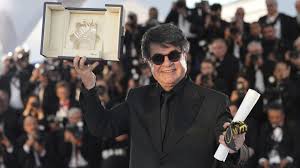

Washington DC [US], May 25: Cannes Film Festival Jury President and acclaimed actress Juliette Binoche has spoken candidly about the jury’s unanimous decision to award the prestigious Palme d’Or to Iranian filmmaker Jafar Panahi’s film It Was Just an Accident, calling it a powerful statement of “resistance” and “survival” in today’s world.
Speaking to Deadline, Binoche described the film as a deeply human and political piece that stood out during the competition. “The film springs from a feeling of resistance, survival, which is absolutely necessary today. It’s very human and political at the same time, because he comes from a complicated country. When we watched the film, it stood out,” she said.
Panahi, a celebrated director known for his courage and artistic vision under political repression, has faced imprisonment in Iran for his outspoken work. He was released from prison in 2023. His previous Cannes accolades include the Camera d’Or in 1995 for The White Balloon, a Jury Prize in Un Certain Regard in 2003 for Crimson Gold, and a Competition entry in 2018 with 3 Faces.
Binoche emphasized the significance of honoring Panahi, saying, “It was exciting to celebrate [him]. Art will always win. What is human will always win. As actors, directors and people who work in art, we can speak out in public on important issues and transform the world.”
She further reflected on the film’s message of hope and non-violence, stating, “We are in a world ruled by revenge, violence… This film speaks of change, not revenge. The idea is that you can listen, not necessarily resort to violence. It holds out huge hope.”
The jury for this year’s Cannes was predominantly female and included prominent voices from global cinema: Italian actress Alba Rohrwacher, Indian filmmaker Payal Kapadia, French-Moroccan writer Leïla Slimani, American stars Halle Berry and Jeremy Strong, South Korean director Hong Sangsoo, Mexican filmmaker Carlos Reygadas, and Congolese documentarian Dieudo Hamadi.
The Palme d’Or win for It Was Just an Accident not only honors Panahi’s indomitable spirit but also amplifies the role of cinema as a platform for human rights, political resistance, and compassion.