

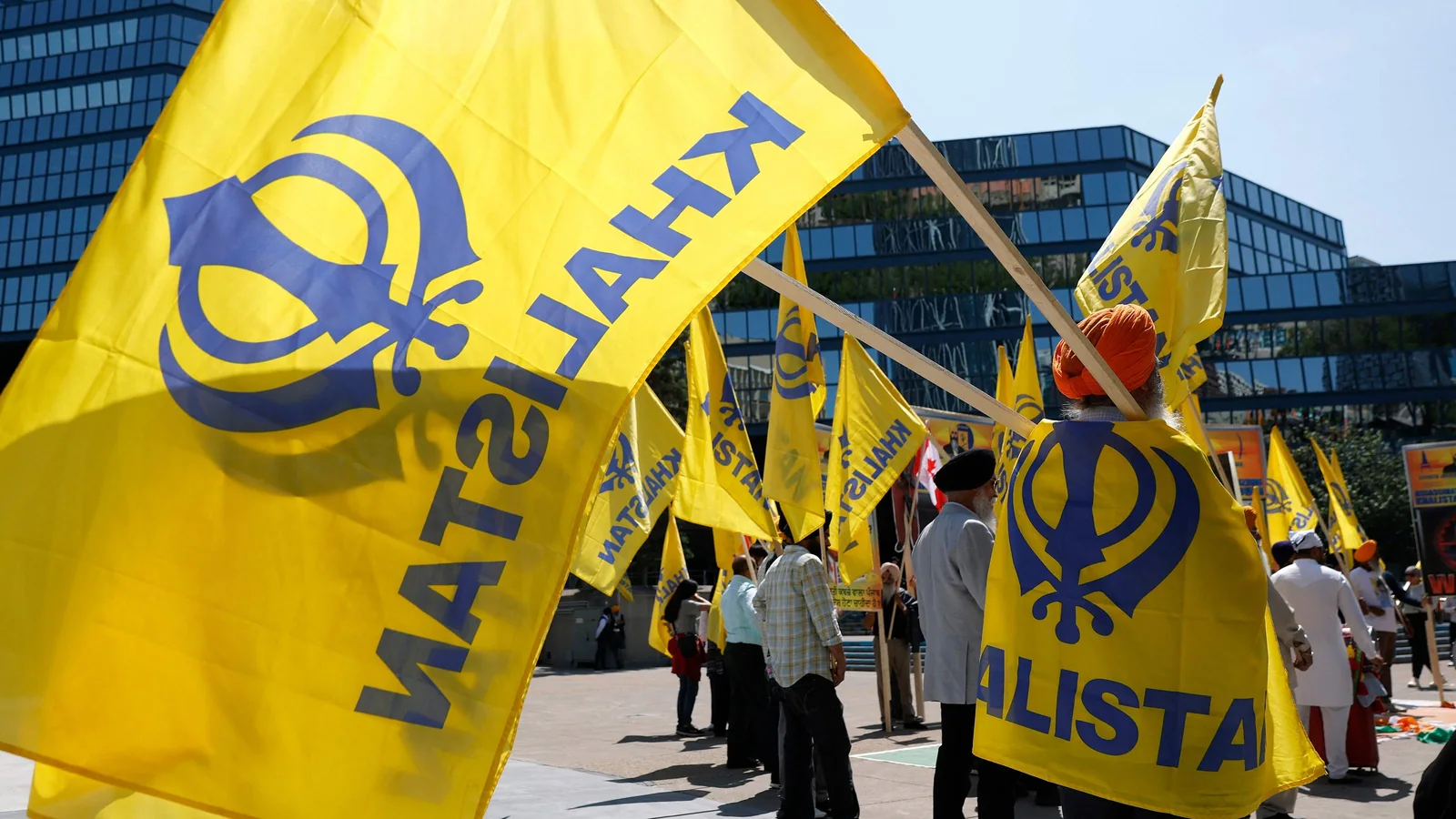

TORONTO – A Canadian federal court has turned down Kanwaljit Kaur’s appeal. She is an Indian citizen who tried to stop her deportation by saying that her support for the Khalistan movement and ties to the banned group Sikhs for Justice (SFJ) would put her in danger when she returned to India. Federal judge Guy Regimbald ruled on August 27 that her assertions were not supported by evidence.
Kaur came to Canada in February 2018 and first asked for refugee protection in September 2019, saying she was afraid of her abusive spouse. She later changed her mind. She said in her Pre-Removal Risk Assessment (PRRA) appeal that her work with the SFJ and support for the Khalistan cause would place her at risk of “irreparable harm” from Indian authorities.
Justice Regimbald, on the other hand, disagreed and said that her statements were “speculative.” The judge said that having a voting card for the “Khalistan Referendum” was “not enough to prove” that she was “well-known enough to be of interest to the Indian authorities.” The court then denied her request for a stay of removal, which meant she might be deported.
This verdict comes just two days after another federal court in Montreal made a similar decision. It affirmed the refusal of asylum to an Indian couple, Amandeep Singh and Kanwaldeep Kaur. The court called the couple’s claim that they would be persecuted in Canada for their pro-Khalistan actions “disingenuous” in that case. The court said that their interest in the movement only started after they got to Canada, which made their allegation less believable.
These recent decisions show that Canadian judges are more likely to question the validity of asylum applications based on pro-Khalistan actions, especially when the claimant’s political activity seems to have started or grown dramatically after they got to Canada. The courts are looking for more than just engagement in symbolic or post-arrival political activity as proof of a real and ongoing fear of persecution.