

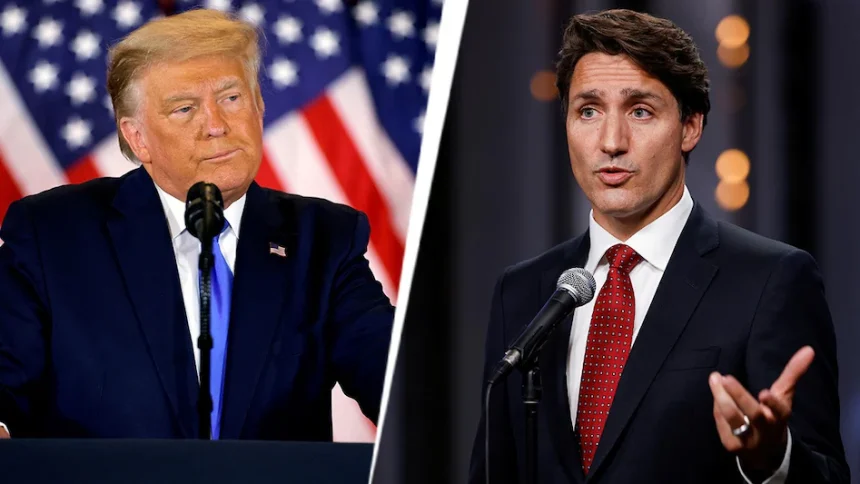

Ottawa [Canada]: Canadian Prime Minister Justin Trudeau announced on Monday (local time) that retaliatory tariffs on U.S. goods will go into effect at midnight on Tuesday if the U.S. tariffs on Canadian imports proceed as planned.
In a statement on March 3, Trudeau emphasized:
“Our tariffs will remain in place until the U.S. trade action is withdrawn, and should U.S. tariffs not cease, we are in active and ongoing discussions with provinces and territories to pursue several non-tariff measures. While we urge the U.S. administration to reconsider their tariffs, Canada remains firm in standing up for our economy, our jobs, our workers, and for a fair deal.”
U.S. Tariffs on Canadian Exports and Energy
The U.S. administration, led by President Donald Trump, has decided to impose 25% tariffs on Canadian exports and 10% tariffs on Canadian energy starting March 4. Trump stated that the tariffs are “all set” and will go into effect as scheduled, leaving no room for Canada or Mexico to avert them.
Trudeau criticized the move, stating:
“Today, after a 30-day pause, the United States administration has decided to proceed with imposing 25 percent tariffs on Canadian exports and 10 percent tariffs on Canadian energy. Let me be unequivocally clear – there is no justification for these actions.”
Canada’s Retaliatory Measures
Trudeau pledged that Canada would not let the U.S. decision go unanswered. He announced a two-phase response:
- Phase 1: Imposition of 25% tariffs against USD 155 billion worth of American goods, starting with USD 30 billion worth of goods immediately at 12:01 a.m. EST.
- Phase 2: Tariffs on the remaining USD 125 billion worth of American products will be applied in 21 days’ time.
Trudeau argued that the U.S. tariffs would cause Americans to pay more for groceries, gas, and cars and potentially lead to job losses. He stated that the tariffs would disrupt a highly successful trading relationship and violate the trade agreement negotiated by Trump in his last term.
Fentanyl Concerns and Canada’s Response
Addressing U.S. concerns about the flow of fentanyl from Canada, Trudeau highlighted Canada’s efforts to tackle the issue:
- $1.3 billion border plan with new helicopters, increased border security, and additional resources.
- Appointment of a Fentanyl Czar and listing of transnational criminal cartels as terrorist organizations.
- Establishment of a Canada-U.S. Joint Strike Force on organized crime.
Trudeau stated:
“While less than 1 percent of the fentanyl intercepted at the U.S. border comes from Canada, we have worked relentlessly to address this scourge that affects Canadians and Americans alike.”
He added that fentanyl seizures from Canada had dropped 97% between December 2024 and January 2025, reducing to a near-zero low of 0.03 pounds seized by U.S. Customs and Border Protection.
Trump’s Stance on Tariffs and Drug Control
President Trump defended the tariffs, linking them to the ongoing fight against the influx of drugs, especially fentanyl, allegedly coming from Canada, Mexico, and China. In a post on Truth Social, Trump stated:
“Drugs are still pouring into our Country from Mexico and Canada at very high and unacceptable levels. A large percentage of these Drugs, much of them in the form of Fentanyl, are made in, and supplied by, China. More than 100,000 people died last year due to the distribution of these dangerous and highly addictive POISONS.”
Trump also confirmed that additional 10% tariffs would be imposed on imports from China starting March 4, with reciprocal tariffs to take effect on April 2.
Key Points of Conflict:
- Trade Dispute Escalation:
- Canada: Retaliatory tariffs targeting USD 155 billion worth of U.S. goods.
- U.S.: Tariffs of 25% on Canadian exports and 10% on Canadian energy.
- Fentanyl and Border Security:
- Canada: Implemented a $1.3 billion border plan and claims a 97% drop in fentanyl seizures.
- U.S.: Continues to blame Canada for the fentanyl crisis.
- Geopolitical Tensions:
- U.S.-China: Additional 10% tariffs on Chinese imports starting March 4.
- U.S.-Canada-Mexico: Heightened trade tensions amid ongoing tariff disputes.
Outlook:
The trade conflict between Canada and the U.S. is expected to intensify if no diplomatic solution is reached soon. Both sides remain firm on their stance, with economic and political implications likely to follow.