

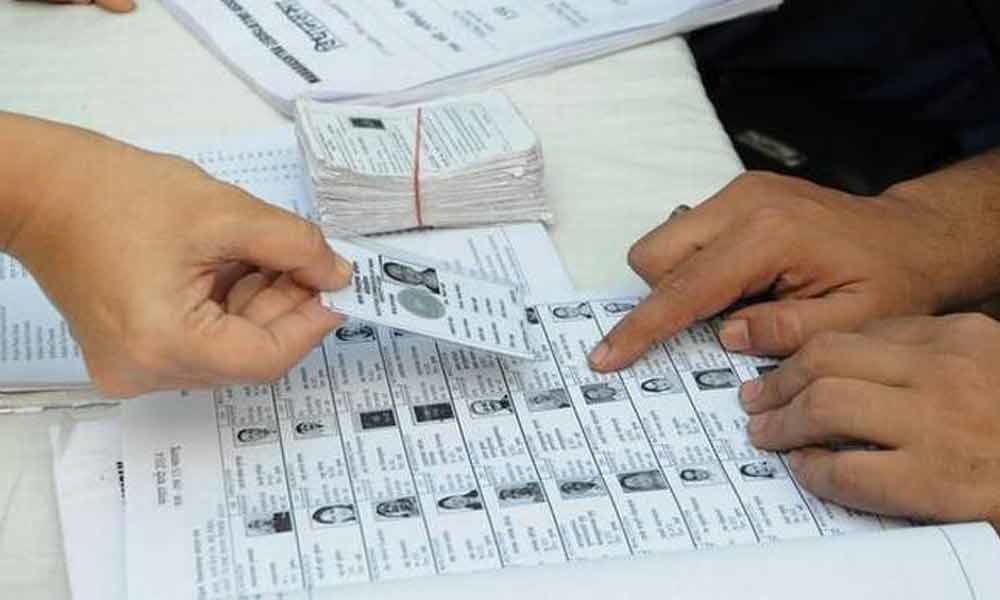

After Rahul Gandhi’s recent claims that votes from Congress strongholds were taken off the electoral records in Karnataka, people are once again talking about how names are taken off the rolls in India. The main point in the argument is if the Congress leader’s allegations that voter names may be taken off the rolls in a matter of seconds are true.
The Representation of the People Act, 1950, and the Registration of Electors Rules, 1960, set the rules for deleting voters. There is an Electoral Registration Officer (ERO) and Booth Level Officers (BLOs) in each constituency who are in charge of keeping the electoral rolls up to date. You can only take names off for legally valid reasons, such death, moving, duplication, or being legally disqualified.
The 7th Form and the Process of Verification
To start the deletion procedure, the voter, a family member, or another voter from the same district can fill out Form 7. This form needs a lot of information regarding the voter who has to be removed, the cause for the removal, and the applicant’s details. You can send it in person or online using the National Voters’ Service Portal and state websites.
Gandhi’s recent allegations included a resident of Aland who supposedly filed 12 deletion papers in 14 minutes and another who filed two applications in just 36 seconds at 4:07 a.m. HT did a test, though, and discovered that even with all the information ready, it still takes about five minutes to fill out a Form 7 application online.
The ERO must check Form 7 for legitimacy as soon as they get it. The legislation says that no name can be removed without giving the voter a chance to be heard. BLOs may also go to the voter’s address to check in person to make sure the deletion was for a good reason. The Election Commission of India (ECI) uses software like ERONet and the Electoral Roll Management System (ERMS) to run the process. Before any deletion is complete, these systems need to be checked by people and have a hearing. There is no evidence in the public records of these systems to back up claims of “bulk deletion” without these protections.
Past Issues and ECI’s Answer
Even with these legal and technological protections, claims of wrongfully deleting voters have been a common problem in Indian elections. In 2018, people in Telangana complained that lakhs of names were missing from the records. In 2019, opposition parties said that voters from certain ethnicities were unfairly deleted in Delhi. The ECI said that the mistakes were due to large-scale data verification in such cases.
Rahul Gandhi said on Thursday that there were attempts to erase 6,018 names in Karnataka’s Aland constituency and add 6,850 “fake voters” in Maharashtra’s Rajura constituency. He further said that the Karnataka Crime Investigation Department (CID) had written to the ECI 18 times asking for technical information, but the ECI had not given it.
The ECI promptly replied on X, calling the claims “incorrect and baseless.” The poll body said that the public can’t erase votes online and that “no deletion can take place without giving the affected person a chance to be heard.” The ECI further said that it was the ECI that filed a FIR about the “unsuccessful attempts” to erase voters in Aland in 2023. In the next election, the Congress party won the seat by more than 10,000 votes.