

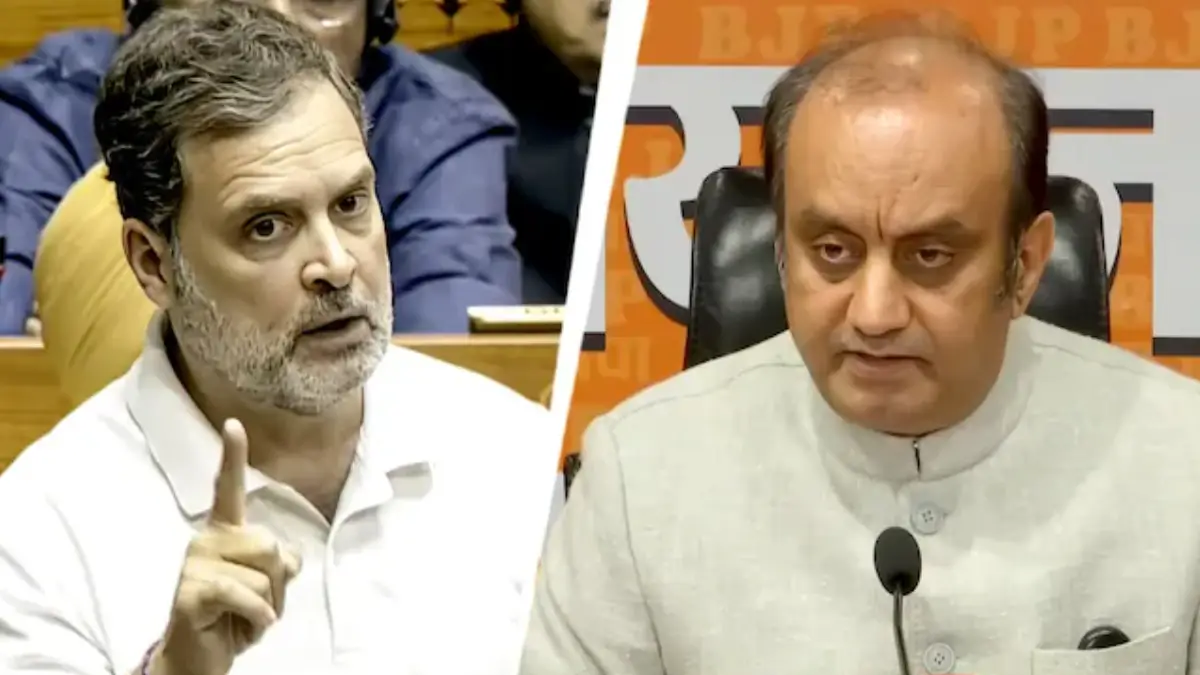

In a day of high drama in the Lok Sabha on Wednesday, February 11, 2026, the BJP launched a blistering counter-offensive against Leader of Opposition Rahul Gandhi. The confrontation was sparked by Gandhi’s fierce criticism of the newly inked India–US Bilateral Trade Agreement (BTA), which he characterized as a “wholesale surrender” of national sovereignty.
The BJP responded by labeling Gandhi the “wisest fool in Congressdom” and announcing plans to move a privilege notice against him for allegedly misleading the House.
The Spark: Gandhi’s “Bharat Mata” Remark
Participating in the Budget discussion, Rahul Gandhi alleged that the trade deal compromised India’s energy and agricultural security. His most inflammatory remarks included:
- “Selling Bharat Mata”: Gandhi told the treasury benches, “Are you not ashamed of selling India? You have sold our mother, Bharat Mata.”
- The “Chokehold” Analogy: Using a martial arts metaphor, he claimed the U.S. has a “grip on the neck” of PM Modi, asserting that no leader would agree to such terms unless they were being “choked” by external pressure.
- Economic Surrender: He claimed the deal allowed the U.S. to “weaponize” India’s energy security by dictating whom India can buy oil from (referring to the pivot away from Russia).
The BJP’s Rebuttal
BJP spokesperson Sudhanshu Trivedi and Parliamentary Affairs Minister Kiren Rijiju led the charge against the LoP:
- “Wisest Fool”: Trivedi mocked Gandhi’s understanding of global trade, calling his speech a “hallucination” and describing him as the “wisest fool” for failing to see the strategic benefits of the deal.
- Privilege Notice: Rijiju announced the government would seek a privilege notice, stating that Gandhi made “defamatory and baseless” statements without authentication.
- “Runaway” Leader: The BJP criticized Gandhi for his “hit-and-run” style of politics, noting that he often leaves the House immediately after his speech to avoid hearing the government’s factual rebuttal.
Fact Check: What is the 2026 India–US Trade Deal?
To provide context to the row, the actual deal (signed earlier in February 2026) includes the following key pillars:
| Sector | Key Provision |
| Tariffs | U.S. reduced effective tariffs on Indian goods from 50% (punitive) to 18%. |
| Market Access | India secured preferential access to a $30 trillion U.S. market for textiles, leather, and machinery. |
| Energy | India agreed to reduce Russian oil imports in exchange for $500 billion in U.S. energy and tech procurements. |
| Safeguards | The government maintains that sensitive sectors like Dairy and Poultry remain fully protected. |