

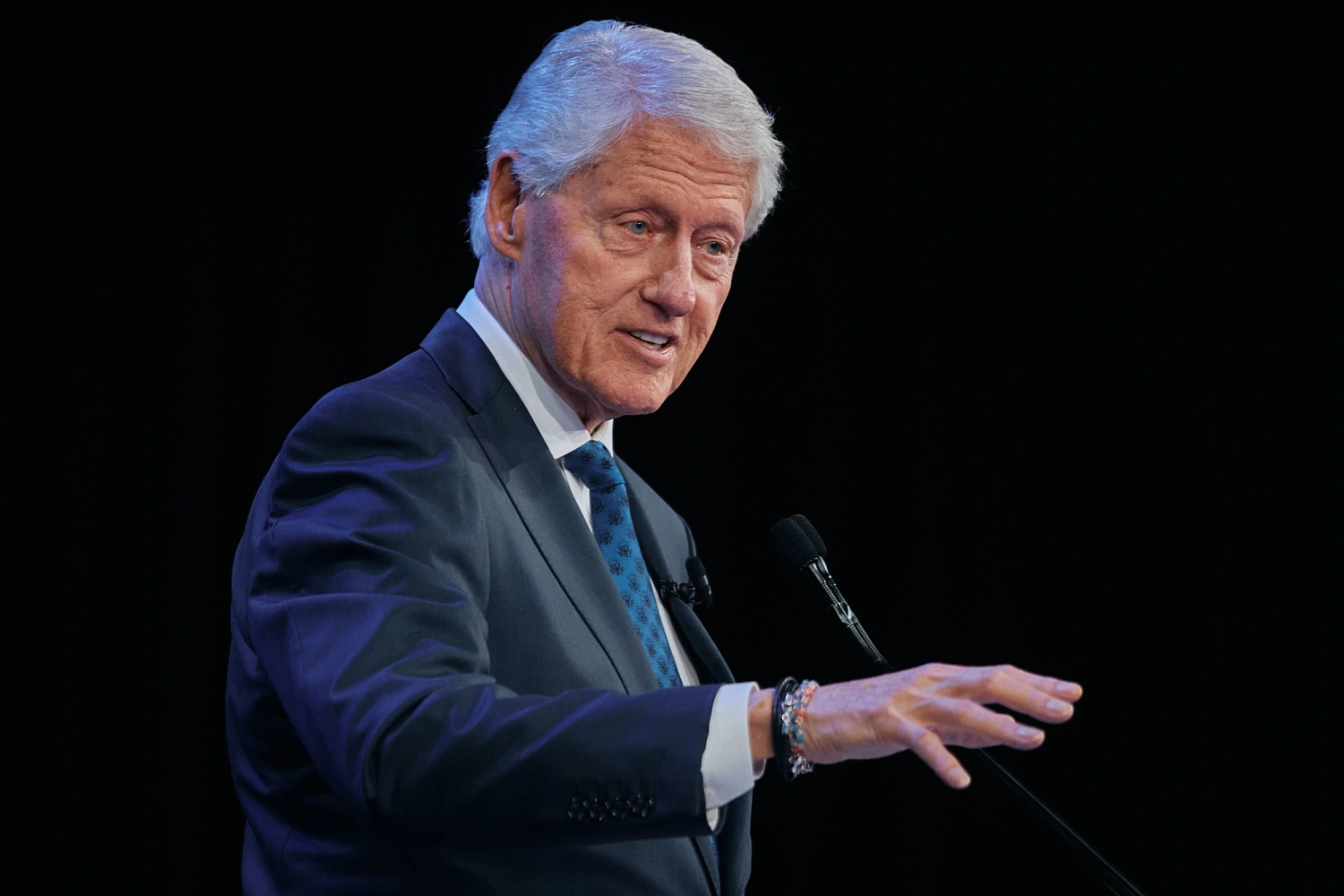

Former U.S. President Bill Clinton faced hours of questioning from members of Congress on Friday over his past relationship with convicted sex offender Jeffrey Epstein, firmly stating that he neither witnessed nor engaged in any wrongdoing during their association more than two decades ago.
“I saw nothing, and I did nothing wrong,” Clinton said in an opening statement shared publicly before the closed-door deposition began at his residence in Chappaqua, New York.
The testimony marks a rare and historic moment — the first time a former U.S. president has been compelled to provide sworn testimony before Congress. The deposition came just one day after his wife, former Secretary of State Hillary Clinton, also appeared before lawmakers for questioning related to Epstein.
Deposition Focuses on Clinton’s Past Interactions With Epstein
Although Clinton has not been accused of criminal misconduct, lawmakers are examining his documented interactions with Epstein during the late 1990s and early 2000s.
Epstein, who pleaded guilty in 2008 to state charges in Florida involving solicitation of prostitution from a minor, later faced federal sex trafficking charges before dying by suicide in a New York jail cell in 2019.
Congressional investigators are reportedly reviewing:
- Multiple international trips Clinton took aboard Epstein’s private aircraft.
- Epstein’s visits to the White House during Clinton’s presidency.
- Photographs and records recently released by the Department of Justice that show Clinton in Epstein’s company, including images featuring Epstein’s associate Ghislaine Maxwell.
Maxwell was convicted in December 2021 on sex trafficking charges, though she maintains her innocence.
Republican Lawmakers Push for Accountability
House Oversight Committee Chairman James Comer said ahead of the deposition that the American public deserves clarity about powerful figures linked to Epstein.
“Men — and women for that matter — of great power and great wealth from all across the world have been able to get away with a lot of heinous crimes,” Comer stated, adding that no one is currently accusing Clinton of criminal wrongdoing but that questions remain.
Comer has claimed that Epstein visited the White House 17 times during Clinton’s presidency and that Clinton flew on Epstein’s plane 27 times — figures that lawmakers are expected to press him on during questioning.
Republicans have long sought testimony from Clinton, especially as conspiracy theories and public skepticism grew following Epstein’s 2019 death.
Hillary Clinton Says She Had No Knowledge of Abuse
During her deposition a day earlier, Hillary Clinton reportedly told lawmakers she had no knowledge of Epstein’s sexual crimes and did not recall meeting him. She indicated that her husband’s association with Epstein ended before the financier’s criminal conduct became publicly known.
“The chronology of the connection that he had with Epstein ended several years before anything about Epstein’s criminal activities came to light,” she said following her testimony.
Democrats Call for Broader Investigation
While Democrats supported the effort to question Clinton, they have argued that the same scrutiny should apply to others who had documented ties to Epstein.
Democratic Representative Robert Garcia publicly called on former President Donald Trump to testify before the committee, stating that accountability should not be selective.
“I think that President Trump needs to man up, get in front of this committee and answer the questions,” Garcia said.
Additionally, some Democrats have called for testimony from Commerce Secretary Howard Lutnick, citing reports that he maintained contact with Epstein after initially distancing himself. Lutnick has previously said he severed ties with Epstein after a 2005 visit to his home disturbed him and his wife, though public records show subsequent interactions in 2011 and 2012.
Representative Ro Khanna indicated that Democrats may have sufficient votes to subpoena Lutnick if necessary.
A Broader Debate on Power and Accountability
Clinton’s deposition reflects ongoing national and international debate over how influential individuals connected to Epstein are scrutinized and held accountable.
Although Clinton continues to deny knowledge of any abuse and insists his relationship with Epstein was limited and ended years before criminal allegations surfaced, lawmakers on both sides of the aisle appear determined to continue examining the broader network of associations surrounding Epstein.
The House Oversight Committee is expected to release transcripts and possibly video recordings of the depositions in the coming weeks, which could provide further insight into what was discussed behind closed doors.
As investigations continue, the case remains a politically sensitive issue — one that intersects questions of justice, power, and public trust in American institutions.