

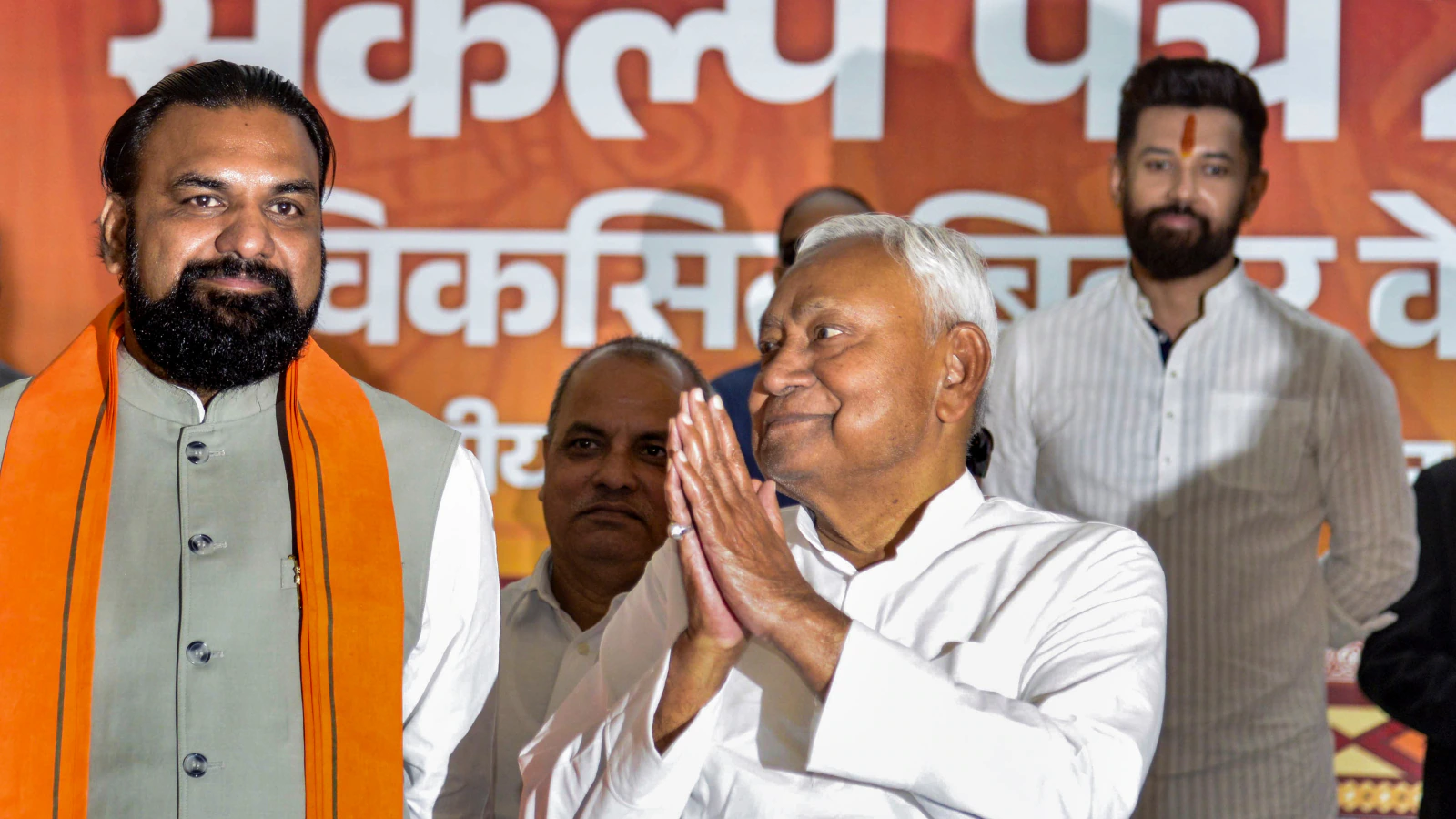

New Delhi: Bihar has wrapped up its assembly elections, with the National Democratic Alliance (NDA) securing a sweeping victory by winning 202 seats. The BJP has emerged as the strongest performer in this election cycle. But while the focus remains on the NDA’s dominant win, another noteworthy trend has quietly taken shape—the rise and impact of NOTA (None of the Above) votes.
What Is NOTA and Why It Matters?
The NOTA option was introduced into Indian elections in 2013 after a landmark Supreme Court judgment in the PUCL vs. Union of India case. The Court directed the Election Commission of India (ECI) to add a NOTA button on Electronic Voting Machines (EVMs) and ballot papers, giving citizens the right to reject all contesting candidates without compromising the secrecy of their vote.
This option serves as a democratic tool for expressing dissatisfaction with the available choices, capturing voter sentiment in a measurable way.
NOTA in Bihar: Small Share, Big Impact
According to ECI data, the 2025 Bihar assembly elections saw 9.1 lakh voters choosing NOTA, accounting for 1.81% of the total vote share. This increase comes despite Bihar recording its highest-ever voter turnout of 66.91%.
While the rise is small compared to the 1.7% NOTA share in 2020, it remains lower than the 2.5% recorded in 2015—when NOTA made its debut in Bihar and saw its highest use.
NOTA’s influence in Bihar extends beyond state elections.
- 2014 Lok Sabha elections: 5.8 lakh NOTA votes (1.6%)
- 2019 Lok Sabha elections: 2% NOTA share
- 2024 Lok Sabha elections: 2.1% NOTA share, with nearly 9 lakh voters rejecting all candidates
These numbers show a consistent trend of voters using NOTA as a form of protest or expression of dissatisfaction.
Margins vs NOTA: A Striking Trend
A significant observation from the 2025 results is that NOTA votes exceeded victory margins in 27 constituencies, highlighting growing discontent among voters.
The most dramatic example came from Sandesh, where:
- Winning margin: 27 votes
- NOTA votes: 4,160
This represents a staggering 15,307% difference, with JD(U) winning the seat while a massive number of voters opted for rejection instead of choosing a candidate.
Other Close Contests
Several other constituencies witnessed a similar pattern:
- Ramgarh:
- Victory margin: 30 votes
- NOTA votes: Over 1,000
- Winner: BSP
- Agiaon:
- Victory margin: 95 votes
- NOTA votes: 3,600+
- Winner: BJP
- Nabinagar and Dhaka:
- Both constituencies saw significantly higher NOTA votes compared to the winning margins.
These results underline that NOTA is no longer just a symbolic expression but a disruptive factor capable of altering election narratives—even if not outcomes.
NOTA vs Political Parties
Interestingly, NOTA’s vote share in Bihar was almost equal to that of Asaduddin Owaisi’s AIMIM, which secured 1.85%, while NOTA stood at 1.81%.
Several established parties, including the Bahujan Samaj Party (BSP) and Sharad Pawar’s NCP, recorded even lower vote shares than NOTA.
Prashant Kishor’s Jan Suraaj Party (JSP), which contested 238 seats, performed notably poorly in many constituencies:
- In 68 seats (28.6% of the total contested), JSP finished behind NOTA.
- Meaning, in more than three out of every ten seats, voters preferred rejecting all candidates rather than voting for JSP.
A Silent but Significant Player
This election makes one thing clear: while NOTA cannot directly influence seat allocation or cause re-elections, it has evolved from a symbolic button to a powerful indicator of voter sentiment. In dozens of constituencies across Bihar, NOTA polled higher than the winning margin—making it a silent but increasingly significant factor in the state’s electoral politics.