

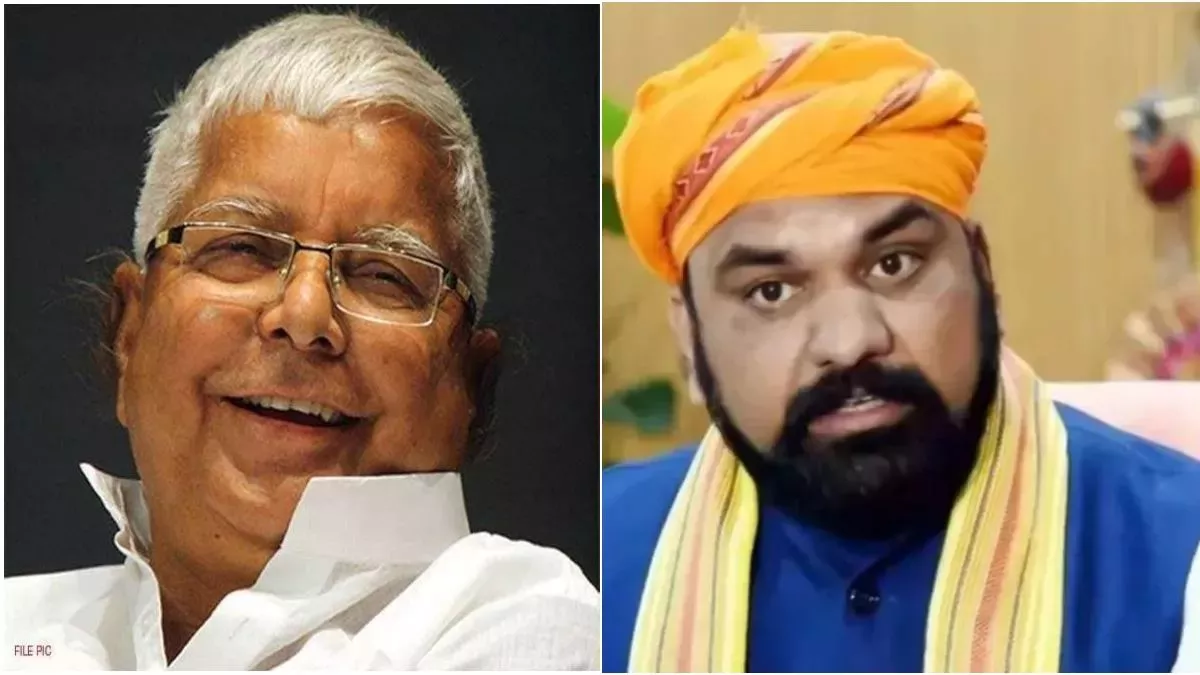

In a sharp political attack ahead of the crucial Bihar Assembly elections later this year, Deputy Chief Minister Samrat Choudhary on Saturday accused Lalu Prasad Yadav and his family of “looting Bihar” during their time in power.
Speaking to media, Choudhary blamed the Rashtriya Janata Dal (RJD) leadership for the state’s backwardness, citing a lack of universities, medical colleges, and basic infrastructure during their tenure.
“Lalu Prasad’s family was given a chance to work in Bihar for a long time. They looted Bihar. For 15 years, no university was built, no medical college was built. Roads, electricity, and water did not reach the villages. The public will not give the Lalu family a chance. Nitish Kumar has done development work,” Choudhary stated.
Meanwhile, in a political counterstrike, the RJD put up posters across Patna criticising Prime Minister Narendra Modi for holding a rally even as the country mourned the victims of the recent terrorist attack in Pahalgam, Jammu and Kashmir.
The posters, put up by RJD leader Sanju Kohli, read:
“On one side the country mourns, on the other side there is a rally. The people will remember everything.”
They sarcastically urged PM Modi to take strong action against the terrorists, while juxtaposing images of Modi with Chief Minister Nitish Kumar against scenes of candlelight vigils for the Pahalgam victims.
During his April 24 address in Madhubani, PM Modi assured that the perpetrators and conspirators of the Pahalgam attack, which killed 26 people, including a Nepali national, would face “punishment beyond their imagination.”
The attack, targeting tourists at Baisaran meadow, was one of the deadliest in the valley since the 2019 Pulwama attack.
Political Scenario in Bihar:
The political contest in Bihar is heating up between the ruling National Democratic Alliance (NDA) — comprising the BJP and Janata Dal (United) — and the Mahagathbandhan (Grand Alliance), which includes the Congress, RJD, and Left parties.
The Assembly elections are seen as a major battleground for both camps, with issues of development, security, and governance expected to dominate the campaign narrative.