


The Bihar unit of the Congress on Monday expelled seven leaders for six years, accusing them of anti-party activities and indiscipline during the recent Bihar assembly elections. The disciplinary action, issued by Bihar Pradesh Congress Committee (BPCC) disciplinary committee chairman Kapildeo Prasad Yadav, has now triggered a fresh wave of dissent within the party.
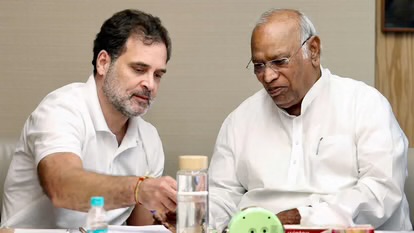
According to reports, the move has deepened internal rifts, with dissident members alleging that the expulsions are an attempt to scapegoat lower-level leaders while shielding senior leadership from responsibility for the party’s electoral setback. Congress President Mallikarjun Kharge and Leader of Opposition Rahul Gandhi had recently held discussions with senior leaders in New Delhi to review the situation.
The controversy follows the Congress’s poor performance in the 2025 Bihar Assembly elections, where the Mahagathbandhan alliance—comprising the RJD, Congress, CPI(ML)(L), CPI(M) and Left partners—won a total of 34 seats. Of these, the Congress secured just six seats, while the RJD won 25. In contrast, the NDA formed the government with a dominant tally: BJP won 89 seats, JD(U) 85, and other allies including LJP (RV), HAM(S) and RLM secured 28 seats collectively.
Names of Expelled Leaders
The seven Congress leaders expelled on Monday are:
- Aditya Paswan, former vice president, Congress Seva Dal
- Shakeelur Rahman, former vice president, BPCC
- Raj Kumar Sharma, former president, Kisan Congress
- Raj Kumar Rajan, former president, State Youth Congress
- Kundan Gupta, former president, Extremely Backward Department
- Kanchana Kumari, president, Banka District Congress Committee
- Ravi Golden, Nalanda District
Why the Expulsions Took Place
A press communiqué issued by the Congress stated that the leaders deviated from the party’s core ideology, violated organisational discipline and made misleading public statements. The BPCC noted that the individuals repeatedly criticised party decisions across print and social media, even levelling baseless accusations such as “ticket racketeering”, causing reputational damage.
Party officials emphasised that the ticket distribution process was carried out after thorough reviews by observers, the Pradesh Election Committee, and the AICC, and approved by central observer Avinash Pandey.