

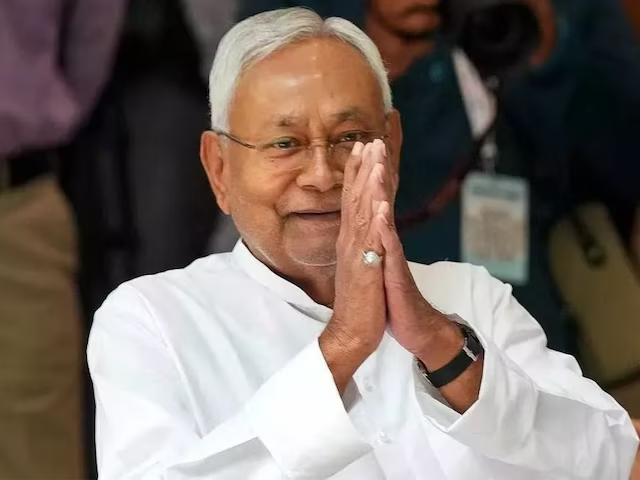

The Bihar Cabinet, chaired by Chief Minister Nitish Kumar, approved the ‘Saat Nishchay-3’ (Seven Resolves-3) programme on Tuesday. This ambitious five-year roadmap (2025–2030) aims to transition Bihar into the category of “developed states” through a focus on economic growth, industrialization, and social dignity.
Building on the previous “development with justice” frameworks of 2015 and 2020, the new edition outlines seven core pillars:
The Seven Resolves of ‘Saat Nishchay-3’
| # | Resolve | Key Initiatives |
| 1 | Double Employment, Double Income | Goal to double per capita income; target of 1 crore (10 million) jobs in 5 years; ₹10,000 to women for self-employment (expandable to ₹2 lakh). |
| 2 | Prosperous Industries, Empowered Bihar | Developing Bihar as the technology hub of Eastern India; establishing industrial areas in every district; attracting private investment. |
| 3 | Agriculture Progress, State Prosperity | Accelerating the 4th Agricultural Road Map; special focus on Makhana, dairy, and fisheries; “Sudha” dairy centers in every Panchayat. |
| 4 | Bright Future, Quality Education | Developing old educational institutions into Centres of Excellence; establishing dedicated “Education Cities.” |
| 5 | Accessible Healthcare, Secure Life | Converting block health centers into specialty hospitals; banning private practice for government doctors with special rural incentives. |
| 6 | Strong Foundation, Modern Expansion | Constructing five new expressways; developing a world-class Sports City in Patna; building film cities for Hindi and regional cinema. |
| 7 | Ease of Living, Dignity for All | Focus on modern technology and sensitive governance to improve the daily life of every citizen. |
🎯 Strategic Targets
- Poverty Focus: The government will prioritize the 94 lakh poor families identified in the 2023 caste-based survey for employment benefits.
- Healthcare Reform: In a major move to improve rural health, government doctors will receive separate incentives to serve in remote areas but will be strictly prohibited from conducting private practices.
- Infrastructure: The plan includes widening rural roads to two lanes and promoting solar energy through rooftop installations.