

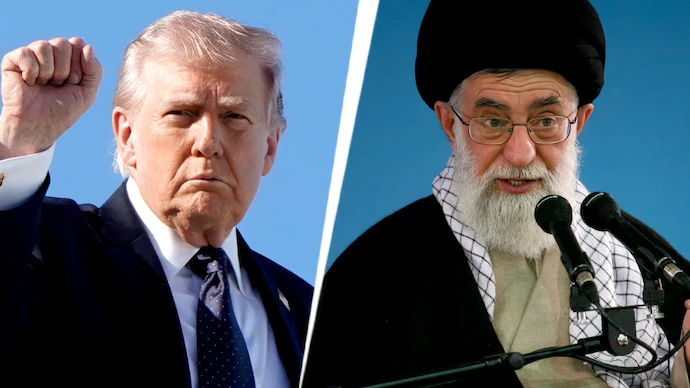

The US military operation Epic Fury that killed Iran’s Supreme Leader Ayatollah Ali Khamenei was the result of months of CIA intelligence tracking, close coordination with Israel, and rapid executive decision-making by President Donald Trump. On February 27, frustrated with stalled nuclear negotiations, Trump authorized the strike while flying aboard Air Force One to Texas.
At 12:25 p.m. EST, Trump expressed dissatisfaction with nuclear talks, initially withholding his decision. By 3:38 p.m. EST, he issued the final order, prompting US forces to initiate a massive multi-domain strike involving air, land, sea, and cyber operations. The operation mobilized thousands of service members, hundreds of advanced jets, refueling tankers, and two carrier strike groups—the USS Abraham Lincoln and USS Gerald R. Ford.
Intelligence from months of CIA surveillance identified Khamenei and senior Iranian officials as key targets. Israel shared intelligence, allowing for precise timing of simultaneous strikes on multiple locations in Tehran. Explosions rocked the city, killing Khamenei and approximately 40 top Iranian leaders, including the head of the Islamic Revolutionary Guard Corps and the defense minister.
Trump announced the leader’s death via Truth Social, praising US intelligence capabilities. Over the next days, US forces destroyed Iranian naval ships, missile infrastructure, and air defense systems. Officials emphasized the operation was not intended as an endless war or regime-change campaign, but as a decisive action to neutralize regional threats.
The strike, unprecedented in scale and precision, marks a turning point in US-Iran-Israel relations, reshaping regional geopolitics and triggering global attention. While intelligence indicated Iran was not planning an immediate attack on the US, broader threats from missiles and proxy forces justified the rapid military decision.