

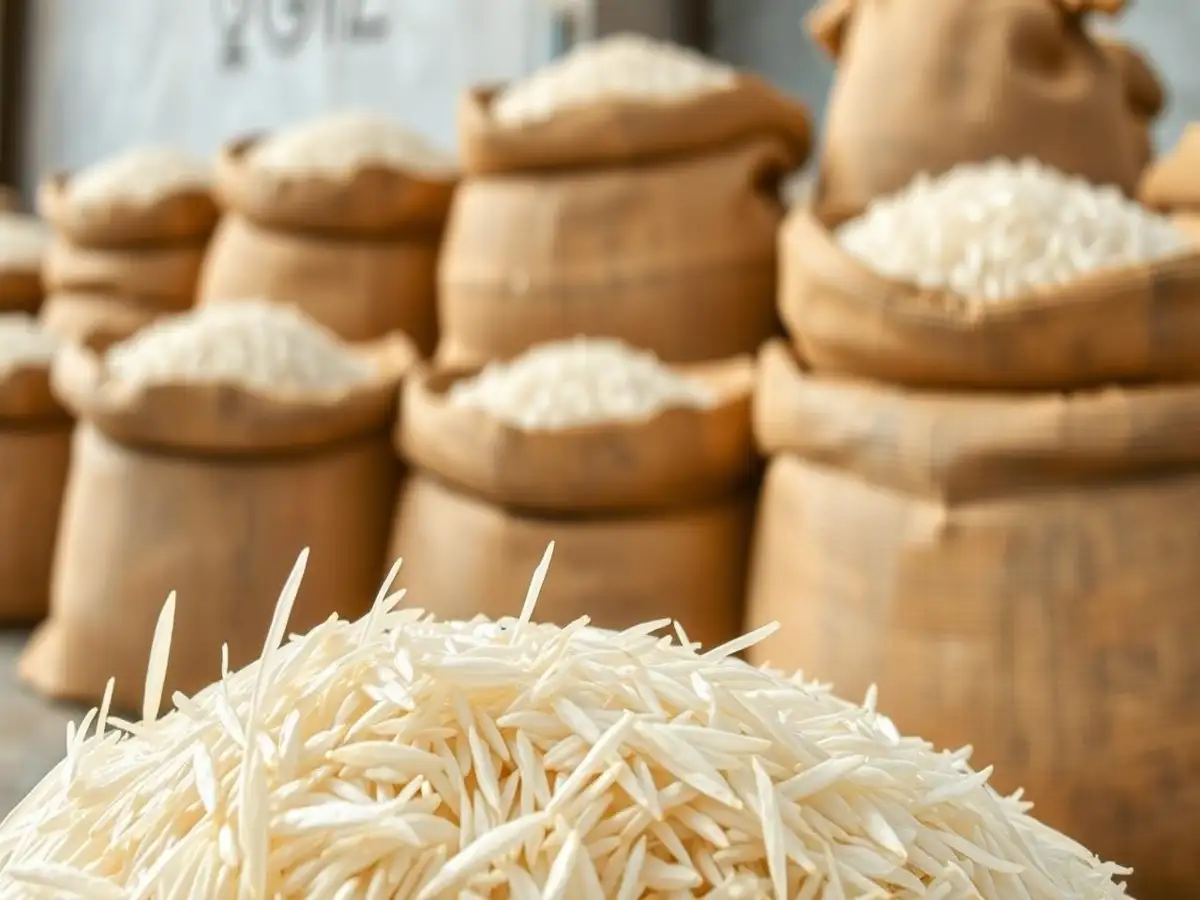

NEW DELHI / CHANDIGARH — The aromatic rice industry, which serves as the backbone of the agricultural economy in Northern India, has become an unintended casualty of the unfolding conflict. As Operation Epic Fury disrupts maritime routes, the primary concern for Indian traders is the effective closure of the Strait of Hormuz and the safety of cargo currently at sea.
1. The IREF Emergency Advisory
In response to the weekend strikes on Tehran and retaliatory volleys across the UAE and Qatar, the Indian Rice Exporters Federation (IREF) has urged its members to shift their business strategy immediately:
- Abandon CIF Terms: Exporters are advised to avoid “Cost, Insurance, and Freight” (CIF) contracts, where the seller bears the risk of the voyage.
- Shift to FOB: The federation suggests moving to “Free-on-Board” (FOB) terms, placing the burden of insurance and freight on the international buyer.
- Insurance Spike: IREF warned that premiums for Gulf-bound vessels are expected to “rise steeply,” potentially making new shipments financially unviable.
2. Impact on Punjab and Haryana
The states of Punjab (40% share) and Haryana (35% share) are the most vulnerable, as they produce the lion’s share of India’s premium basmati.
- Port Paralysis: Shipments headed to Iran and Afghanistan via Bandar Abbas—Iran’s largest port—are currently stuck.
- Price Volatility: While wholesale prices have already risen by 10-15% due to supply concerns, exporters fear a domestic price crash if international stocks cannot be moved, which would devastate local growers.
3. The “Iran Exposure” Problem
Iran is a critical pillar of the Indian basmati market. According to APEDA data:
- Total Value: Basmati exports to West Asia reached ₹27,197 crore between April and December 2025.
- The Iran Factor: Iran alone accounts for ₹6,000 crore of that trade.
- Payment Delays: With the Iranian banking system and infrastructure under fire, exporters are bracing for a complete freeze on outstanding payments.
Basmati Trade at a Glance: Risk Dashboard
| Metric | Details / Impact |
| Total Basmati Export Value | Approx. ₹50,000 crore (2024-25) |
| West Asia Export Share | 50% of total volume |
| Top 5 At-Risk Markets | Saudi Arabia, Iran, Iraq, UAE, Yemen |
| Key Blocked Port | Bandar Abbas (Iran) |
| Price Trend | Wholesale up 10-15%; expected to remain volatile |