

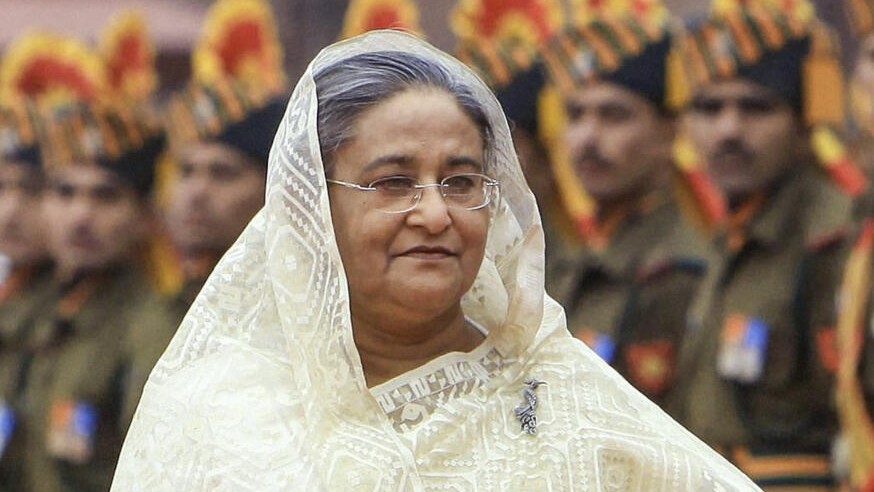

Bangladesh’s interim government has renewed its request to India for the extradition of deposed Prime Minister Sheikh Hasina, but has assured that the issue alone will not be a “barrier” to bilateral relations with New Delhi.
⚖️ Call for Repatriation
- Conviction: Sheikh Hasina, who fled to India after the student-led “July Uprising” toppled her Awami League regime in August 2024, was sentenced to death in absentia on November 17 by a special tribunal for “crimes against humanity” over a brutal crackdown on protestors. She had earlier been declared a fugitive.
- Bangladesh’s Expectation: Bangladesh’s interim government’s Foreign Affairs Adviser Mohammad Touhid Hossain stated on Sunday that since Hasina is now a declared convict, Dhaka “expects her repatriation from India at the earliest possible time” under the existing extradition treaty.
- Official Request: Dhaka’s foreign office sent an “official letter” to the Indian Ministry of External Affairs (MEA) seeking the extradition following the conviction.
🤝 Impact on Bilateral Relations
Hossain sought to decouple the extradition request from the overall diplomatic relationship between the two nations:
“I think our (bilateral) relations won’t (be) stuck on one issue alone.”
- Adjustment Period: The Adviser added that India “needs some time to adjust to the new realities” under the new Muhammad Yunus-led interim government, but he remains hopeful for better working relations “based on interest.”
- Heightened Expectation: Hossain noted that while a previous extradition request sent in December last year received “no reply,” Dhaka now expects a response as the “situation is different now” with the judicial process completed and the former premier convicted.
🇮🇳 India’s Stance
The Ministry of External Affairs (MEA) in New Delhi has maintained a cautious and neutral stance:
- MEA Confirmation: The MEA confirmed receiving the latest extradition request and stated it is “being examined as part of ongoing judicial and internal legal processes.”
- Commitment: India’s statement following the verdict said it “noted” the decision and remains committed to the “best interests of the people of Bangladesh, including in peace, democracy, inclusion and stability in that country.”
Legal analysts note that the India-Bangladesh Extradition Treaty (2013) contains provisions that allow for refusal if the alleged offense is considered to be of a “political character” or if the extradition would be “unjust or oppressive.” Bangladesh’s Law Adviser Asif Nazrul has also stated the government is considering moving the International Criminal Court (ICC) to bring back the “fugitive convicts.”