

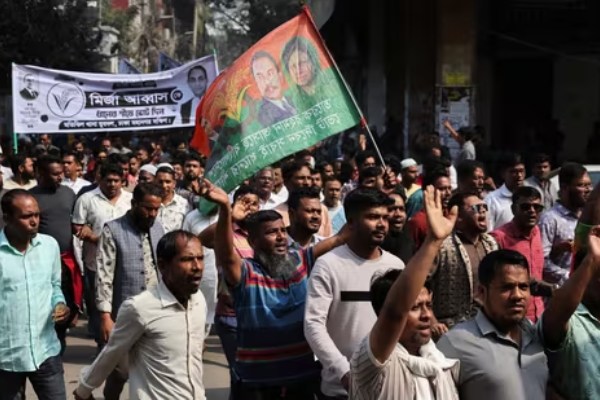

Bangladesh is on the brink of its most significant electoral event in decades. On Thursday, February 12, 2026, the nation will simultaneously hold the 13th National Parliamentary Election and a landmark Constitutional Referendum. This is the first general election since the student-led uprising in August 2024 that ended Sheikh Hasina’s 15-year rule.
Chief Election Commissioner AMM Nasir Uddin has confirmed that the polls will be the “biggest democratic process of 2026,” overseen by an interim government led by Nobel Laureate Muhammad Yunus.
1. The Excluded Giant: Awami League Banned
In a move that has reshaped the political landscape, the Awami League—the party that won the last four elections—is barred from participating.
- The Ban: The party’s registration was suspended in May 2025 due to “national security concerns” and ongoing war crimes trials.
- The Fallout: Ousted PM Sheikh Hasina, currently in exile in India, has called for a boycott, warning that millions of her supporters are being “locked out” of the process.
- The Trial: On November 17, 2025, the International Crimes Tribunal sentenced Hasina to death in absentia for crimes against humanity related to the 2024 protest crackdowns.
2. Candidates, Parties, and the New “Bipolar” Contest
The absence of the Awami League has turned the election into a primary contest between the Bangladesh Nationalist Party (BNP) and a new 11-Party Alliance.
| Feature | Election Statistics (2026) |
| Total Registered Voters | 127,695,183 (Male: 64.8M | Female: 62.8M) |
| Parliamentary Seats | 300 (151 needed for a majority) |
| Total Candidates | ~1,981 |
| Major Contenders | BNP (Tarique Rahman) vs. 11-Party Alliance (Jamaat-e-Islami & NCP) |
| Youth Vote (Age 18-37) | 56 Million (44% of the electorate) |
3. The “July Charter” Referendum
Voters will receive a second, pink ballot to vote “Yes” or “No” on the July Charter, a set of constitutional reforms including:
- Term Limits: A two-term limit for the office of the Prime Minister.
- Bicameral Legislature: Establishing a 100-member “Upper House.”
- Caretaker System: Formalizing the interim government system for future elections to prevent rigging.
4. Security: 100,000 Troops Deployed
Home Affairs Adviser Lt Gen (Retd.) Jahangir Alam Chowdhury has announced “unprecedented” security measures to combat rising political violence, which saw 274 incidents and 5 murders in the 53 days leading up to the poll.
The Security Grid:
- Army: 100,000 personnel.
- Police: 150,000 personnel.
- Ansar: 500,000 personnel.
- Technology: Every polling center will be under CCTV surveillance, with dog squads and drone monitoring in sensitive areas.