

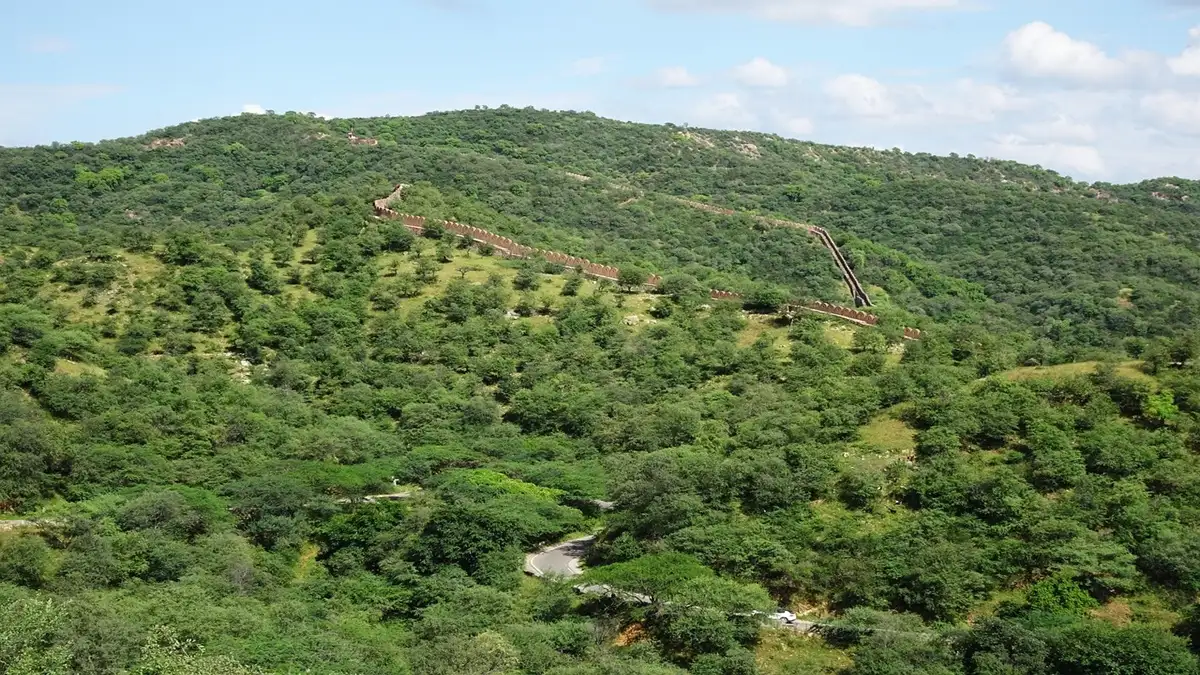

The Union Ministry of Environment, Forest and Climate Change (MoEF&CC) has announced a sweeping directive to protect the ecologically vulnerable Aravalli mountain range, imposing a complete ban on granting any new mining leases across the entire landscape.
According to an official release cited by media, the prohibition will uniformly apply from Gujarat to the National Capital Region, ensuring the preservation of the Aravallis as a continuous geological ridge and controlling unregulated mining activities that have severely impacted the terrain over the years.
In addition to the ban, the ministry has entrusted the Indian Council of Forestry Research and Education (ICFRE) with the responsibility of identifying further areas within the Aravallis that require mining restrictions. These new zones will be determined based on ecological importance, geological sensitivity, and overall landscape preservation needs — going beyond the regions already restricted by the Centre.
Jairam Ramesh Criticises the Move
Reacting to the announcement, senior Congress leader Jairam Ramesh criticised the government’s directive, calling it a “bogus attempt at damage control.” Posting on X, he claimed that the ban fails to address the core issue of the controversial redefinition of the Aravallis. He highlighted that the redefinition had already been opposed by the Forest Survey of India, the Supreme Court-mandated Central Empowered Committee, and the Supreme Court’s amicus curiae.
Details of the New Measures
As part of the broader initiative, ICFRE has been instructed to prepare a comprehensive Management Plan for Sustainable Mining (MPSM) for the entire Aravalli belt. The plan will be made available for public consultation to ensure transparency and inclusiveness.
The proposed strategy will:
- Evaluate cumulative environmental impact
- Assess ecological carrying capacity
- Identify conservation-critical and eco-sensitive areas
- Recommend restoration and rehabilitation measures
The government stated that this scientific exercise will expand protected mining-prohibited zones, keeping in view biodiversity, local ecology, and terrain vulnerability.
For existing operational mines, state governments have been instructed to strictly enforce environmental safeguards in line with Supreme Court orders. Additional regulatory frameworks will be applied to ensure sustainable practices and minimise ecological harm.
Reaffirming its commitment, the Government of India emphasized the crucial role of the Aravalli ecosystem in preventing desertification, conserving biodiversity, replenishing groundwater, and providing critical environmental services to millions across the region.