

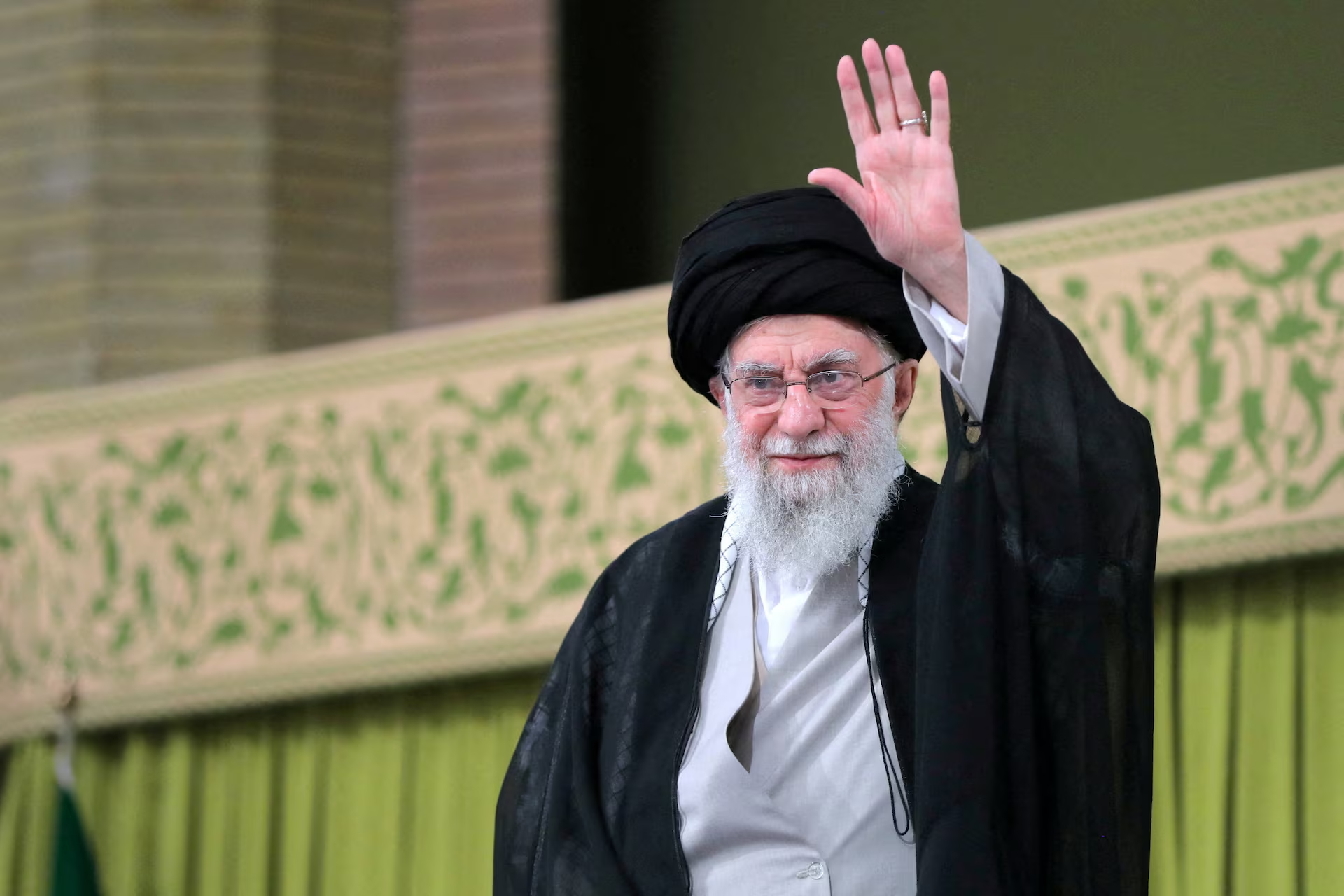

Iran’s Supreme Leader, Ayatollah Ali Khamenei, has been killed at the age of 86 in joint US-Israeli strikes, according to Iranian state television and the official Islamic Republic News Agency (IRNA). The announcement was made early Sunday, though authorities did not immediately elaborate on the exact circumstances of his death.
Hours before Tehran’s confirmation, US President Donald Trump said Khamenei had been killed during a coordinated American-Israeli military operation targeting Iranian military and nuclear-linked facilities. Israeli and US forces launched large-scale strikes across Iran on Saturday, marking a dramatic escalation in regional tensions.
From Revolutionary Successor to Longest-Serving Leader
Khamenei assumed power in 1989 after the death of Ayatollah Ruhollah Khomeini, architect of the 1979 Islamic Revolution that toppled Shah Mohammad Reza Pahlavi. Initially viewed as a compromise figure, Khamenei went on to become the Islamic Republic’s longest-serving leader, consolidating control over Iran’s political and military institutions.
Over more than three decades, he expanded the authority of clerical institutions and strengthened the Islamic Revolutionary Guard Corps (IRGC), transforming it into the backbone of Iran’s security and economic power. The Guard came to oversee Iran’s missile arsenal and wield influence across key sectors of the economy.
Crackdowns at Home, Confrontation Abroad
Khamenei’s tenure was marked by waves of domestic unrest. From the reformist protests of the late 1990s to the disputed 2009 election of Mahmoud Ahmadinejad, security forces responded firmly to dissent. Protests intensified in 2017 and 2019 over economic grievances, and again in 2022 after the death of Mahsa Amini, sparking nationwide demonstrations.
Regionally, Khamenei advanced what became known as the “Axis of Resistance,” backing groups such as Hezbollah and supporting allied militias in Iraq, Syria, and Yemen. However, escalating hostilities with Israel following Hamas’ October 7, 2023, attack triggered direct confrontations between Iran and Israel in subsequent years.
Nuclear Standoff and Escalation
Khamenei consistently defended Iran’s nuclear program while denying any intention to develop nuclear weapons. The 2015 nuclear agreement limited Iran’s enrichment activities in exchange for sanctions relief, but the United States withdrew from the deal in 2018 under Trump’s first term. Tensions deepened after Trump returned to office in 2025, culminating in renewed strikes on Iranian nuclear facilities.
Saturday’s operation, described by US officials as large-scale, targeted military and nuclear-linked infrastructure. Trump later announced that Khamenei had been killed; Iranian state media confirmed his death shortly afterward.
Uncertain Succession
Khamenei’s death leaves the Islamic Republic facing immediate uncertainty. Under Iran’s constitution, the Assembly of Experts is responsible for appointing the next Supreme Leader. Observers say the IRGC’s influence may play a decisive role in shaping the transition.