

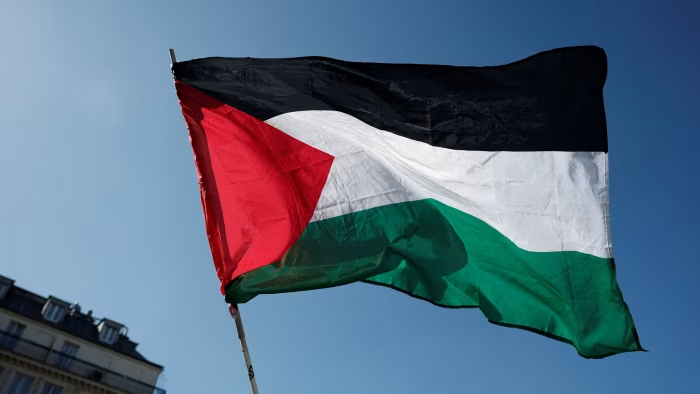

New York, US — In a coordinated diplomatic effort, Australia, Canada, and the United Kingdom have formally recognized a Palestinian state, with all three nations releasing statements on Sunday affirming their commitment to a two-state solution. The move, which comes ahead of the United Nations General Assembly meetings in New York, is aimed at preserving the possibility of a lasting peace in the Middle East.
The leaders of all three nations emphasized that the recognition is not a reward for Hamas. The UK’s Prime Minister Keir Starmer stated that the decision is a “historic” step to “revive the hope of peace,” insisting that it is “not a reward for Hamas” and is, in fact, “the exact opposite of their hateful vision.”
Similarly, Canadian Prime Minister Mark Carney noted that Canada’s policy has always been to support a two-state solution, while Australia’s Prime Minister’s Office stated that the recognition acknowledges the “legitimate and long held aspirations of the people of Palestine to a state of their own.” The leaders of all three nations made it clear that a future Palestinian state would have no role for Hamas.
Strong Opposition and Humanitarian Concerns
The move has drawn immediate and fierce condemnation from several quarters. The Hostages and Missing Families Forum issued a powerful statement, criticizing the three countries for “unconditional recognition of a Palestinian state while turning a blind eye to the fact that 48 hostages remain in Hamas captivity.” The forum stressed that any discussion about statehood must be contingent upon the immediate release of all hostages, calling it a “moral and humanitarian imperative.”
The forum’s statement urged other nations to “act responsibly” and ensure that any “day after” discussions—referring to a post-conflict political settlement—occur only after all hostages are brought home.
Israeli officials also reacted strongly. Yair Golan, chairman of Israeli Democrats, called the recognition “destructive” and “extremely damaging” to Israel. This sentiment echoes comments from Israeli Prime Minister Benjamin Netanyahu, who has previously argued that recognizing a Palestinian state “rewards terrorism” and poses a grave threat to Israel’s security.
A Growing International Consensus
The coordinated recognition by these three major US allies marks a significant shift in diplomatic positions that have been held for decades. The decisions highlight growing international frustration with the ongoing conflict, the humanitarian crisis in Gaza, and Israel’s expansion of settlements in the West Bank, which many view as “snuffing out hope for a two-state solution.”
With France also expected to join the wave of recognitions at the UN summit, the international community appears to be moving toward a unified front on the issue, despite strong opposition from the United States and Israel.