

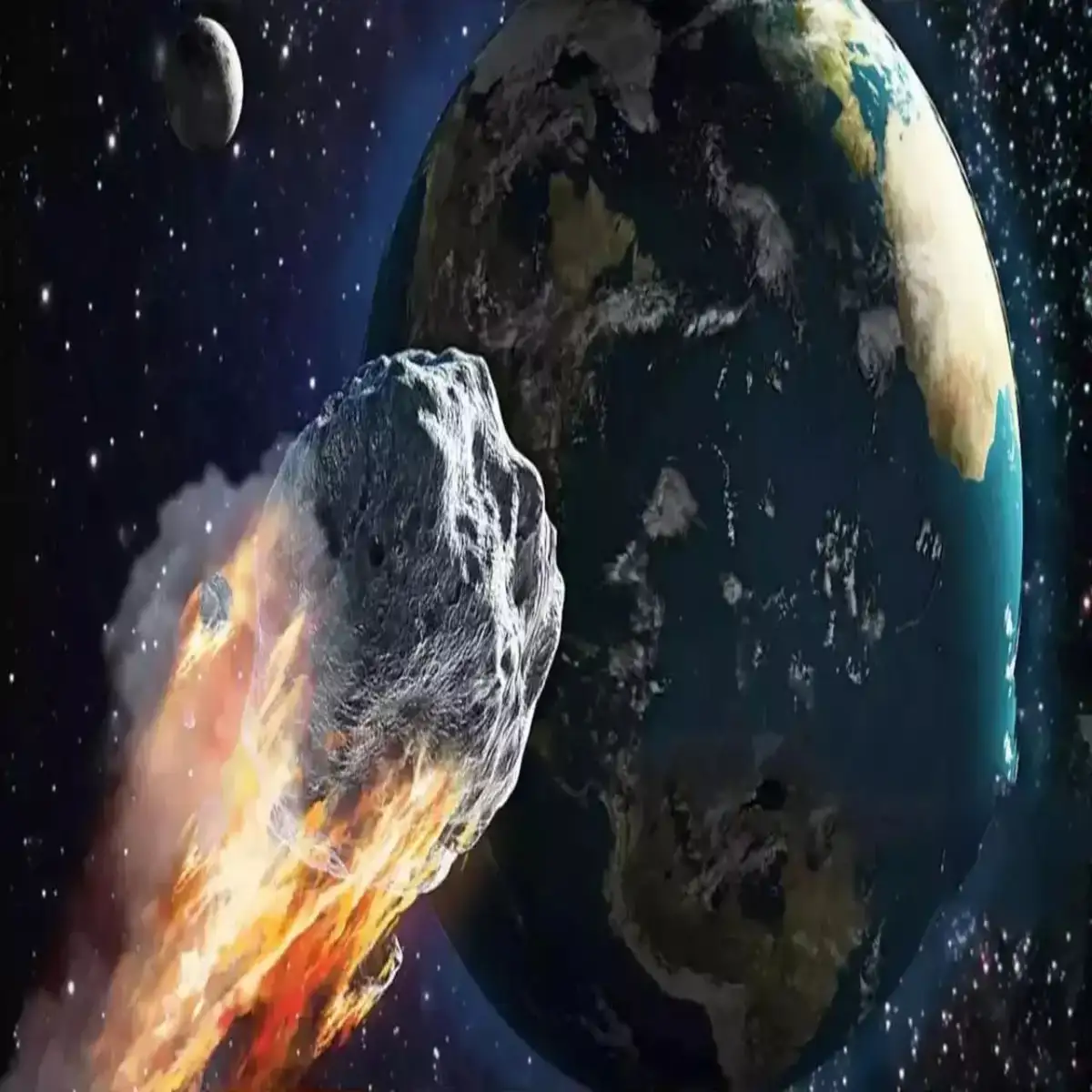

Astronomers are interested in a newly discovered asteroid called 2025 SC79 because of its strange orbit and location in the Solar System. The asteroid, which is thought to be around 700 meters wide, orbits the Sun every 128 days. It is the second-fastest known asteroid and the only one ever located completely within Venus’s orbit.
Scott S. Sheppard of the Carnegie Institution for Science used the Dark Energy Camera (DECam) on the Blanco 4-meter telescope in Chile to make the discovery on September 27, 2025. The asteroid’s orbit crosses Mercury’s path, putting it deep in the inner Solar System, which is hard for astronomers to see because of the Sun’s bright light.
An Asteroid in the “Twilight”
Asteroid 2025 SC79 is one of the few “twilight asteroids,” which are celestial bodies that can only be seen when the Sun is slightly below the horizon, either at dawn or sunset. Most telescopic surveys that work at night can’t see these asteroids since they are so close to the Sun.
Follow-up studies from the Gemini and Magellan telescopes confirmed confirm the asteroid’s orbit and other features.
Sheppard said in a news release, “The most dangerous asteroids are the hardest to find.” “Most asteroid research catches these objects at night, when they are easiest to see. But you can only see asteroids that are close to the Sun at dawn or dusk, when the Sun is about to rise or set. If these “twilight” asteroids get too close to Earth, they could hit it and cause a lot of damage.
Orbit, Risks, and Future Research
2025 SC79 is now behind the Sun, so telescopes won’t be able to see it for the next three months. More observations in the future should help us learn more about its makeup, how well it can withstand heat, and where it might have come from.
Sheppard said that most asteroids are in one of two primary belts: the main asteroid belt between Mars and Jupiter or the Kuiper Belt beyond Neptune. However, sometimes gravitational forces can pull them into far tighter orbits around the Sun.
“Many of the asteroids in the Solar System live in one of two belts of space rocks, but changes in the belts can send them into orbits that are closer to the Sun, where they are harder to see,” Sheppard said. “Knowing how they got to these places can help us protect our planet and teach us more about the history of the Solar System.”
Final Thoughts
The finding of 2025 SC79 gives us important information on a group of near-Sun asteroids that we don’t know much about. These asteroids are still one of the most unexplored and possibly dangerous groups of celestial objects. Keeping an eye on these kinds of bodies not only helps us learn more about how the Solar System has changed over time, but it also makes it easier to protect planets from possible future threats.