

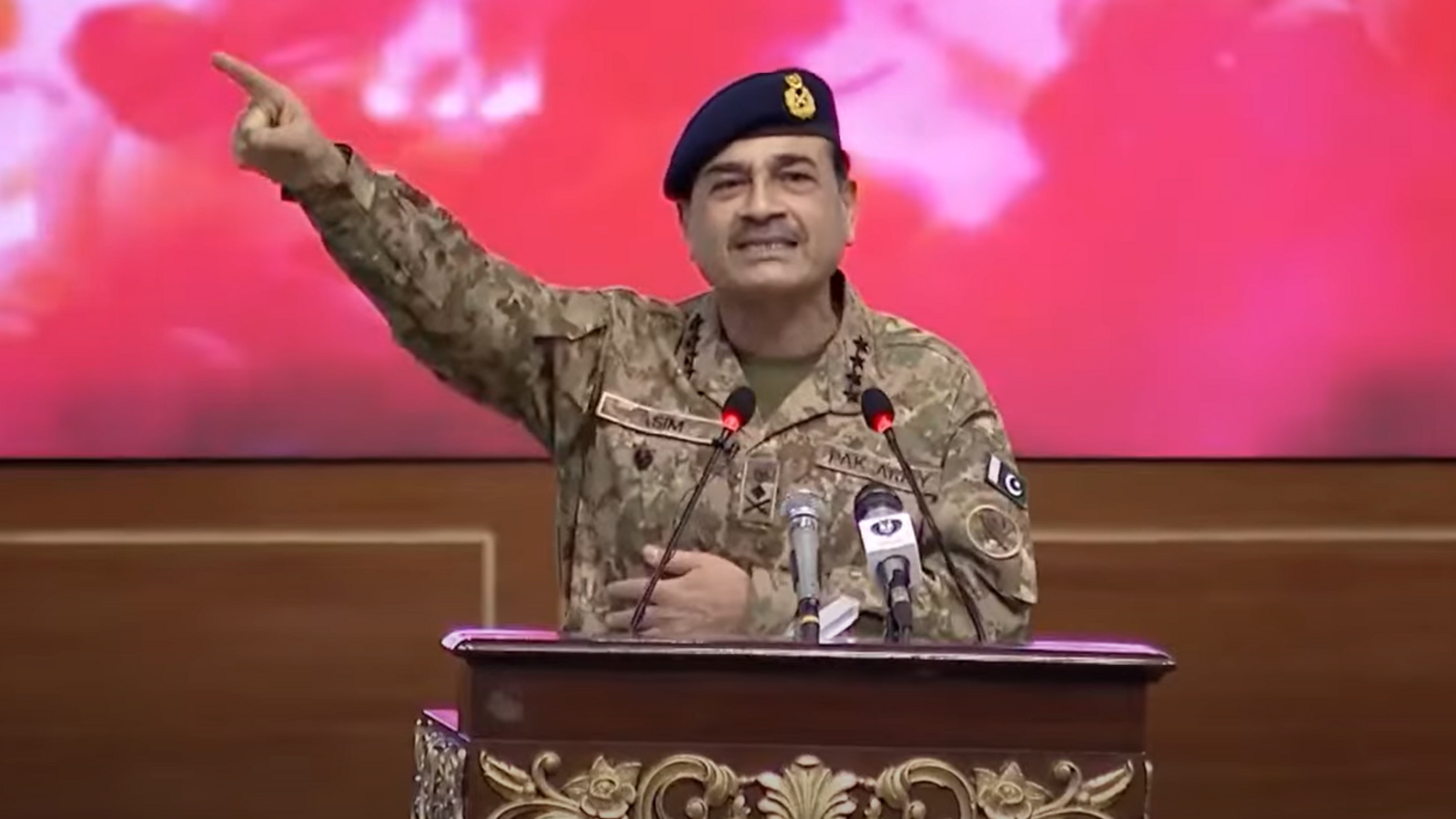

In a significant revelation that has raised concerns globally, a top commander of the Pakistan-based terror group Jaish-e-Mohammed (JeM) has claimed that the Pakistani military leadership framed their response to India’s Operation Sindoor as “Ghazwa-e-Hind”—a radical religious war.
The allegations were made by Ilyas Kashmiri during a provocative speech in Rawalakot, Pakistan-occupied Kashmir (PoK) on February 5, 2026. Kashmiri asserted that Pakistan Army Chief General Asim Munir and the top command gave the conflict a jihadist framing to motivate cadres and justify the escalation.
Operation Sindoor
Launched in May 2025, Operation Sindoor was India’s decisive tri-service response to the Pahalgam terror attack (April 22, 2025), which claimed the lives of 26 civilians.
| Feature | Details of Operation Sindoor (May 2025) |
| Trigger | Terror attack in Pahalgam, J&K (26 civilian deaths). |
| Scope | Tri-service operation (Army, Navy, Air Force) targeting terror infrastructure. |
| Primary Targets | 9 major terror launchpads and training camps in PoK and Pakistan. |
| Strategic Move | India held the Indus Waters Treaty in abeyance to pressure Islamabad. |
| Outcome | Neutralization of over 100 terrorists; destruction of deep-state infrastructure. |
The “Ghazwa-e-Hind” Narrative
According to the recording of the speech, the Jaish commander told new recruits:
“When the fighter jets confronted each other and tanks came face to face, the commander announced that this was Ghazwa-e-Hind… this was jihad.”
This rhetoric aligns with recent reports that the Pakistani military has increasingly relied on religious narratives to manage internal morale after the strategic setbacks of 2025. In late 2025, General Asim Munir reportedly addressed religious scholars at the National Ulema Conference, claiming “divine intervention” had protected Pakistan during the Indian strikes.
Why This Matters
- State-Terror Nexus: The open admission by a Jaish commander that military leaders use extremist religious concepts to frame state-on-state conflict reinforces India’s long-standing claims of a direct link between the Pakistan Army and UN-designated terror groups.
- Regrouping in Rawalakot: The speech took place in Rawalakot, a known hub for terror training. Reports suggest that despite the damage during Operation Sindoor, groups like JeM and Lashkar-e-Taiba (LeT) are attempting to rebuild their headquarters and recruitment networks using digital platforms and fintech.
- Regional Security: Analysts warn that such radical framing (“Ghazwa-e-Hind”) is often used to recruit more youth into cross-border militancy, signaling a potential spike in infiltration attempts as the 2026 summer season approaches.