

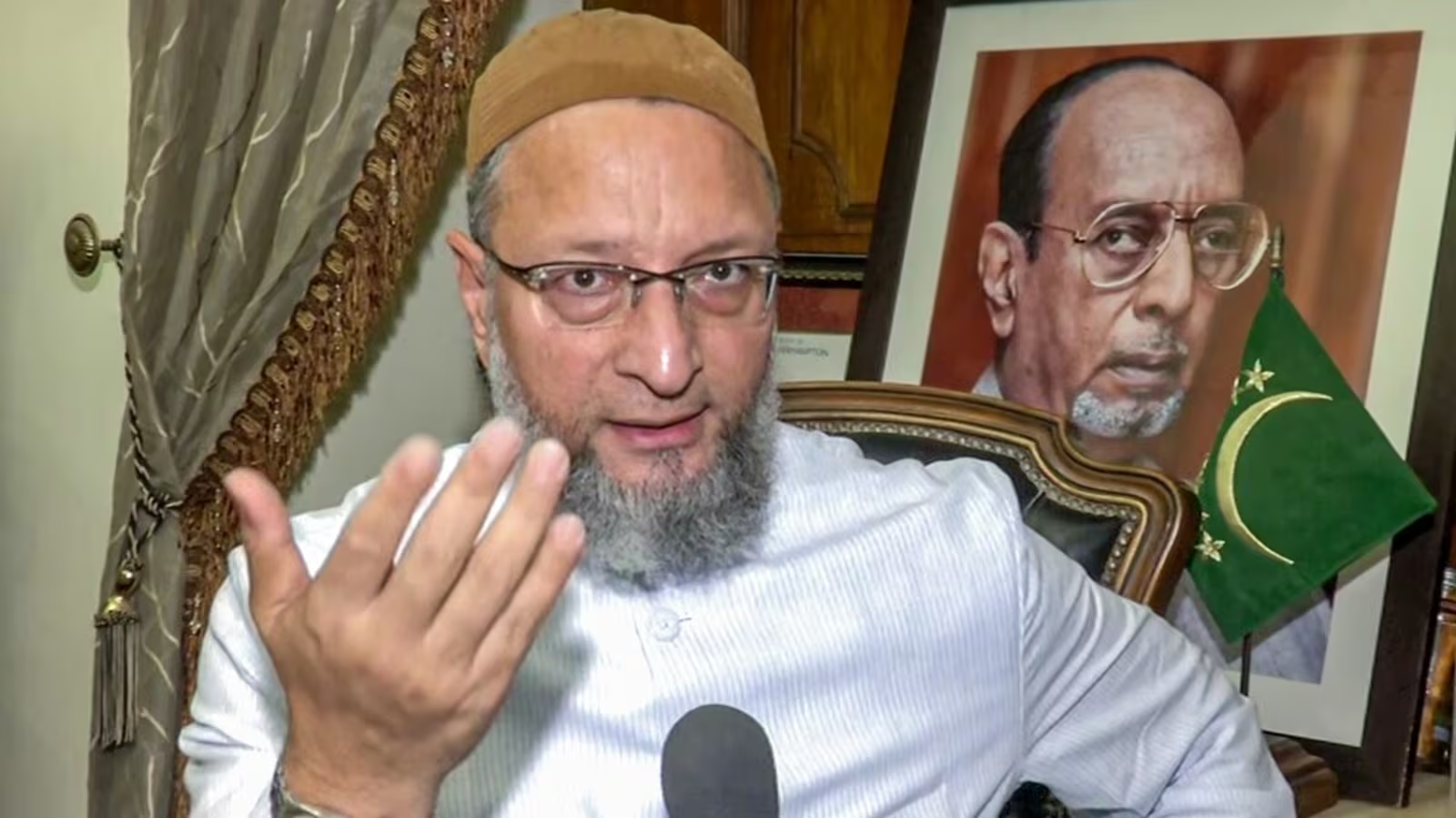

New Delhi, [India], July 31: All India Majlis-E-Ittehadul Muslimeen (AIMIM) MP Asaduddin Owaisi on Thursday voiced his “disappointment” with the acquittal of all seven accused in the 2008 Malegaon blast case. Speaking outside Parliament, Owaisi called for accountability and urged the Maharashtra and central governments to challenge the verdict in the Supreme Court, labeling a failure to do so as “hypocrisy.”
“After 17 years, all the accused were acquitted. The Maharashtra government went to the Supreme Court against the verdict of the 2006 Mumbai train blast case. Won’t this be a hypocrisy on terrorism if they do not go to the Supreme Court?” Owaisi questioned, drawing a parallel with a previous case to highlight his demand for a consistent approach to justice.
Owaisi pointed out that military-grade RDX was used in the explosion, asking, “Where did it come from? … Who is responsible for these bomb blasts? The ones who actually did it are roaming free. My question is, will the Modi Govt and the Maharashtra Govt go to the Supreme Court against this verdict?”
A special NIA court in Mumbai on Thursday acquitted all seven individuals accused in the case, including former BJP MP Sadhvi Pragya Singh Thakur and Lt Colonel Prasad Purohit. The court’s decision, which came nearly 17 years after the incident, cited a lack of “cogent and reliable” evidence to prove the charges beyond a reasonable doubt. The prosecution, which had examined 323 witnesses, saw 37 of them turn hostile, significantly weakening its case. The court also noted that charges under the Unlawful Activities (Prevention) Act (UAPA) could not be invoked due to “defective sanction orders” and pointed to serious lapses in the investigation, including a contaminated crime scene and inconclusive forensic reports.
The blast on September 29, 2008, had killed six people and injured 95 others when an explosive device strapped to a motorcycle detonated near a mosque in Malegaon. The case was initially investigated by the Maharashtra Anti-Terrorism Squad (ATS) and was later transferred to the NIA in 2011. The trial began in 2018 after charges were framed against the seven accused under various sections of the UAPA and the Indian Penal Code, including murder and criminal conspiracy.
Before the verdict was announced, security had been heightened around the NIA court, with many people, including witnesses, gathered outside awaiting the judgment. Following the acquittal, the court also ordered the government to pay compensation of ₹2 lakh to the families of each of the six deceased and ₹50,000 to each injured victim.