

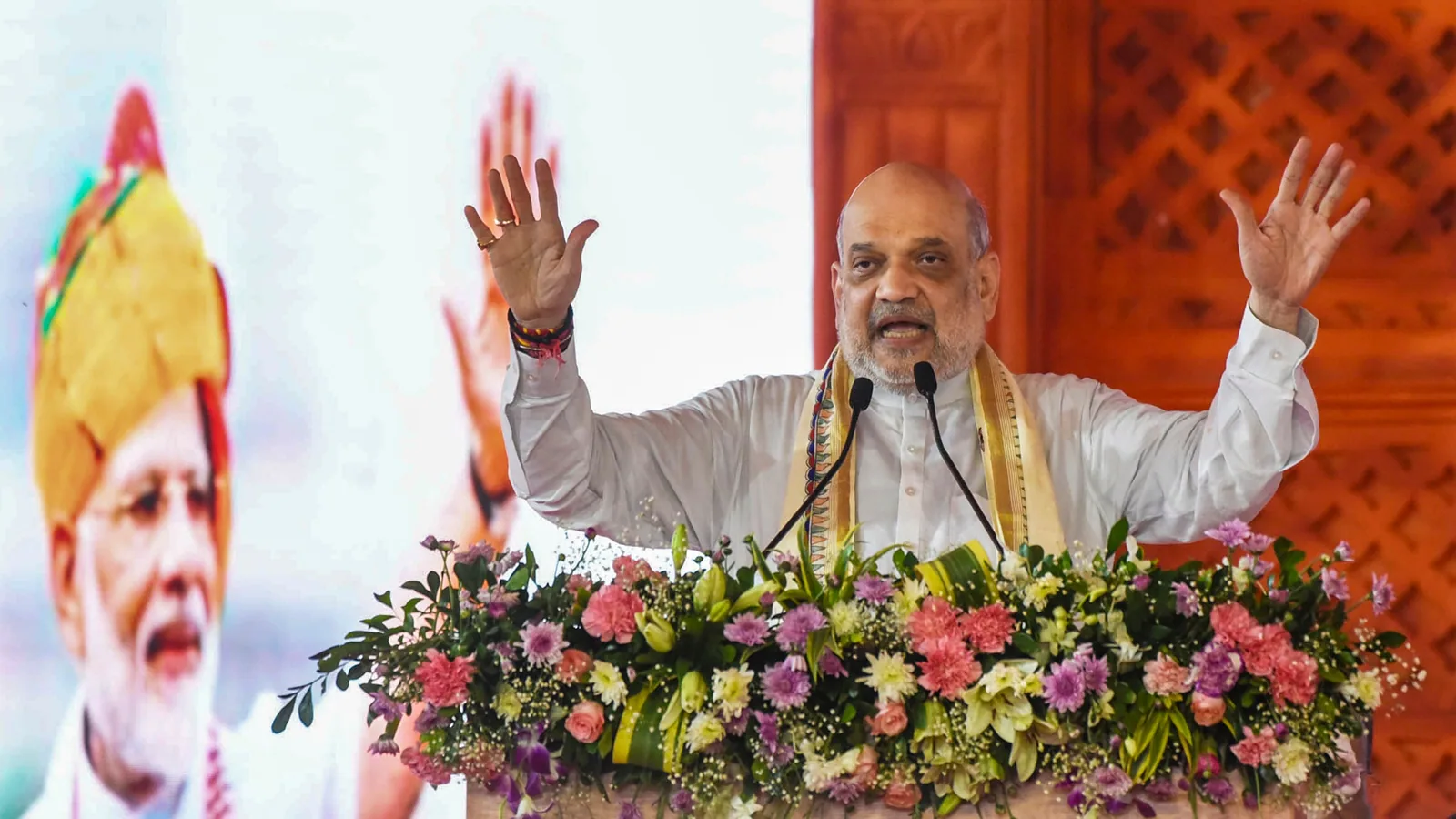

New Delhi – Union Home Minister Amit Shah has announced that the Bharatiya Janata Party (BJP) fully supports the Election Commission of India’s (ECI) Special Intensive Revision (SIR) exercise, which is aimed at purifying the country’s electoral rolls. His statement comes amid a growing political controversy over the ECI’s initiative, particularly in the state of Bihar.
The Special Intensive Revision is a comprehensive process designed to ensure the integrity of voter lists by identifying and removing the names of ineligible individuals. These include the deceased, those with duplicate registrations, and foreign illegal immigrants. The ECI’s decision to conduct this exercise has faced significant opposition from several political parties, especially in Bihar, who have accused the commission of acting at the behest of the ruling government. Critics, including the Congress party and the Rashtriya Janata Dal (RJD), allege that the revision is a politically motivated attempt to disenfranchise a large number of voters from marginalized communities.
In response to these allegations, Amit Shah has staunchly defended the ECI’s position. He emphasized that the Indian Constitution does not grant voting rights to non-citizens, and therefore, the cleansing of the electoral rolls is a necessary and constitutional measure to maintain a free and fair electoral process. Shah has also criticized the opposition for what he termed “vote bank politics,” suggesting that their resistance to the revision is an attempt to protect a political constituency of “infiltrators” ahead of upcoming elections.
The matter has also reached the Supreme Court, which is currently hearing multiple pleas challenging the validity of the SIR process. The Court has stated that if any illegality is found in the ECI’s methodology, the entire exercise will be struck down. The court has also clarified that its final verdict on the Bihar SIR, expected in early October, will apply to any future nationwide revision exercise, as the ECI has already directed the initiation of pre-revision activities for a pan-India SIR with reference to January 1, 2026.
Despite the controversies and legal challenges, the ECI has consistently maintained that its purpose is to “maintain the purity and integrity of the electoral rolls.” The commission has also noted that it is a multi-layered, decentralized process with opportunities for political parties and individuals to raise objections and file appeals.