

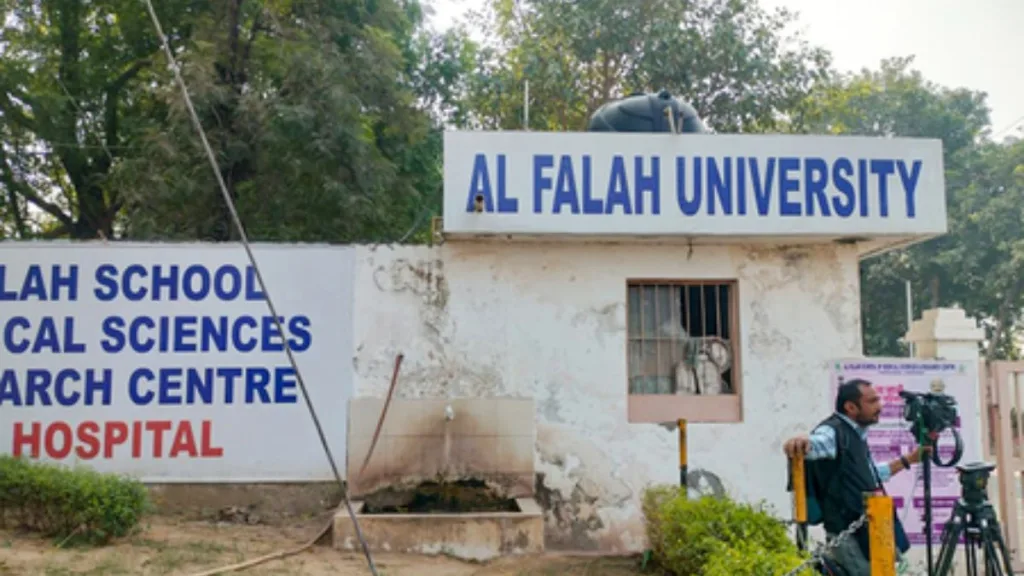

The Al Falah University in Haryana and its parent body, the Al Falah Group, have been thrust into the national spotlight following a massive explosives haul in Faridabad and the deadly car blast near Delhi’s iconic Red Fort last week that claimed over 10 lives. The intensified scrutiny has now led to a major arrest in a separate financial probe.
On Tuesday, the Enforcement Directorate (ED) arrested Jawad Ahmad Siddiqui, the chairman of the Al Falah Group, in a money laundering case stemming from alleged financial irregularities and fraud within the institution.
Links to Delhi Blast Suspects
Al Falah University is currently under simultaneous scrutiny by probe agencies due to its links with individuals connected to the Delhi blast case:
- Dr. Muzammil Shakil: The Kashmir-based doctor from whose rented house in Faridabad’s Dauj village the explosives were recovered, taught at Al Falah.
- Dr. Umar Un Nabi: The alleged suicide bomber behind the explosives-laden car near the Red Fort has also been linked to the university, along with several others who have been arrested in connection with the attack.
The probe agencies had previously summoned Siddiqui as his testimony was considered crucial in clarifying inconsistencies regarding the functioning of the university and the activities of its associated individuals.
Money Laundering and Financial Fraud Charges
Siddiqui was arrested under Section 19 of the Prevention of Money Laundering Act (PMLA), 2002, following an investigation based on two FIRs registered by the Crime Branch of Delhi Police. These FIRs alleged that the university made fraudulent and misleading claims of National Assessment Accreditation Council (NAAC) accreditation with the intention to deceive stakeholders for wrongful gains.
The ED’s investigation has revealed significant financial irregularities:
- Proceeds of Crime: ED investigations showed that “large amounts of proceeds of crime have been generated,” and evidence revealed that “crores of rupees have been diverted by the trust to family-owned entities.”
- Trust Control: Officials stated that the Al-Falah Trust was set up in 1995, and Siddiqui, a key figure in the group’s expansion since the late 1990s, exercised “complete control” over the trust and its educational network.
- Dubious Transactions: Officials noted that the group’s rapid expansion was not supported by its declared financials, suggesting family-linked firms were central to “questionable transactions.”
Recoveries and Shell Company Allegations
During the searches conducted on premises related to the Al Falah group on Tuesday, the ED seized:
- Cash: ₹48 lakh in cash.
- Records: Digital devices, financial records, and documents pointing to the alleged diversion of proceeds of crime running into crores of rupees.
Officials further detailed the alleged mechanism of the fraud:
- Contract Diversion: Construction, catering, and service contracts were routinely awarded to companies tied to Siddiqui’s wife and children.
- Shell Entities: The investigation’s focus includes nine linked companies—all registered at the same address—which officials described as showing “classic red flags of shell entities”: no physical operations, negligible utility use, common email IDs and phone numbers, and overlapping directors.
- Missing Records: Salary payments were found to be “minimal and unsupported,” with no HR or payroll records, and statutory filings such as EPFO and ESIC contributions were absent.