


Every winter and holiday season, India’s air pollution gets worse, and the Air Quality Index (AQI) levels make the news. But what do these figures really signify for your health? Is it harmful to have an AQI of 180? Should you not go for a walk in the morning at 250?
The AQI is a simple way to assess air pollution. It takes data from nitrogen dioxide (NO2), ozone (O3), sulfur dioxide (SO2), carbon monoxide (CO), and particulate matter (PM2.5 and PM10) and puts it all together into one number and color-coded scale. An AQI result that is higher means that the lungs, heart, and overall health are at a greater risk.
How the AQI Works
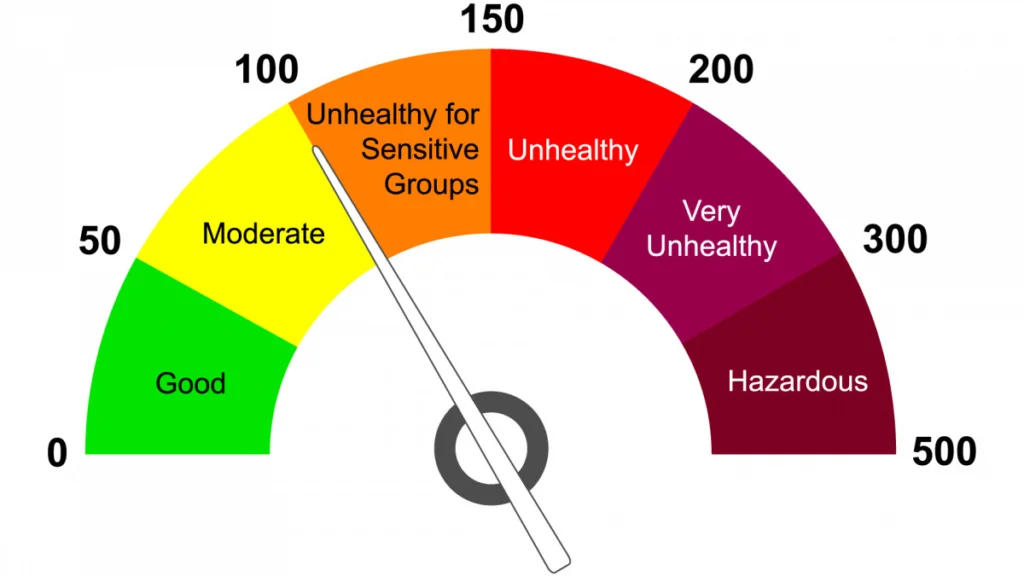
There are six color-coded levels of AQI: Good, Satisfactory, Moderate, Poor, Very Poor, and Severe. The range is 0 to 500.
PM2.5 is the most dangerous kind of pollution because it gets deep into the lungs and blood.
The AQI for the day is based on the highest sub-index, which is the concentration of each pollutant.
The Central Pollution Control Board (CPCB) keeps an eye on the AQI across India in real time, which helps people keep an eye on the air quality in their area.
AQI Health Guide:
0–100 (Good/Satisfactory): Everyone is safe; outdoor activity is encouraged.
101–200 (Moderate/Poor): People with respiratory problems, children, and the elderly may feel uncomfortable. Limit intense outdoor activities.
201–300 (Very Poor): Bad for everyone; stay inside, limit time outside, and use air purifiers.
300+ (Severe): Dangerous; stay inside, don’t exercise outside, and visit a doctor if you have any symptoms.
How Bad Air Quality Affects Your Health
Exposure for a short time:
Coughing, wheezing, sore throat, burning eyes, headaches, and tiredness
Symptoms got worse for people with asthma and chronic bronchitis.
Long-term exposure:
Lower lung function, breathing issues, heart problems, some types of cancer
Worsening of heart and lung problems that were already there
People who live in areas with a lot of pollution have shorter life expectancies, especially children, pregnant women, and older persons.
How to Keep Yourself Safe
Check the AQI every day with CPCB dashboards or apps like SAFAR.
On days when the air is very polluted, stay inside and use air purifiers to clean the air.
Wear N95 or FFP2 masks when you are out and about in bad air quality.
Drink enough water and eat foods high in antioxidants, like fruits, green vegetables, and nuts.
Change your outdoor activities: On days with a high AQI, work out inside.
Adopt green habits: carpooling, using fewer firecrackers, and backing renewable energy projects are all good ideas.
When the AQI goes over 150, think of your lungs as fragile filters and protect them from UV radiation just like you would your skin.
Final Thoughts
The AQI isn’t simply a number; it shows how clean the air is and how it could affect your health. You can lower your exposure, protect family members who are more at risk, and stay healthy even during India’s smog-prone months by knowing the AQI levels and taking the right steps at the right time.
Taking care of the environment is good for the air, but being conscious and having good habits is the first step to staying healthy.