

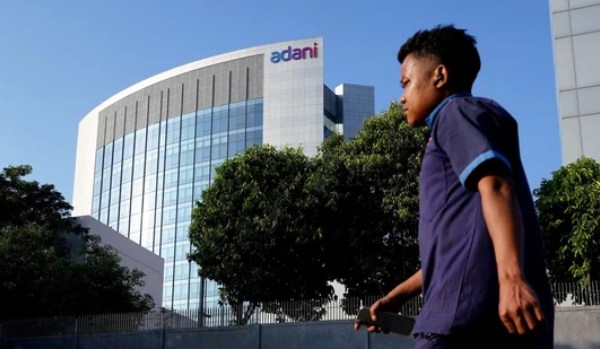

HYDERABAD, TELANGANA — In a bold challenge to India’s long-standing aviation policy, Adani Airports CEO Arun Bansal called for a transition to an “Open Skies” approach during the Wings India 2026 air show today, Wednesday, January 28.
Bansal argued that current bilateral air service agreements, which cap the number of seats foreign airlines can sell, are a “short-term constraint” that prevents Indian airports from competing with global transit hubs like Dubai, Doha, and Singapore.
1. The “Open Skies” Argument
Adani Airports, which currently manages eight major hubs (including the newly operational Navi Mumbai International Airport), believes that liberalization is essential for infrastructure ROI.
- The Constraint: Bilateral agreements currently limit seat capacity to protect domestic carriers like IndiGo and Air India while they scale their fleets.
- The Demand: Bansal emphasized that to justify the $11 billion (₹1 lakh crore) investment planned for the next five years, India must allow foreign giants—like Emirates or Qatar Airways—to bring in more passengers.
- CEO Quote: “In the short term, growth in Indian aviation is constrained by bilateral agreements. For India to become a hub, we need an open skies approach.”
2. The Domestic Pushback: Hub vs. Homegrown
The proposal has highlighted a deepening rift between airport operators and domestic airlines.
- Airlines’ Stance: Market leaders like IndiGo (holding ~62% market share) argue that opening the skies too early would allow foreign carriers to “predate” on Indian traffic before local airlines have enough wide-body jets to compete on long-haul routes.
- Government Silence: A Ministry of Civil Aviation spokesperson has not yet responded to Bansal’s remarks. Historically, the government has sided with domestic carriers to ensure a “Viksit Bharat” includes a strong homegrown fleet.
3. Adani’s $11-Billion Expansion Roadmap
The Adani Group is doubling down on its “hard asset” strategy, despite thin margins in the airline business itself.
| Expansion Pillar | Details |
| New Bids | Confirmed plans to bid for 11 more airports (including Amritsar and Varanasi). |
| Navi Mumbai Hub | Phase 1 (20M passengers) launched Dec 25, 2025; scaling to 90M. |
| Non-Aero Revenue | Developing “Aero Cities” with 20+ hotels and retail hubs around airports. |
| IPO Watch | Adani Airport Holdings (AAHL) targets an IPO/demerger by March 2028. |
4. Case Study: The India-UAE Bottleneck
The debate is most heated regarding the Middle East corridor.
- The Shortage: A recent study by Tourism Economics warns that the India-UAE corridor will run out of seats by late 2026 if caps aren’t lifted.
- Economic Loss: Maintaining the current cap of 140,000 weekly seats could result in a loss of AED 26 billion in potential tourism and trade revenue by 2035.