

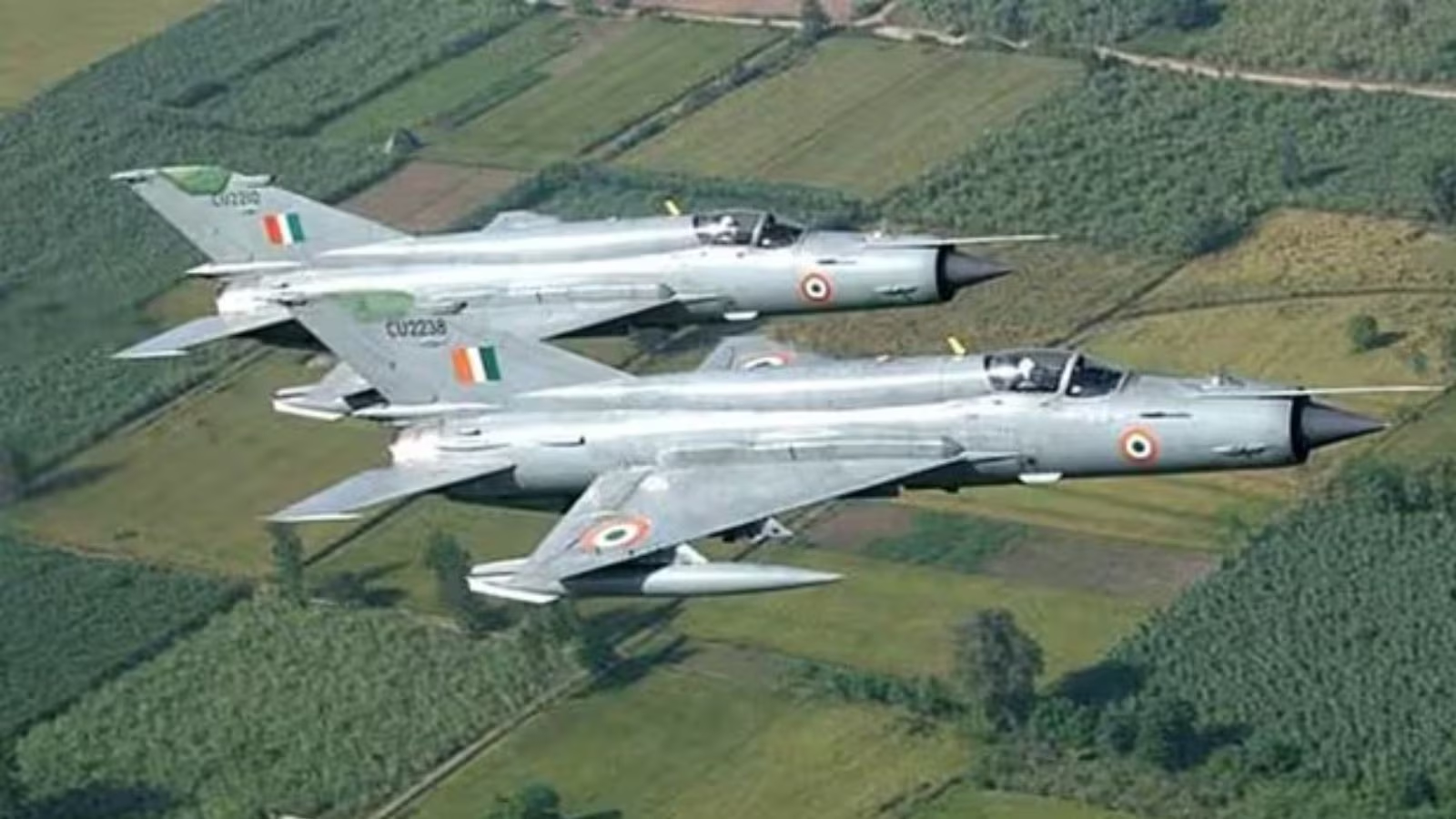

After over six decades of storied service as the backbone of the Indian Air Force’s combat fleet, the Russian-origin MiG-21 (Mikoyan-Gurevich) fighter jets took their final flight in Indian skies on Friday at the Chandigarh Air Force Station.
The farewell ceremony marked the culmination of the operations of the supersonic fighter jets, whose induction in the early 1960s was instrumental in catapulting the IAF into the jet age.
The final moments were celebrated with spectacular aerial displays and parades. Fighter pilots flew the iconic jets in two distinct formations: the three-aircraft Badal formation and the four-aircraft Panther formation, thundering over the skies for the very last time. Air Chief Marshal AP Singh flew the last sortie of the squadron, using the call sign ‘Badal 3’.
The event was attended by Union Defence Minister Rajnath Singh, along with former IAF chiefs SP Tyagi and BS Dhanoa, and IAF Group Captain Shubhanshu Shukla.
The celebration included a spectacular display by the IAF’s elite skydiving team ‘Akash Ganga’, who descended from a height of 8,000 feet, followed by a majestic flypast of the MiG-21 aircraft, precision drills by the air warrior drill team, and an aerial salute. The Surya Kiran aerobatic team also captivated the audience with their breathtaking maneuvers. As they decommissioned after 63 years in service, the MiG-21 fighter jets received a traditional water gun salute.
In a recent post on X, the IAF beautifully summarized the legacy of the retiring jets, stating, “Six decades of service, countless tales of courage, a warhorse that carried pride of a nation into the skies.”
A Legacy of Conflict and Service
The iconic aircraft was first inducted into the force over six decades ago, and the IAF procured over 870 MiG-21s, making them the mainstay of the force for a prolonged period.
These supersonic jets were dominant platforms during the 1965 and 1971 wars with Pakistan. They also played a crucial role in the 1999 Kargil conflict and the 2019 Balakot airstrikes.
However, the IAF’s workhorse also had a mixed record, being involved in multiple crashes over the last six decades, repeatedly drawing the spotlight onto the safety record of the ageing, Soviet-origin fleet.