

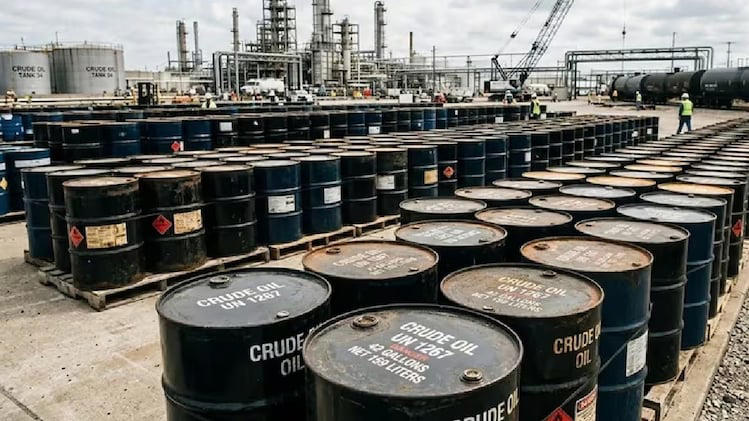

TOKYO / SEOUL — Global markets entered a state of panic on Monday, March 9, 2026, as Asian equities witnessed their sharpest sell-off in nearly a year. The escalation of the West Asia conflict—specifically Iran’s strategic closure of the Strait of Hormuz—has sent Brent crude prices screaming past the $100-per-barrel mark, threatening a global recession.
The Strait of Hormuz is the world’s most important oil chokepoint, with approximately one-third of the world’s seaborne oil trade passing through its narrow waters daily.
1. Japan: Nikkei’s Worst Rout Since 2025
Japan, which relies on the Middle East for 90% of its oil imports, has emerged as one of the most vulnerable economies in this crisis.
- The Crash: The benchmark Nikkei 225 plunged by as much as 7.1% in morning trading, wiping out months of gains fueled by Prime Minister Sanae Takaichi’s expansionary fiscal policies.
- Currency Pressure: The Yen faced extreme volatility as investors weighed the cost of Japan’s ballooning energy import bill against its traditional “safe haven” status.
- Expert View: “Japan is among the most affected countries globally due to its total energy dependency,” Hiroshi Matsumoto of Pictet Asset Management told Bloomberg.
2. South Korea: Circuit Breakers Activated
The situation in Seoul was even more dire, as panic selling forced a temporary halt in trading.
- Circuit Breakers: For the second time this month, South Korea activated trading halts after the Kospi tumbled over 8.1%. This follows a brutal week where the index lost nearly 11%.
- Currency Crisis: The South Korean Won plummeted toward the 1,500 per dollar level, a psychological barrier that usually triggers aggressive government intervention.
- Tech Sell-off: Major exporters like Samsung and SK Hynix saw massive outflows as investors feared a spike in manufacturing and logistics costs.
3. The Hormuz Blockade: A Global Chokepoint
The primary catalyst for the market meltdown is the total disruption of the energy supply chain.
- Iran’s Maneuver: Tehran’s decision to block the Strait of Hormuz has effectively stranded millions of barrels of oil intended for Asian and European markets.
- Supply Halt: Several regional facilities have reportedly ceased production entirely due to direct military threats or physical damage from recent strikes.
- Price Outlook: Analysts warn that if the blockade persists for more than 72 hours, oil could challenge the $120–$140 range, potentially triggering a wider global market contagion.
| Index / Asset | Current Level | Change (%) | Impact / Status |
| Nikkei 225 (Japan) | 31,245.50 | ▼ 6.9% | Worst drop since April 2025. |
| Kospi (S. Korea) | 5,132.07 | ▼ 8.1% | Circuit Breakers Activated. |
| Brent Crude Oil | $103.45 | ▲ 12.2% | Highest since mid-2022. |
| USD/KRW (Won) | 1,494.20 | ▼ 1.1% | Approaching 1,500 threshold. |