

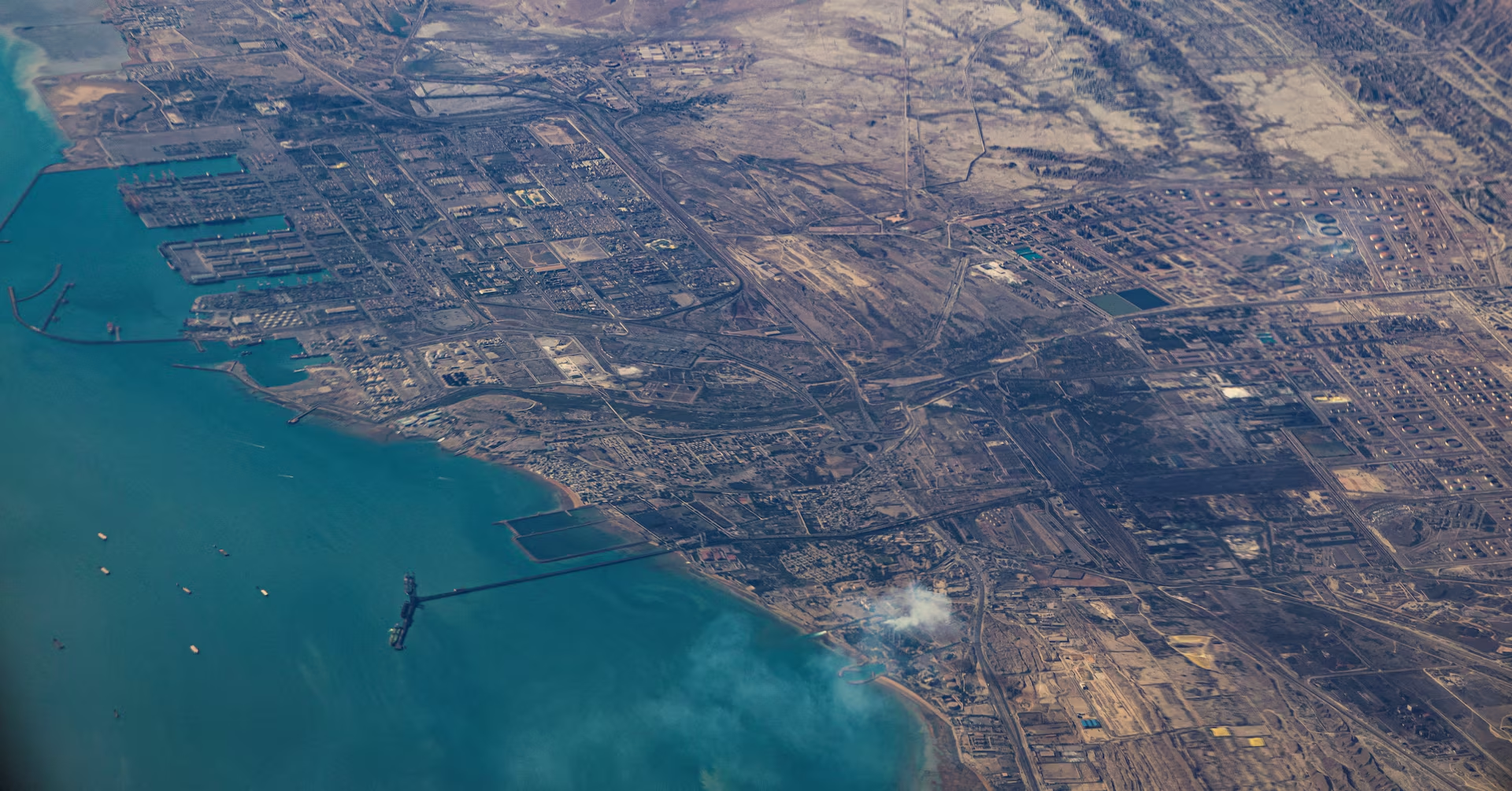

Escalating military operations by the United States and Israel against Iran have raised concerns over a potential closure of the Strait of Hormuz, a key maritime corridor linking the Persian Gulf to the Gulf of Oman and the Arabian Sea. While Iran claims the strait is closed, reports suggest that a full closure has yet to be confirmed. Even partial disruption, however, could send global oil prices soaring and destabilize international trade.
Strategic Importance of the Strait
- The Strait of Hormuz lies between Iran and Oman, with its narrowest point measuring just 33 kilometres.
- Shipping lanes in each direction are barely 3 kilometres wide.
- About 20% of the world’s daily oil and gas supply — roughly 20–21 million barrels — passes through this corridor. It is also critical for Qatar’s liquefied natural gas (LNG) exports, making it one of the world’s most crucial trade arteries.
Global Energy Market Impact
- Oil from OPEC producers — Saudi Arabia, Iraq, Kuwait, UAE, and Iran — mainly passes through this strait to Asia.
- Fears of disruption have already pushed Brent crude prices higher, with analysts warning that prolonged tensions could drive prices to $120–$150 per barrel.
- Many tankers are anchoring outside the Gulf, delaying shipments and increasing freight and insurance costs.
Iran’s Leverage and Risks
- Iran holds the world’s fourth-largest proven oil reserves (~170 billion barrels) and significant naval and missile capabilities.
- While Iran can disrupt shipping, a complete closure would also impact its economy, halting exports and straining relations with major buyers like China. Analysts say such action would likely be a last-resort option.
Implications for India
- India imports around 55% of its crude from the Middle East, about 2.7 million barrels per day.
- Current effective storage covers only 20–25 days, leaving India vulnerable to supply disruptions.
- Expected consequences include:
- Rising fuel prices for petrol and diesel.
- Inflationary pressures across transport, food, and manufacturing sectors.
- Wider trade deficit and pressure on foreign reserves.
- Currency volatility and increased subsidy burdens.
- While India has diversified its crude sources, Middle East oil remains central to its energy needs. Any prolonged disruption could force India to compete globally for alternate supplies at higher prices.
Broader Global Consequences
- Asia: Heavily reliant on Middle East oil; Japan and South Korea maintain larger reserves.
- Europe and the US: Indirectly affected as global oil prices rise.
- Shipping costs and insurance premiums have surged, with VLCC freight rates doubling and LNG shipping rates up 40%.
- Prolonged conflict could cause significant disruption to global supply chains, reminiscent of past oil crises.
Historical Context
- 1980–88 Iran-Iraq War: Tanker attacks targeted Gulf oil shipments.
- 2012: Iran threatened closure over sanctions.
- Recent years: Tensions have resulted in tanker seizures and attacks.
Any full closure of the Strait of Hormuz would have unprecedented economic consequences worldwide, affecting oil markets, trade, and geopolitical stability.