

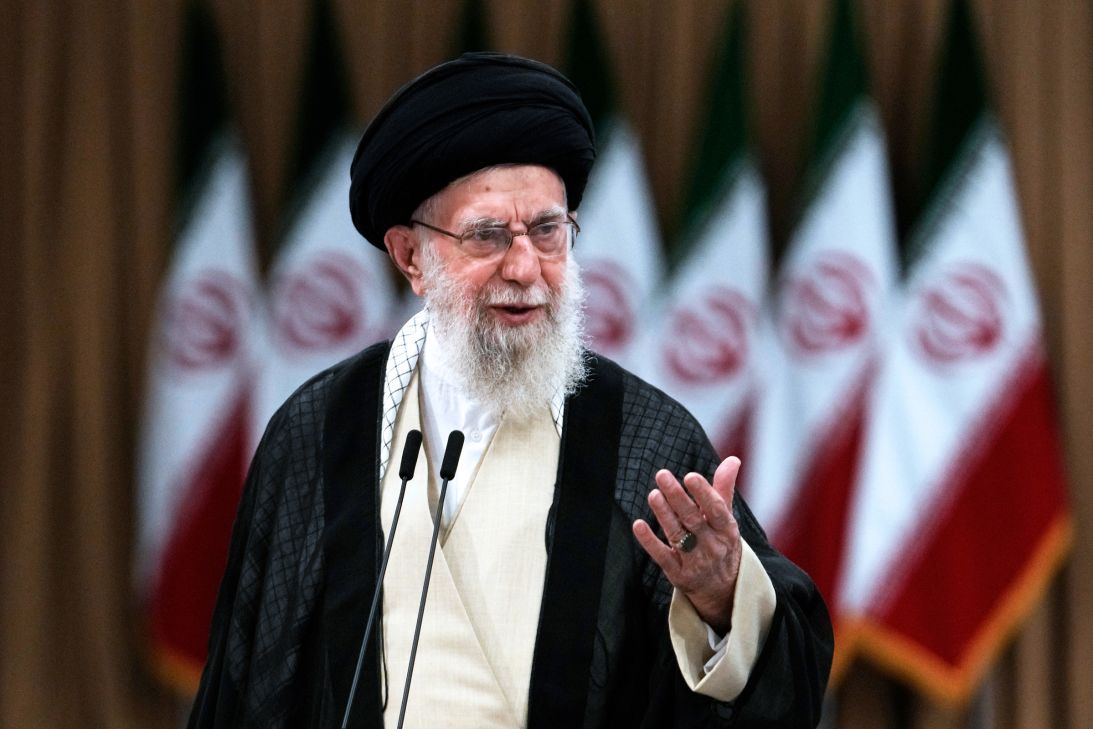

Thousands gathered at Tehran’s Enghelab Square after Supreme Leader Ayatollah Ali Khamenei was killed in joint US-Israel airstrikes that reportedly targeted his central residence, ending his 36-year rule. The strike has triggered mass mourning across Iran and sharply escalated regional tensions.
According to reports by The New York Times and The Times of Israel, the operation was the result of months of surveillance, real-time intelligence inputs, and close coordination between US and Israeli agencies.
Key Factors Behind the Operation
1. Long-Term Surveillance
The Central Intelligence Agency (CIA) had reportedly monitored Khamenei’s movements and security routines for months. Officials described the intelligence as “high fidelity,” meaning agencies had a detailed understanding of his patterns and possible safe locations.
2. A Critical Leadership Meeting
Intelligence sources identified a rare high-level meeting scheduled for the morning of February 28, 2026. Senior political and military leaders were expected to attend, creating what officials viewed as a narrow but decisive window.
3. Advanced Tracking Systems
US President Donald Trump claimed that “highly sophisticated tracking systems” were used to confirm the target’s presence and prevent any escape once the strike plan was activated.
4. Intelligence Sharing with Israel
The CIA reportedly shared precise location data with Israeli forces. The timing of the strike was shifted from nighttime to broad daylight (around 9:40 a.m. Tehran time) to ensure all intended targets were present.
5. Simultaneous Targeting of Multiple Sites
Reports indicate that multiple high-security facilities — including offices linked to the presidency, the Supreme Leader, and the National Security Council — were struck nearly simultaneously using bunker-buster munitions.
Trump’s Statement
President Trump praised the operation, calling it “justice” and asserting that Khamenei was unable to evade US intelligence capabilities. Both Iranian authorities and Israeli officials later confirmed the death.
The strike marks one of the most dramatic escalations in recent Middle East tensions, with global leaders now closely watching Tehran’s next move.