

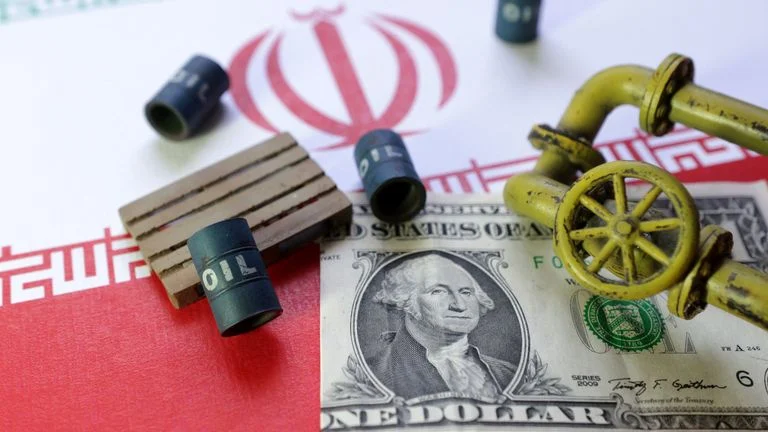

The escalating conflict following the US-Israel strikes on Iran has raised fears of disruptions in the Strait of Hormuz, a critical global energy corridor. Experts warn that any prolonged hostilities could push up international crude oil prices and weaken the Indian rupee against the US dollar.
India, the world’s third-largest oil consumer after the United States and China, is particularly vulnerable to supply shocks. Under US pressure, New Delhi has already curtailed purchases of Russian crude, narrowing its sourcing flexibility. A sustained conflict could further tighten supplies from the Gulf region, increasing India’s import bill.
Energy expert SC Sharma said that if tensions escalate and continue, India’s crude import costs may jump sharply. He pointed out that reduced Russian output due to sanctions and increased winter demand in the US—leading to withdrawals from strategic reserves—have already tightened global supply.
India’s average crude purchase price has risen over 10% to $70.86 per barrel from $64.2 a month ago, amid geopolitical tensions. Any further disruption, especially involving Iranian exports of nearly 3 million barrels per day, could intensify pricing pressures.
Iran has historically threatened to close the Strait of Hormuz, though it has avoided full disruption due to its own reliance on the route for exports, particularly to China. However, renewed threats and recent military drills signal rising risks.
Ajay Sahai, director general of the Federation of Indian Export Organisations, said it is too early to fully assess trade impacts, but prolonged conflict may raise freight charges, insurance premiums and dollar demand—leading to further rupee depreciation.
Exporters fear that Gulf instability could force cargo ships to reroute via the Cape of Good Hope, significantly increasing transportation costs. Traders may have to absorb a large share of these additional expenses.
Prashant Vasisht of ICRA Ltd noted that attacks on oil producers in the Middle East could heighten volatility in crude markets. Nearly 20% of the world’s petroleum liquids and liquefied natural gas pass through the Strait of Hormuz, making it a crucial energy choke point.
A prolonged regional conflict, experts caution, could therefore strain global energy markets, pressure India’s trade balance, and deepen currency volatility.