

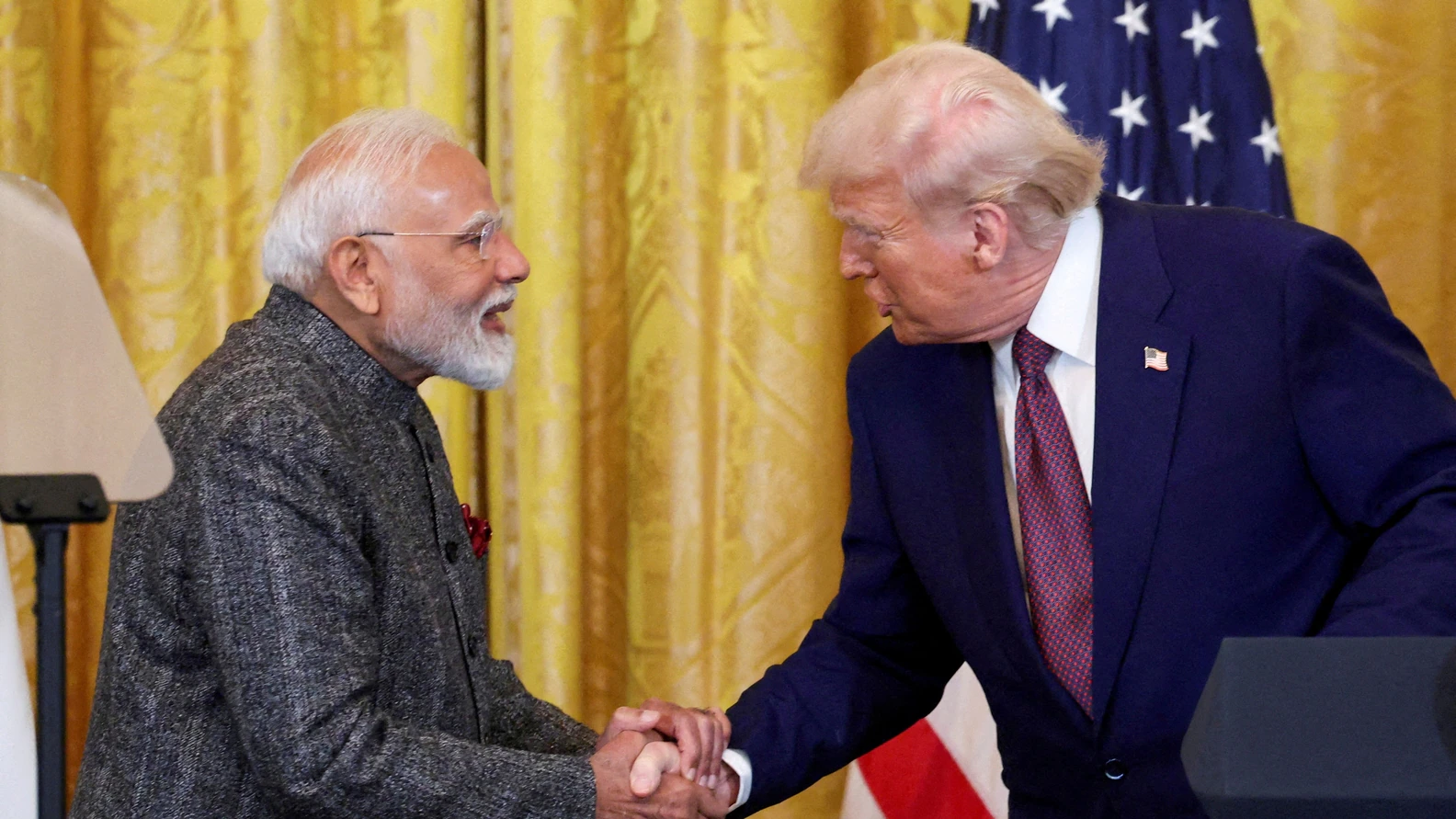

India will continue negotiations with the United States to finalise a mutually beneficial interim trade deal, even after the US Supreme Court struck down the legal basis for former tariff measures introduced by President Donald Trump.
Tariff Reset After Court Verdict
The proposed 18% reciprocal tariff on Indian goods — referenced in a February 7 joint statement — may now be irrelevant following the court’s ruling. Instead, the effective tariff on Indian exports is expected to align with the newly announced 15% global rate.
Under the revised framework, the earlier 25% reciprocal tariff would drop to 15%, replacing the proposed 18% structure. However, this 15% levy will apply in addition to product-specific Most-Favoured Nation (MFN) tariffs.
Officials familiar with the matter said the “15% plus MFN” structure is the new baseline after the court invalidated the earlier legal mechanism used to impose higher duties.
Scope For Realignment
Sources indicated that tariff commitments under the India-US joint statement may need recalibration in light of the changed legal position. The agreement reportedly allows either country to modify commitments if tariff structures change.
For Indian exporters to remain competitive against countries such as China, Bangladesh, Vietnam, Cambodia and Indonesia, Washington may need to either reduce the 15% levy or adjust MFN rates, officials suggested.
India’s commerce ministry said it is studying the implications of the US Supreme Court ruling and subsequent announcements by the US administration.
Interim Bilateral Trade Agreement (BTA)
India and the US are yet to finalise the legal text of their proposed interim Bilateral Trade Agreement (BTA). An Indian delegation led by chief negotiator Darpan Jain is scheduled to travel to Washington for discussions aimed at finalising the framework ahead of a possible visit by US Trade Representative Jamieson Greer next month.
While the reciprocal tariff component may no longer apply, other elements of the BTA — including quota-based concessions and non-tariff measures — are expected to remain part of the negotiations.
US Administration’s Next Steps
US Treasury Secretary Scott Bessent indicated that alternative legal routes — including Sections 232, 301 and 122 — may be used to maintain tariff measures within statutory limits. Section 122 has already been invoked to impose the temporary 15% tariff, which requires Congressional approval beyond 150 days.
Industry Reaction
Exporters in labour-intensive sectors such as textiles, gems and jewellery, automobiles and engineering goods are cautiously optimistic. Industry leaders say the removal of higher reciprocal tariffs offers relief, though uncertainty persists.
The textile sector, heavily reliant on the US market, has called for greater clarity on how the revised tariff structure will align with the interim trade deal.
Global Implications
Experts say the Supreme Court verdict could reduce the scope for arbitrary tariff actions and restore predictability to global trade. It may also open the door for refund claims by importers who paid higher duties under the earlier framework.
Despite the evolving tariff landscape, officials emphasised that both India and the US remain committed to concluding a mutually beneficial agreement in line with the spirit of their joint statement.