

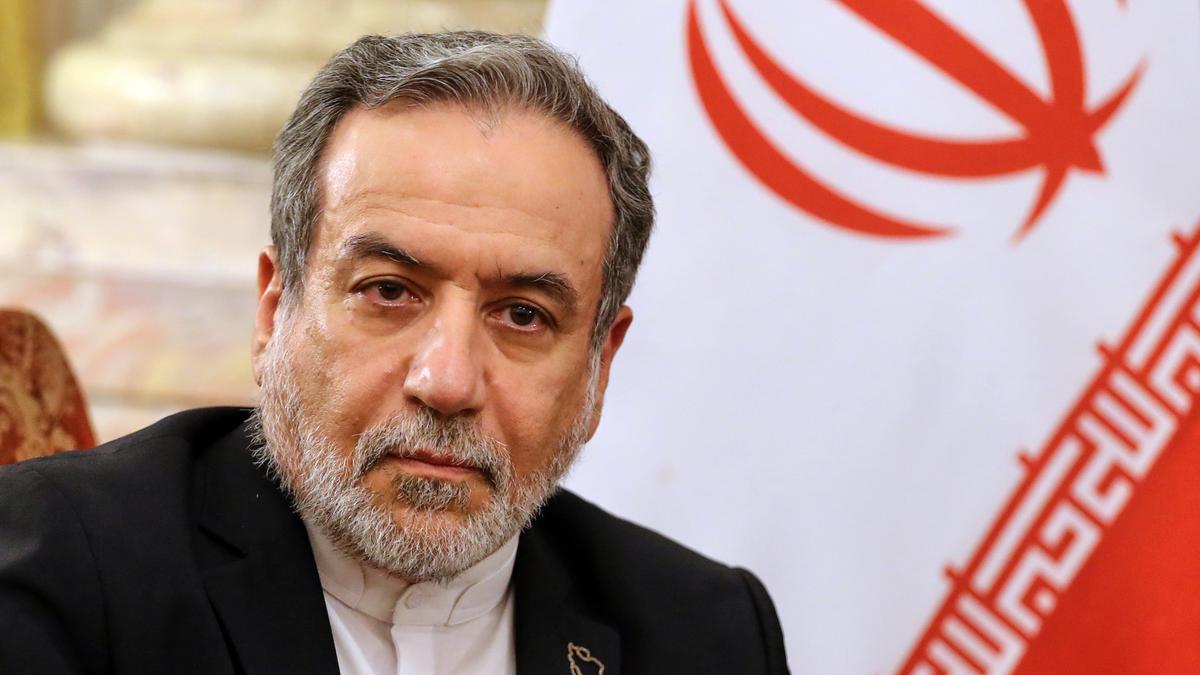

GENEVA – A “new window of opportunity” has opened in the long-standing nuclear standoff between Tehran and Washington. Following hours of mediated discussions at the Omani embassy, both sides reportedly reached a general agreement on a set of “guiding principles” that will serve as the foundation for drafting a potential formal agreement.
While Minister Araghchi described the atmosphere as “constructive” and “serious,” he cautioned that a final deal remains distant. A U.S. official echoed this sentiment, noting that while progress was made, “a lot of details” remain unresolved. Iranian negotiators are expected to return with detailed proposals within the next two weeks.
The “Iron Fist” Behind Diplomacy
Even as negotiators spoke of peace, the military reality on the ground told a more volatile story.
- US Air Power Surge: In the 24 hours surrounding the talks, the U.S. military moved more than 50 fighter jets—including advanced F-35s, F-22s, and F-16s—into the Middle East. Citing flight radar data, analysts suggest these assets, supported by aerial refueling tankers, are prepared for sustained operations.
- The “Ford” Joins the Fray: This deployment follows President Trump’s recent order sending the USS Gerald R. Ford, the world’s largest nuclear supercarrier, to join the USS Abraham Lincoln strike group in the region.
- Hormuz “Smart Control”: In a direct counter-signal, Iran’s Revolutionary Guard (IRGC) launched a live-fire naval drill, temporarily closing sections of the Strait of Hormuz. The “Smart Control” exercise involved high-speed missile boats and drone units, marking a rare and assertive closure of a waterway through which 20% of the world’s oil passes.
Red Lines and “Traumatic” Consequences
The political rhetoric remains sharp. U.S. Vice President JD Vance told FOX News that while the meetings were productive, Iran has yet to acknowledge certain “red lines” set by President Trump.
“The President has set some red lines that the Iranians are not yet willing to actually acknowledge and work through,” Vance stated, reiterating that the U.S. goal remains preventing Iran from obtaining a nuclear weapon. He added that the President “reserves the ability” to end diplomacy if progress stalls.
The pressure is high for Tehran; President Trump has previously warned that a failure to reach a deal quickly could lead to “very traumatic” consequences, referencing the June 2025 “Operation Midnight Hammer” strikes on Iranian nuclear sites.