

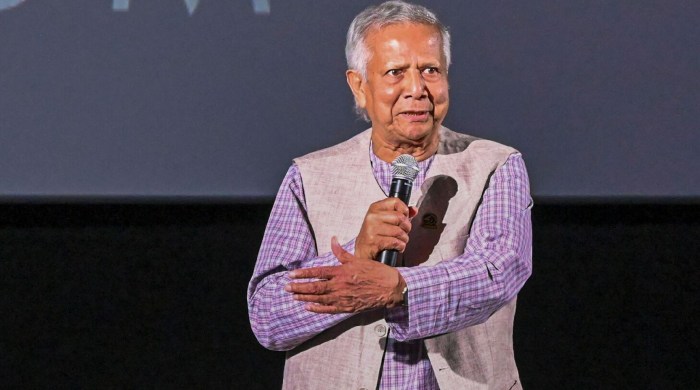

DHAKA – In a move likely to ripple through diplomatic circles in New Delhi, outgoing Bangladesh Chief Adviser Muhammad Yunus used his farewell address on Monday to outline a bold—and controversial—vision for sub-regional economic cooperation.
Yunus specifically grouped India’s northeastern “Seven Sisters” states alongside the sovereign nations of Nepal and Bhutan. By placing Indian states in the same category as independent countries, Yunus appeared to blur traditional political boundaries, a gesture analysts suggest could further strain the already delicate relationship between Dhaka and New Delhi.
A Shift in Foreign Policy
Reflecting on his 18-month tenure, which began after the fall of Sheikh Hasina in August 2024, Yunus asserted that his administration restored the “three core pillars” of Bangladesh’s foreign policy: sovereignty, national interest, and dignity.
“Our open sea is not only a geographical boundary; it is an open door to engage with the world economy,” Yunus stated. “This region, along with Nepal, Bhutan, and the Seven Sisters, has great economic potential.” He proposed deeper cooperation through enhanced connectivity, trade agreements, and maritime access via Bangladesh’s ports.
The 2026 Election Context
The departure of the interim government follows the February 12 parliamentary elections, where the Bangladesh Nationalist Party (BNP) achieved a landslide victory.
| Party | Seats Won (out of 297) |
| Bangladesh Nationalist Party (BNP) | 209 |
| Jamaat-e-Islami | 68 |
| Others | 20 |
Tarique Rahman, the scion of Khaleda Zia, is set to be sworn in as Prime Minister on Tuesday. Yunus’s nationalist messaging comes at a time when his own administration has faced criticism regarding the safety of minorities and a perceived downturn in relations with India.
Governance and Military Modernization
Yunus defended his record by highlighting a massive legislative overhaul. His administration framed approximately 130 new laws and issued 600 executive orders, reporting an 84% implementation rate.
He also touched upon military readiness, stating that Bangladesh has begun modernizing its armed forces to counter “any aggression,” though he stopped short of naming specific regional threats.
A Complicated Legacy with India
During the Yunus-led interim period, ties with New Delhi reached a historic low. India frequently raised alarms over attacks on the Hindu minority and a general breakdown of law and order. While Yunus highlighted expanded ties with China, Japan, and the U.S.—including Chinese-backed projects like the Teesta River initiative—the stagnation of trade and connectivity projects with India remains a significant hurdle for the incoming Rahman administration.
In his final remarks, Yunus expressed optimism for a “just and democratic Bangladesh” before receiving a farewell call from Army Chief Gen Waker-Uz-Zaman, thanking the military for its role in the election transition.