

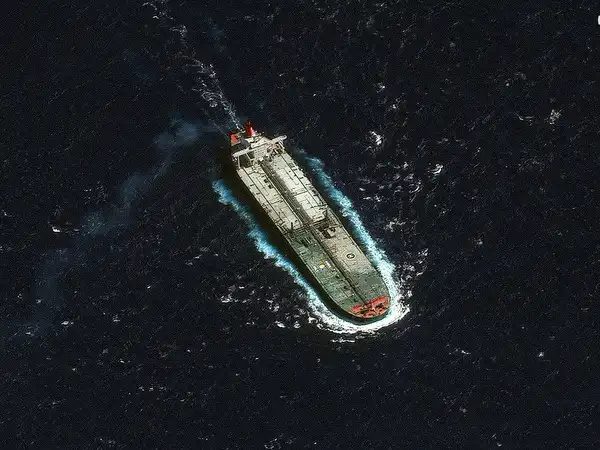

New Delhi: India has seized three oil tanker vessels sanctioned by the United States and allegedly linked to Iran, significantly stepping up maritime surveillance in its waters, according to a Reuters report citing a source with direct knowledge of the development.
The move comes as India and the United States strengthen trade and strategic ties. Earlier this month, Washington reduced import tariffs on Indian goods from 50% to 18%, reportedly after India committed to halting imports of Russian oil.
Tankers Intercepted Near Mumbai
The three vessels — Stellar Ruby, Asphalt Star, and Al Jafzia — were intercepted around 100 nautical miles west of Mumbai after authorities detected suspicious ship-to-ship transfer activity inside India’s Exclusive Economic Zone (EEZ).
Although an official social media post confirming the interception was later deleted, the tankers were reportedly escorted to Mumbai for further investigation.
Indian authorities suspect the vessels frequently altered their identities and operational details to evade detection by coastal enforcement agencies. Their ownership structures are believed to be based overseas, complicating regulatory scrutiny.
Links to Sanctioned Iranian Oil Trade
The US Treasury’s Office of Foreign Assets Control (OFAC) had previously sanctioned ships named Global Peace, Chil 1, and Glory Star 1, whose International Maritime Organization (IMO) numbers reportedly match those of the detained vessels.
Shipping data from LSEG shows:
- Al Jafzia transported Iranian fuel oil to Djibouti in 2025.
- Stellar Ruby was flagged in Iran.
- Asphalt Star mainly operated on China-linked trade routes.
These patterns raised red flags over possible attempts to circumvent international sanctions.
India Tightens Maritime Enforcement
India is seeking to prevent its waters from being used for illicit ship-to-ship oil transfers, a common tactic used to disguise the origin of sanctioned crude and fuel cargoes.
To strengthen enforcement, the Indian Coast Guard has deployed around 55 ships and 10 to 12 aircraft for continuous monitoring across key maritime zones.
Sanctioned oil cargoes are often sold at deep discounts and moved through complex ownership networks, falsified documentation, and mid-sea transfers, making detection and enforcement challenging.