

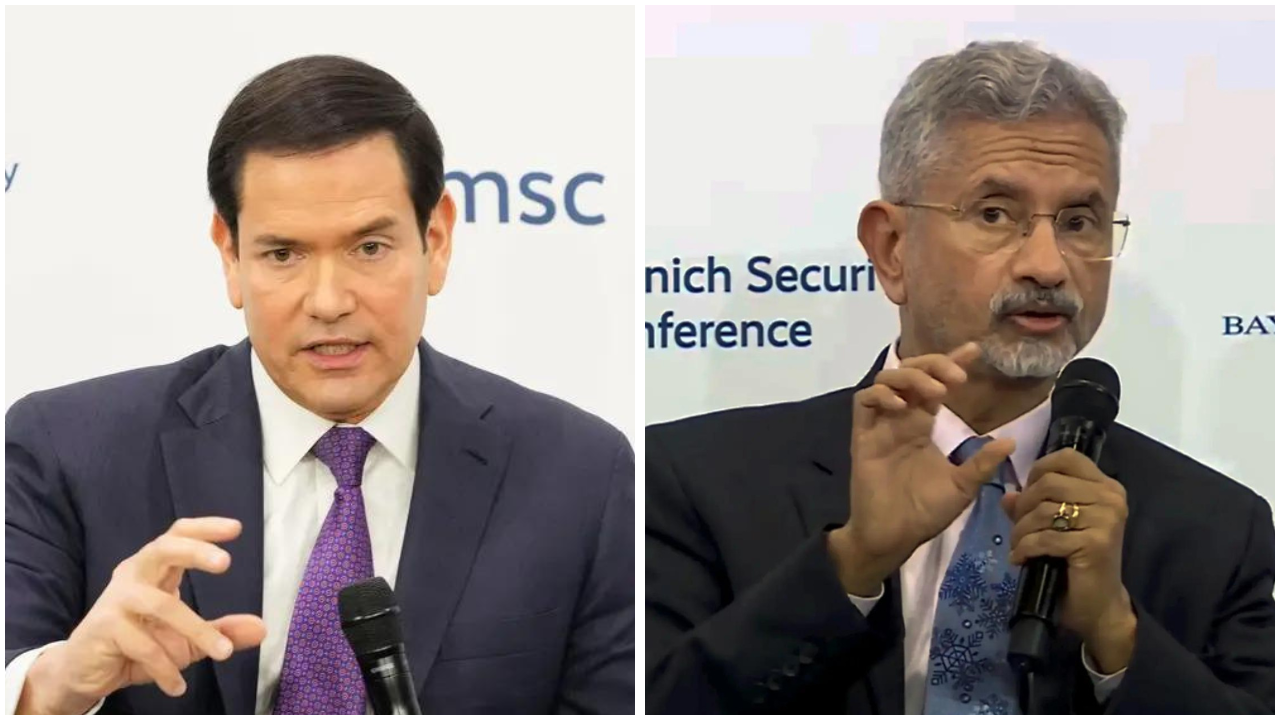

A sharp diplomatic divide over India’s energy ties with Russia played out at the 62nd Munich Security Conference on Saturday, February 14, 2026. While US Secretary of State Marco Rubio claimed Washington has secured a commitment from New Delhi to stop purchasing “additional” Russian oil, Indian External Affairs Minister S. Jaishankar doubled down on India’s policy of “strategic autonomy.”+1
The tension centers on the implementation of the February 2 India-US Trade Framework, which recently halted a month-long trade war between the two nations.
The Dispute: Commitment vs. Market Dynamics
The controversy stems from differing interpretations of the trade deal signed by the Trump administration and the Modi government.
- The US Stance: Marco Rubio stated that as part of the deal to lower US tariffs, India has agreed to curb its reliance on Russian energy. He specifically noted a commitment to stop buying “additional” Russian oil, a phrasing that suggests current contracts may be honored but new ones are restricted.+1
- The Indian Response: Speaking at a separate session, S. Jaishankar did not directly confirm or deny Rubio’s claim. Instead, he emphasized that Indian oil companies make decisions based on “availability, cost, and risks.” He stated, “We are very much wedded to strategic autonomy… if the bottom line is ‘would I remain independent-minded?’ Yes.”
The “Snapback” Mechanism: Trump’s Executive Order
Strategic experts, including Brahma Chellaney, have pointed out that the relief India received is conditional. President Trump’s Executive Order (EO 14329) rescinded the 25% “penalty” tariff on Indian goods effective February 7, but it includes a monitoring mandate:+1
- Surveillance: The US Commerce Secretary is tasked with tracking Indian oil imports to verify if they have “resumed directly or indirectly” importing Russian crude.
- The Trigger: If India is found to have violated the understanding, the 25% punitive tariff can be reinstated immediately at the President’s discretion.
- The Pivot: As part of the framework, India has pledged to import $500 billion in US energy, tech, and aircraft over the next five years to replace the Russian supply.
Impact on India’s Import Bill
Transitioning from discounted Russian Urals to market-priced US crude (WTI) is expected to have a significant fiscal impact:
- Projected Cost: An estimated $4 billion annual increase in India’s oil import bill due to higher crude prices and increased freight costs from the Atlantic.
- Domestic Backlash: The Congress-led Opposition in India has labeled the deal a “surrender,” leading to repeated adjournments in Parliament over the last week.
What to Watch Next
The “Interim Agreement” is expected to be formalized into a legally binding Bilateral Trade Agreement (BTA) by mid-March 2026. This will decide whether the current 18% tariff rate for Indian exports is lowered further to 0% for sectors like pharmaceuticals and gems.