

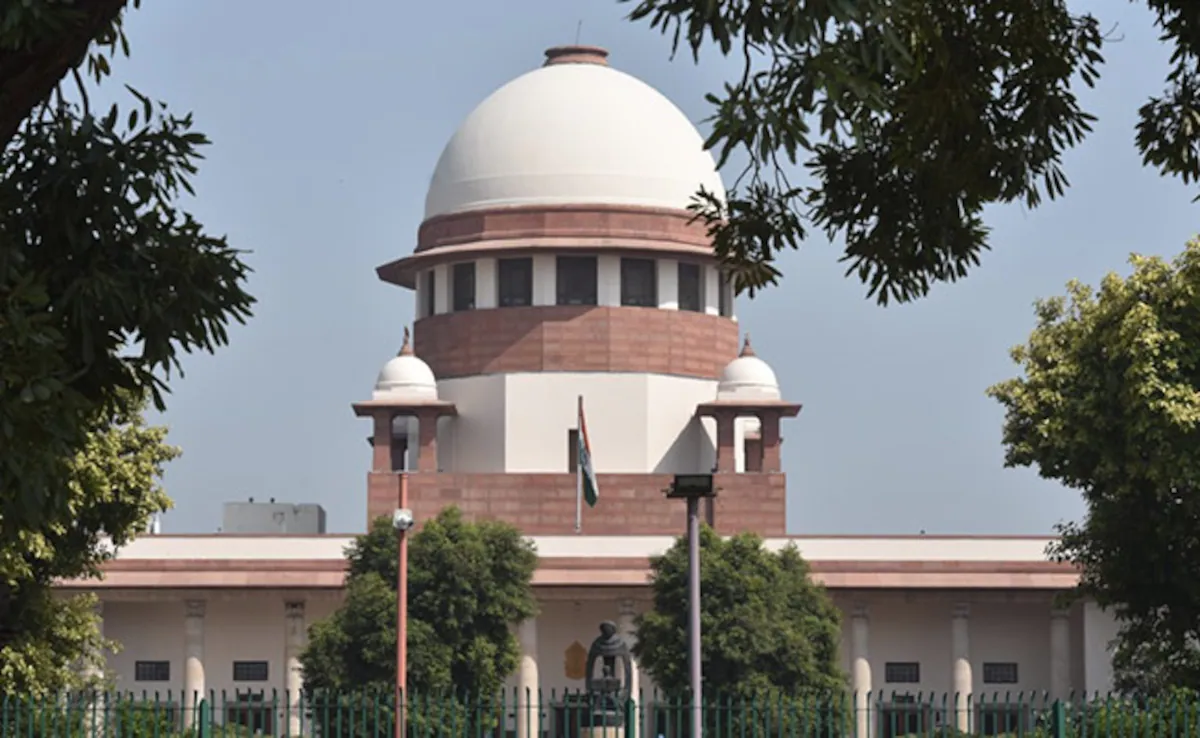

In a significant judgment delivered on February 12, 2026, the Supreme Court of India established that investigating agencies cannot immediately arrest an individual already out on bail simply because more serious, non-bailable charges have been added to the case.
The bench, comprising Justices JB Pardiwala and KV Viswanathan, clarified that the addition of graver offenses does not give police unilateral power to revoke a person’s liberty. Instead, the process must remain under judicial oversight to prevent administrative overreach.
Key Legal Principles Established
The court outlined a clear “roadmap” for how law enforcement and the judiciary must handle cases where a charge sheet is updated with serious offenses:
- No Automatic Arrest: Investigating authorities must obtain a fresh order from the specific court that granted the initial bail before taking the accused back into custody.
- Judicial Review: The presiding judge must “apply their mind afresh” to the new facts. An arrest should only be ordered if the new charges genuinely warrant incarceration, rather than as an automatic consequence.
- The Right to Surrender: An accused has the right to voluntarily surrender and apply for bail specifically for the newly added charges. Only if this new bail plea is rejected can the person be arrested.
- Formal Petition Required: Agencies must move the court under Sections 437(5) or 439(2) of the CrPC (now under corresponding provisions of the BNSS, 2023) to seek a custody order or bail cancellation.
Context: The Sumit v. State of U.P. Case
The ruling stemmed from a dowry death appeal (Sumit v. State of U.P. & Anr.). The appellant, a brother-in-law of the deceased, was granted anticipatory bail by the Allahabad High Court, but the order was restricted only until the filing of the charge sheet.
The Supreme Court criticized this “unusual” time limit, reiterating that:
“Once anticipatory bail is granted, it ordinarily continues without a fixed expiry… The filing of a charge sheet does not terminate protection unless special reasons are recorded.”
By citing landmark precedents like Pradeep Ram and Prahlad Singh Bhati, the apex court ensured that bail remains a protected right even as investigations evolve.