

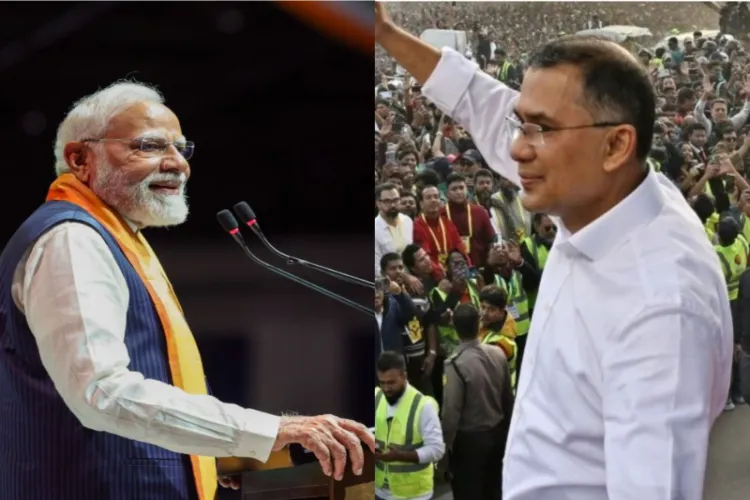

NEW DELHI/DHAKA — Prime Minister Narendra Modi formally congratulated Tarique Rahman, acting chief of the Bangladesh Nationalist Party (BNP), on Friday, February 13, 2026, following the party’s sweeping victory in the landmark general elections. The move is seen as a swift diplomatic pivot by New Delhi to secure its interests as the political landscape in Dhaka undergoes its most significant shift since the 2024 student uprising.
Taking to social media, PM Modi praised Rahman for leading the BNP to a “decisive victory,” noting that the results reflect the deep trust the people of Bangladesh have placed in his leadership.
1. The Numbers: A Clear Mandate for the BNP
The elections, held across 299 parliamentary constituencies, were overseen by a massive security apparatus of nearly one million personnel. Despite the tense lead-up, the polling remained largely peaceful with a robust voter turnout of over 60%.
- BNP & Allies: Preliminary data shows the alliance leading in 181 seats, well past the majority mark.
- The Opposition: A combination of Jamaat-e-Islami and the student-led National Citizen Party (NCP) trailed significantly, securing approximately 61 seats.
- Personal Victory: The 60-year-old Tarique Rahman solidified his return to the center of power by winning from two key constituencies in Dhaka and Bogura, clearing the path for his official elevation as Prime Minister.
2. India’s Strategic Outreach
The relationship between New Delhi and the BNP has historically been complex, particularly during the era of the late Khaleda Zia. However, the Indian government has spent the last year meticulously rebuilding bridges.
- Funeral Diplomacy: Following the death of Khaleda Zia, PM Modi sent External Affairs Minister S. Jaishankar to represent India at her funeral.
- The Letter: During that visit, Jaishankar hand-delivered a personal letter from PM Modi to Tarique Rahman, pledging bilateral cooperation—a move that anticipated the BNP’s eventual return to power.
- Relief over Jamaat: While the BNP and Jamaat-e-Islami were once close allies, the BNP has indicated it intends to form the government on its own. This is a major relief for New Delhi, which has long viewed Jamaat’s hard-line Islamic agenda with skepticism.
3. Rebuilding a Frayed Partnership
Bilateral ties faced a severe downturn after Sheikh Hasina fled to New Delhi in August 2024. The subsequent interim government, led by Muhammad Yunus, saw heightened friction over several critical issues:
- Minority Safety: India has repeatedly raised concerns over the treatment of Bangladesh’s Hindu minority (approx. 8% of the population) during periods of political transition.
- Resource Sharing: Stalled talks over Teesta water sharing and cross-border trade are expected to be prioritized under the new Rahman administration.
- Economic Development: PM Modi reiterated that India remains committed to a “democratic, progressive, and inclusive” Bangladesh, looking to advance “multifaceted relations and common development goals.”