

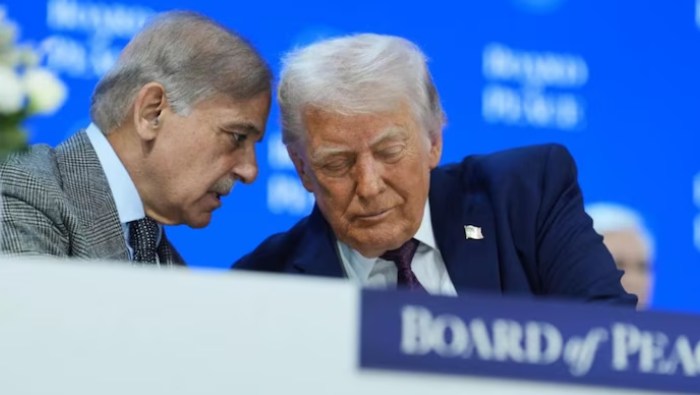

NEW DELHI — India’s Ministry of External Affairs (MEA) confirmed on Thursday, February 12, 2026, that the government has received an official invitation from the United States to join President Donald Trump’s newly established Board of Peace (BoP). While New Delhi remains in a “review” phase, its neighbour Pakistan has already moved to the front of the line, with Prime Minister Shehbaz Sharif set to fly to Washington next week for the body’s maiden session.
The Board of Peace, which was formally launched at the World Economic Forum in Davos last month, has positioned itself as a modern alternative to the United Nations for global conflict resolution.
1. India’s Strategic Hesitation
While Prime Minister Narendra Modi has previously welcomed the “first phase” of Trump’s West Asia peace plan, the Indian government is proceeding with its trademark strategic caution.
- UN Framework Concerns: Historically, India prefers participating in peacekeeping and stabilization efforts only under the United Nations (UN) banner. The BoP’s charter, which positions Donald Trump as a “Chairman for life” with a mandate outside the traditional UN structure, presents a diplomatic challenge for Delhi.
- The Membership Fee: Reports suggest a “pay-to-stay” provision, with a billion-dollar contribution discussed for permanent membership—a factor New Delhi is likely scrutinizing closely.
- The “Pakistan-Turkey” Factor: With both Pakistan and Turkey (frequent critics of Indian policy) among the first founding members, India is weighing how its voice would be positioned within the group.
2. Pakistan’s Early Adoption
In contrast to India’s deliberation, Pakistan has leaned heavily into the initiative. PM Shehbaz Sharif was a prominent figure during the Davos charter-signing on January 22, 2026.
- The Delegation: PM Sharif will be accompanied by Deputy Prime Minister and Foreign Minister Ishaq Dar for the February 19 meeting at the Donald J. Trump US Institute of Peace.
- Islamic-Arab Alliance: Pakistan views its participation as part of a collective “Muslim-majority” voice, alongside nations like Saudi Arabia, Qatar, the UAE, and Jordan, focusing primarily on the reconstruction of Gaza.
3. What exactly is the “Board of Peace”?
Initially pitched as a technocratic body to rebuild Gaza, the BoP’s charter has since expanded into a global mandate.
4. India-US Relations: The Trade Context
The invitation comes at a pivotal moment for bilateral ties. Just last week, on February 6, 2026, the two nations signed an Interim Trade Agreement, which saw India slash tariffs on US agricultural goods (like wine and tree nuts) in exchange for preferential access for Indian automotive parts. This “thaw” in trade relations makes the BoP invitation a significant test of the new Trump-Modi rapport.