

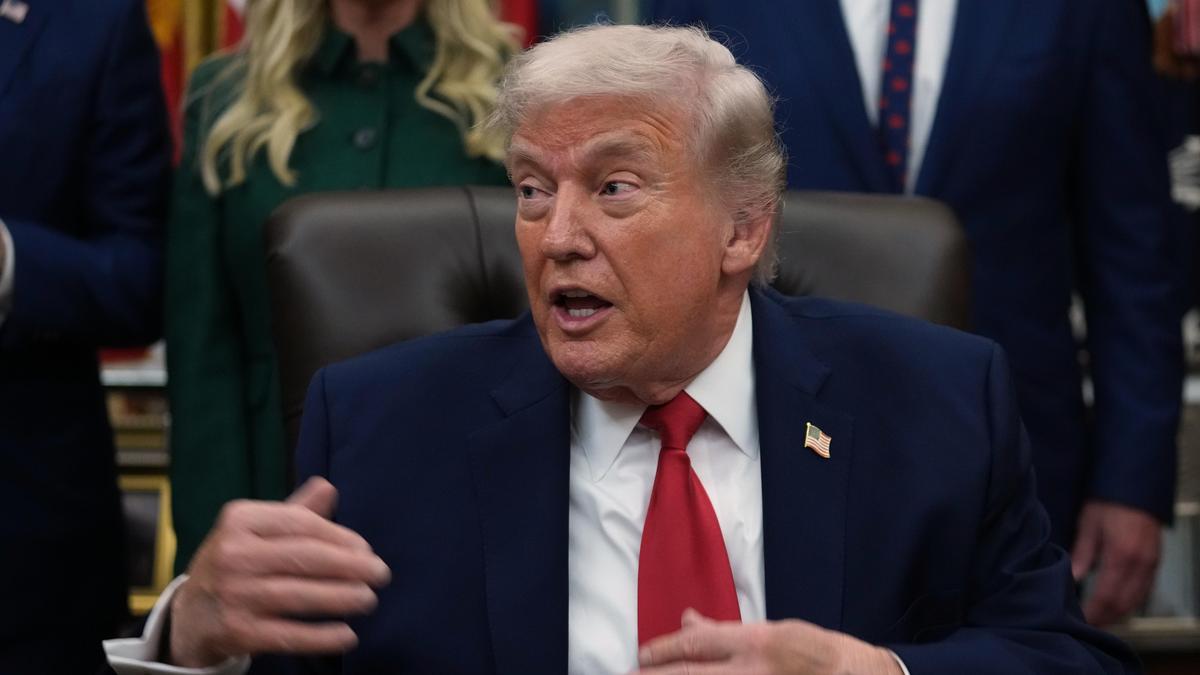

WASHINGTON, D.C. — In a dramatic show of legislative defiance, the U.S. House of Representatives voted on Wednesday, February 11, 2026, to rescind President Donald Trump’s tariffs on Canadian imports. The 219–211 vote marks a rare bipartisan break from the President’s signature “America First” trade agenda and signals growing anxiety within the GOP ahead of the upcoming midterm elections.
The resolution, authored by Rep. Gregory Meeks (D-NY), seeks to terminate the national emergency Trump declared last year to justify a 35% baseline tariff on most Canadian products—excluding those compliant with the USMCA pact.
1. The “Rebel Six”: Republicans Who Defied the Threat
The vote took place under the shadow of a stern warning from the President, who posted on Truth Social during the roll call that any Republican voting against tariffs would “seriously suffer the consequences come Election time, and that includes Primaries!”
Despite the threat, six Republicans broke ranks:
- Don Bacon (NE)
- Thomas Massie (KY)
- Brian Fitzpatrick (PA)
- Kevin Kiley (CA)
- Dan Newhouse (WA)
- Jeff Hurd (CO)
Rep. Don Bacon, a frequent advocate for Congressional trade authority, argued that lawmakers “cannot and should not outsource our responsibilities,” calling the tariffs a “tax on American consumers.”
2. Collapse of the Johnson Blockade
The path to this vote was paved by a major procedural failure for House Speaker Mike Johnson.
- The Strategy: For months, GOP leadership used “rule” changes to block any vote that would challenge Trump’s tariff authority.
- The Failure: On Tuesday night, a procedural vote to extend that blockade through July failed (217–214) after Bacon, Kiley, and Massie joined Democrats to sink it.
- The Fallout: With the “shield” gone, Democrats immediately forced the resolution on Canada tariffs to the floor on Wednesday.
3. Trump’s Defense & The “Greenland” Factor
President Trump defended his policy as essential for economic and national security. He criticized Canada as one of the “worst in the world to deal with” regarding the northern border and recently threatened to hike duties to 100% if Canada pursues a proposed trade deal with China under Prime Minister Mark Carney.
The President also recently sparked controversy by suggesting tariffs on European allies could be used as leverage to acquire Greenland—a move that has alienated even some “old-fashioned” conservative members of his party.
4. What Happens Next?
| Step | Status | Outlook |
| House Vote | Passed (219–211) | A rare, symbolic victory for Democrats and GOP moderates. |
| Senate Vote | Pending | Likely to pass; the Senate already voted to reject these tariffs in late 2025. |
| The Veto | Imminent | Trump is virtually certain to veto the measure if it reaches his desk. |
| Veto Override | Unlikely | Congress lacks the two-thirds majority required to bypass the President. |