

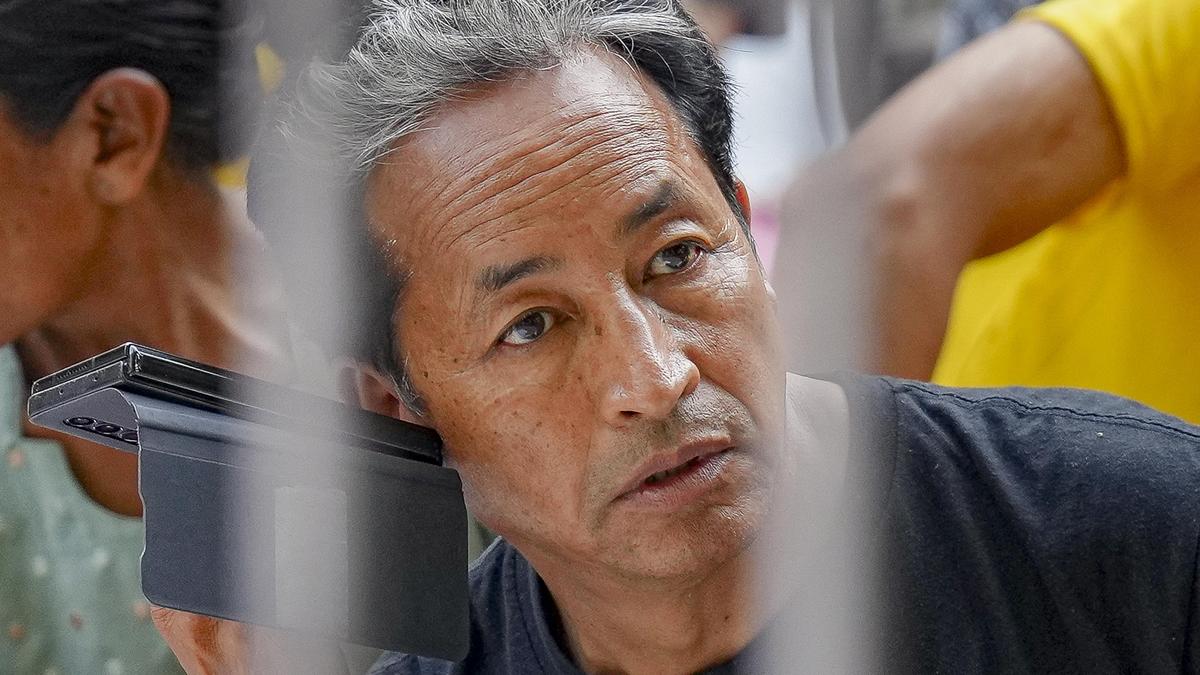

New Delhi: The central government informed the Supreme Court on Wednesday that it does not support the release of climate activist Sonam Wangchuk on health grounds, despite an earlier suggestion by the court. The government argued that the grounds for his detention continue to exist and releasing him would set an unwarranted precedent in a serious case.
Wangchuk was detained in September 2025 and is currently lodged in Jodhpur jail. Six months after his detention, the government has maintained that the allegations against him remain significant and that his continued custody is justified. His wife, Geetanjali Angmo, has approached the Supreme Court seeking his release and is pursuing legal remedies on his behalf.
What Indian Law Says on Preventive Detention
Preventive detention refers to detaining a person without a trial or conviction, based on suspicion that they may commit an offence in the future. Under such laws, authorities can arrest individuals without a warrant or magistrate’s approval in certain circumstances.
The purpose of preventive detention is not to punish a person for past actions but to prevent potential offences and maintain public order or national security.
Article 22 of the Indian Constitution states that a person cannot be detained for more than three months without the approval of an advisory board. However, in cases involving special laws like the National Security Act (NSA), detention can extend up to 12 months.
Clause 7 of Article 22 allows Parliament to define circumstances under which individuals may be detained for longer periods without advisory board approval. Over the years, several preventive detention laws have been enacted, including:
- COFEPOSA (1974) for smuggling and foreign exchange violations
- PITNDPS Act (1988) for drug trafficking cases
- National Security Act (1980) for maintaining national security and public order
The NSA is considered one of the strictest preventive detention laws in India, allowing detention on grounds such as threats to state security or public order.
Legal Safeguards Under Preventive Detention Laws
Article 22 provides safeguards for people detained under preventive detention laws. It mandates the formation of advisory boards, typically consisting of individuals qualified to be High Court judges. These boards review detention orders every three months to determine whether continued detention is justified.
The detainee has the right to be informed of the grounds for detention. While grounds are generally provided immediately, under the NSA, the government has three weeks to present the grounds and the detainee’s representation before the advisory board.
Legal Remedy: Habeas Corpus and Article 32
One of the most important legal remedies in preventive detention cases is a writ of habeas corpus, which protects an individual’s fundamental right to liberty against unlawful detention.
Geetanjali Angmo has filed a habeas corpus petition in the Supreme Court, seeking Wangchuk’s release. A habeas corpus writ requires authorities to produce the detained person before the court and justify the detention. Individuals can directly approach the Supreme Court under Article 32 for this relief.
The Supreme Court is currently hearing arguments from all sides before deciding on Wangchuk’s case.