

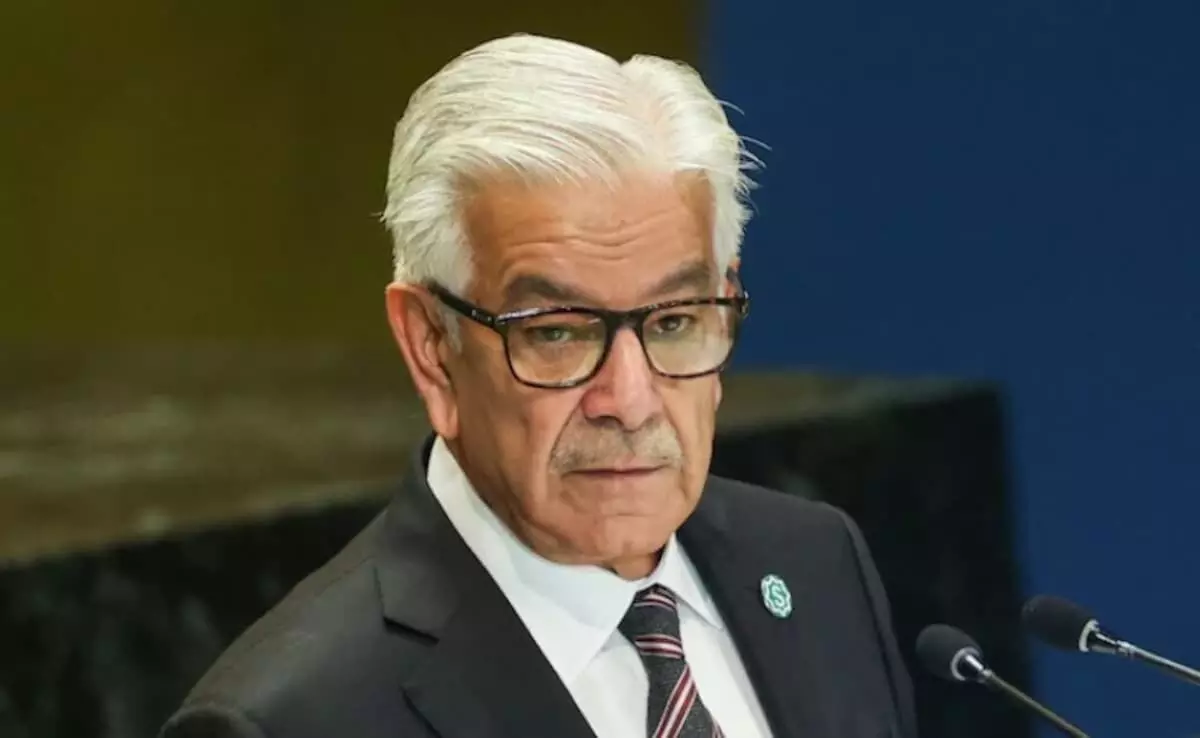

In a blistering critique of Pakistan’s foreign policy history, Defence Minister Khawaja Asif told the National Assembly on Tuesday, February 10, 2026, that the United States has historically treated Pakistan “worse than toilet paper.”
Asif’s remarks came during a parliamentary debate on national security following a devastating suicide bombing at a Shia mosque in Islamabad that killed 31 people. He argued that the terrorism plaguing Pakistan today is the “blowback” of decades of strategic errors.
Key Highlights from the Speech
The Defence Minister’s address was marked by unusually blunt language regarding Islamabad’s long-standing, often transactional relationship with Washington.
- The “Toilet Paper” Analogy: Asif stated that the U.S. used Pakistan for its own geopolitical purposes—specifically during the Afghan wars—and then discarded the country “like a piece of toilet paper” once its strategic goals were met.
- A “Made in America” Jihad: He challenged the narrative that Pakistan’s involvement in the 1980s Soviet-Afghan war was a religious duty. He called it a “superpower war” and admitted that Pakistan’s education system was intentionally altered to promote a radical curriculum to support U.S. interests.
- The Post-9/11 “Mistake”: Asif described the decision to realign with the U.S. after 1999 under General Pervez Musharraf as a “grave miscalculation.” He noted that by turning against the Taliban to appease a superpower, Pakistan invited decades of internal violence and economic instability.
- Blaming Dictators: He specifically held former military rulers Zia-ul-Haq and Pervez Musharraf responsible for renting out the country’s sovereignty for “American crutches” and political legitimacy.
Current Security Context
Asif’s admission was fueled by the deteriorating security situation in Pakistan. He noted that:
- The country has suffered irreversible losses in human lives and economic growth.
- The Tehreek-e-Taliban Pakistan (TTP) continues to operate with relative freedom, further straining ties with the current Taliban-led government in Kabul.
- Even religious sites like mosques are no longer safe, as evidenced by the recent suicide attack at the Imambargah Qasr-e-Khadijatul Kubra in Islamabad.
“We deny our history and do not accept our mistakes. Terrorism is a blowback of the mistakes committed by dictators in the past,” Asif told lawmakers.