

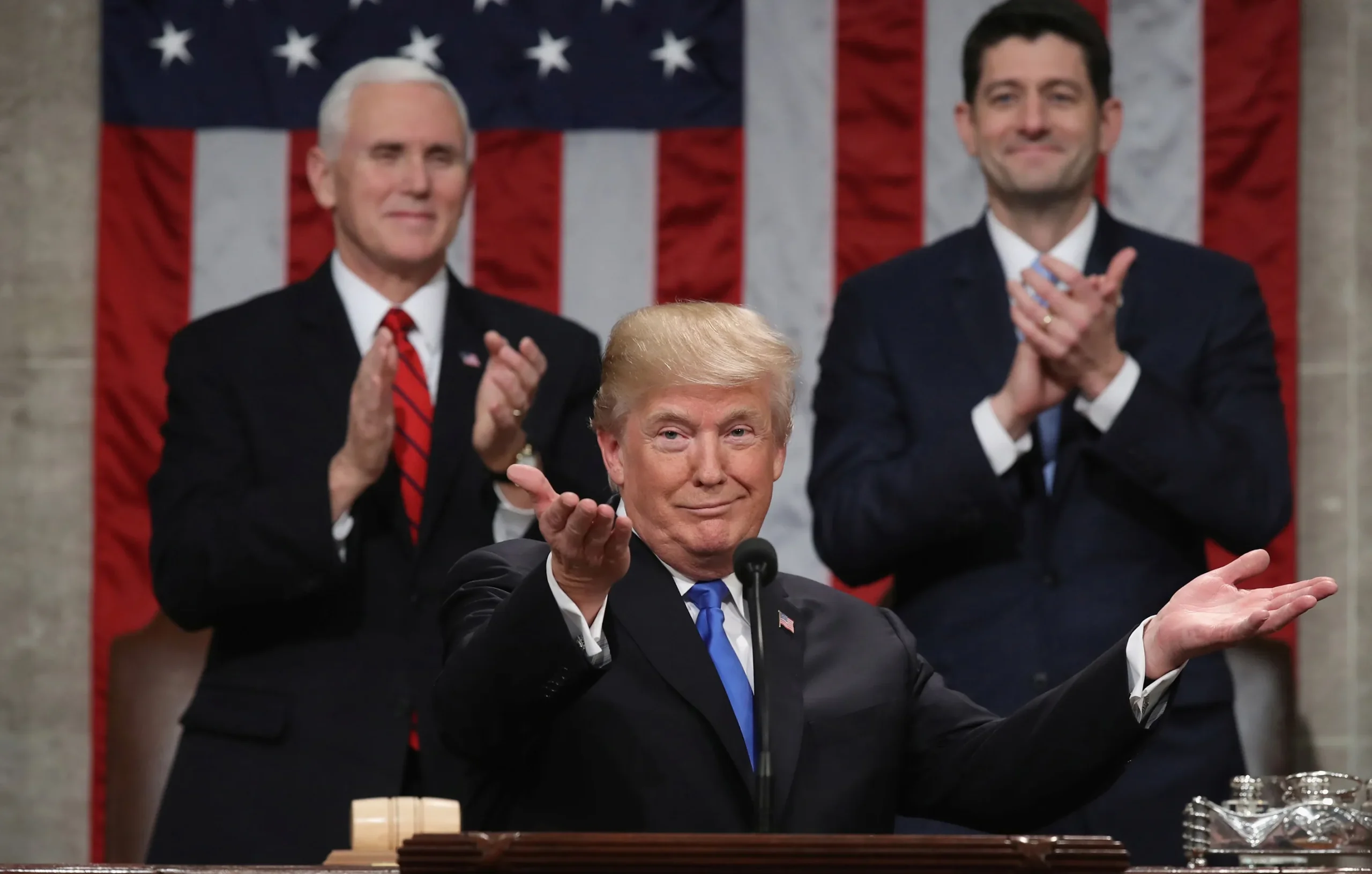

WASHINGTON, D.C. — In a series of defiant Truth Social posts on Thursday, February 5, 2026, President Donald Trump escalated his rhetoric against the American electoral system, labeling it “rigged, stolen, and a laughingstock.” The President is now calling for a total “nationalization” of election rules through the Safeguard American Voter Eligibility (SAVE) America Act, a legislative push that would strip states of much of their autonomy in managing federal elections.
The move comes at a high-stakes moment for the administration, as the 2026 Midterm Elections on November 3 will determine control of all 435 House seats and 33 Senate seats.
1. The SAVE America Act: Trump’s Reform Roadmap
The proposed legislation seeks to implement a uniform federal standard for voter registration and participation. Key pillars of the act include:
- Mandatory Voter ID: All voters must present a government-issued photo ID at the polls.
- Proof of Citizenship: Registration would require documentary proof of U.S. citizenship, such as a birth certificate or passport.
- Mail-In Ballot Restrictions: The bill seeks to ban mail-in voting except for specific exemptions for illness, disability, military service, or verified travel.
- Voter Roll Purges: The act would mandate that state officials regularly purge non-citizens and ineligible voters from the rolls.
“We are either going to fix them [the elections], or we won’t have a Country any longer,” Trump wrote in his post. White House Press Secretary Karoline Leavitt supported the call, describing the measures as “common-sense policies” that align with the President’s March 2025 executive orders on election security.
2. Demographic Impact and Data Breakdown
While proponents argue these measures are necessary for “election integrity,” civil rights groups and policy analysts highlight significant barriers for millions of eligible voters.
The Documentation Gap: According to studies by the Bipartisan Policy Center and the Brennan Center for Justice (2025-2026 data):
- 21.3 Million: The number of voting-age American citizens (roughly 9%) who do not have documentary proof of citizenship readily available.
- 52%: The percentage of registered voters who do not possess a valid, unexpired passport.
- 11%: The percentage of voters who lack access to their original paper birth certificate.
Disproportionate Effects on Groups: Data suggests the SAVE Act’s “show your papers” requirement would impact specific demographics more than others:
- Women: Approximately 69 million women have a current legal name that does not match their birth certificate due to marriage or divorce, potentially requiring additional “bridge” documentation like marriage licenses.
- Low-Income Earners: Only 1 in 5 Americans with an annual income below $50,000 has a valid passport.
- Voters of Color: Studies indicate that voters of color are less likely to have current photo IDs; for example, roughly 25% of Black voting-age citizens lack a current government-issued photo ID, compared to 8% of white citizens.
3. “Dead on Arrival”: The Battle in the Senate
The legislative path for the SAVE Act remains blocked by a Democratic-led Senate. Senate Minority Leader Chuck Schumer has remained steadfast in his opposition, calling the bill “Jim Crow 2.0” and a “federalization of voter suppression.”
“I want to be very clear: the SAVE Act is dead on arrival in the Senate,” Schumer stated on Thursday. “Democrats will make sure this power grab does not pass.”
Democrats argue that non-citizen voting is already illegal and statistically “vanishingly rare,” citing a 2025 USCIS audit where 96.31% of flagged voters were confirmed as citizens, and only 0.04% were confirmed non-citizens.
4. 2026 Midterm Snapshot
The clash over the SAVE Act is set to define the upcoming electoral cycle.
| Metric | 2026 Midterm Details |
| Election Date | November 3, 2026 |
| House Seats Contested | All 435 Seats |
| Senate Seats Contested | 35 (33 Regular + 2 Special) |
| Gubernatorial Races | 36 States |
| Control of Congress | Republicans currently hold both chambers |