

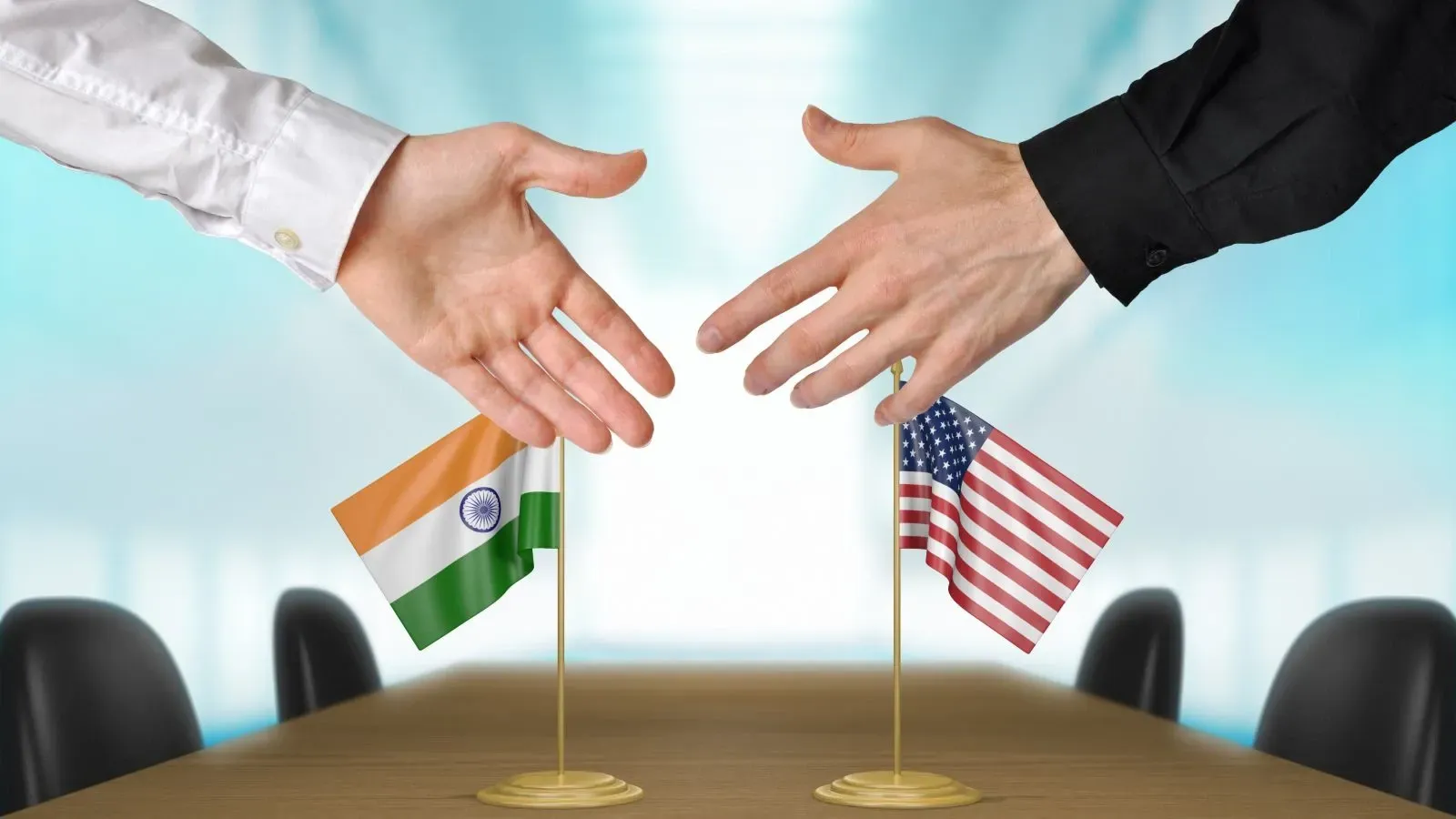

India’s newly concluded trade agreement with the United States has triggered a wave of criticism and introspection in Pakistan, where commentators and opposition leaders argue that Islamabad’s sustained outreach to Washington delivered little tangible return.
Despite Pakistan’s overt gestures toward US President Donald Trump — including nominating him for the Nobel Peace Prize and backing his inclusion on the Board of Peace — the country emerged from the latest round of trade decisions facing higher tariffs than India.
Under the agreement announced on February 2, US tariffs on Indian exports will be set at 18 per cent, while Pakistan will face a 19 per cent rate. The outcome has intensified debate in Pakistan, particularly as New Delhi is widely seen as having resisted pressure from Trump for months before finalising the deal.
Optics That Stung Across the Border
The optics surrounding the announcement added fuel to the backlash. In a series of social media posts, Trump shared images of India Gate and an India Today magazine cover featuring Prime Minister Narendra Modi alongside himself, before revealing the reduced tariff rate for India — notably one percentage point lower than Pakistan’s.
The contrast was not lost on observers in Pakistan, many of whom expressed disbelief that India secured a better deal without what they described as excessive deference to Trump.
One viral post captured the prevailing mix of anger and sarcasm. Pakistan-based X user Umar Ali wrote a scathing analogy comparing Trump’s treatment of Pakistan’s leadership to a relationship of convenience, alongside an AI-generated image depicting Field Marshal Asim Munir holding a box of rare minerals while staring at the Modi–Trump magazine cover.
Opposition Slams ‘Optics-Driven’ Foreign Policy
Former Pakistan Tehreek-e-Insaf (PTI) minister Hammad Azhar framed the outcome as a strategic failure rather than bad luck.
“Foreign policy in the 21st century isn’t about optics or personal relationships. It’s about leveraging economic strength, tariffs, and market access,” Azhar wrote on X. “India’s recent trade deals with the EU and the US prove the point. Sycophancy and photo ops are useless.”
Pakistan’s opposition has seized on the comparison, arguing that India negotiated from a position of strategic autonomy, while Pakistan relied heavily on personal engagement with US leadership — only to walk away with a less favourable outcome.
Economic Worries Deepen
Journalist Asad Toor warned that the tariff decision compounds Pakistan’s broader economic challenges, pointing to falling exports, shrinking foreign investment, and what he described as a steady erosion of Pakistan’s bargaining power on the global stage.
Another journalist, Imran Riaz Khan, was even more blunt. “The ‘Salesman-in-Chief’ strategy has failed,” he said. “You can give away Balochistan’s minerals in wooden boxes, but you cannot buy respect.”
Digital creator Wajahat Khan echoed the sentiment, writing, “Trump is a businessman. He saw a manager and a shopkeeper and gave them a shopkeeper’s deal. India came as a partner and walked away with the 18 per cent prize. This is the cost of having a government without the backbone of a public mandate.”
India’s Trade Momentum
India’s agreement with the US comes on the heels of a landmark free trade pact with the European Union, often described as the “mother of all trade deals”. Together, these back-to-back agreements are expected to boost India’s economy significantly, potentially adding up to $150 billion in exports over the next decade.
For many in Pakistan, the contrast has become a case study in how economic leverage and long-term strategy, rather than symbolism and personal diplomacy, increasingly shape outcomes in global trade.